Advertisement
Anonymous
Sandwich generation squeeze
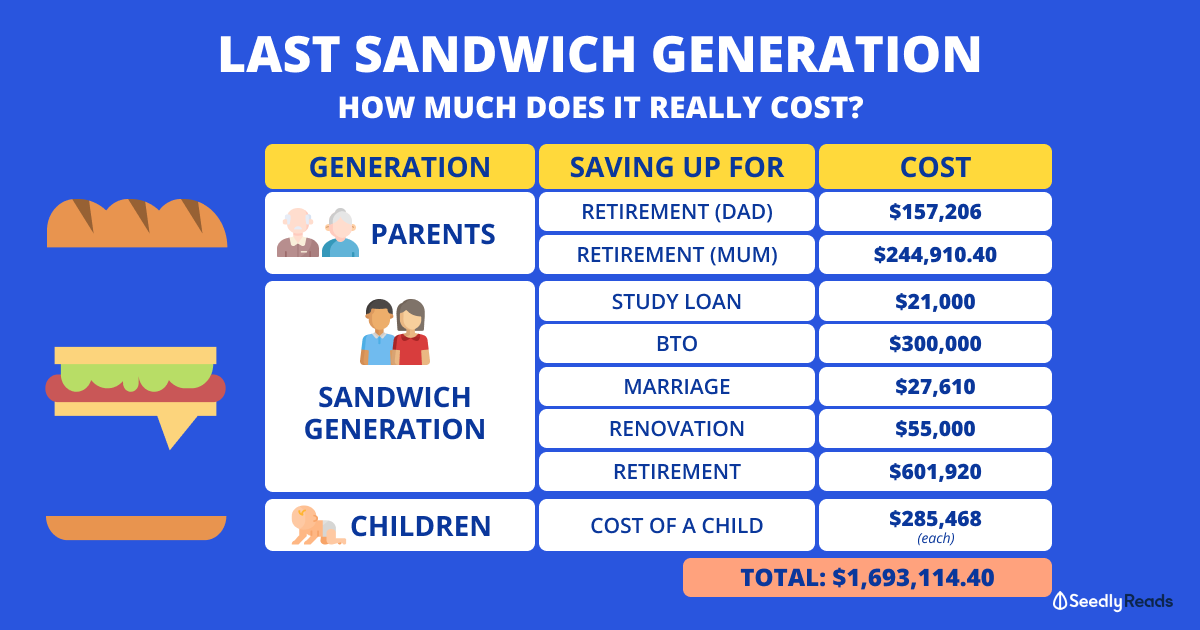
Mid-career PMET, married with 2 kids (childcare/enrichment), still paying mortgage. Parent’s health takes a turn and now it’s $600–$1,200/month for meds, appointments, transport + time off work.
I’m trying to keep things from spiralling by setting up a separate “care fund” (I’m using an OCBC account just to isolate these expenses), but it still feels like the budget is wobbling.
How would you handle this without burning out?
24
Discussion (24)
Learn how to style your text


William Koh
1d ago
Income and Wealth Security at Financial Planning (SG)
Reply
Save
You need to discuss the finance with your partner, and your parents.
Your parents have their responsibilities to takd care of themselves. You are not their domestic helper/ATM.
You have to be responsible for your own family too.
And if you have siblings, they will need to help as well.
Basically, everyone has to chip in, including your parents.
Reply
Save
If I were you, I’d keep the “care fund” (that’s actually smart), but I’d stop trying to hold everything up with willpower.
What helped me most in similar situations was:
- set a hard "this is what we can handle" number each month. Not because you don’t care, but because if you keep stretching, you’ll snap. Anything above that number = you trigger other options (siblings chip in, subsidies, change clinic route, whatever).
- Batch everything: Appointments, meds refills, paperwork — do it in one fixed block (like one morning every 2–4 weeks). The constant “one more thing” is what really kills you, not just the money.
- Get someone else to carry even if they can’t pay, they can do admin, transport, sitting in, calling clinics. The mental load is the burnout.
- Give yourself a small "switch off" break every week like one night you don’t talk about parents/medical stuff. Sounds minor, but it stops your whole life becoming caregiving.
Reply
Save
Sad
Reply
Save
Either cut expenses or increase more channels of income...
what You have shared is vague so onl...
Read 19 other comments with a Seedly account
You will also enjoy exclusive benefits and get access to members only features.
Sign up or login with an email here
Write your thoughts
Related Articles








Related Posts
Related Posts
Advertisement
This is a very real situation for many mid-career families, and it’s not just a budgeting issue — it’s about how to make everything sustainable without burning out.
Setting up a separate care fund is already a very good move, because it gives clarity on what’s actually being spent.
Beyond that, amidst all the great and practical sharing posted earlier, I’d usually look at 3 things from a complementing angle:
1. How stable your income is against rising obligations
With mortgage, kids and now caregiving, the key question is whether your income is protected enough to support all these over time.
2. Whether existing plans are working efficiently
Sometimes there are overlaps or gaps in coverage that only become obvious at this stage, especially when medical needs increase.
3. How to structure the outflow so it doesn’t keep compounding stress
It’s not just about setting aside funds, but making sure the overall setup (expenses, buffers, protection) works together so one area doesn’t keep affecting another.
Usually when these are aligned, the situation feels a lot more manageable even if the numbers don’t change immediately.
If it helps, happy to share how to think through this more clearly based on your situation with an open chat - no pressure.