Advertisement


OPINIONS
Women’s Critical Illness Insurance Coverage Guide
Women-specific critical illness cover adds targeted protection for female health risks that standard policies may miss.
This post was originally posted on Planner Bee.
Being a woman often means wearing many hats, caregiver, professional, partner, and more, all while navigating health challenges unique to our bodies. From breast and cervical cancers to pregnancy-related complications and gynaecological conditions, we face risks that require careful attention and protection.
Yet, critical illness insurance is often overlooked in the midst of our busy lives.
Early detection and effective management are key to improving outcomes and reducing the impact of these conditions. However, treatment and follow-up care can be expensive and may quickly deplete any savings.
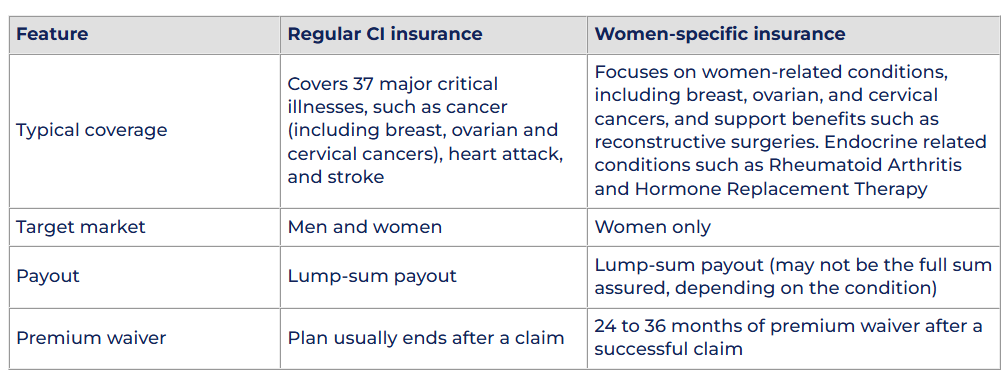
Standard Critical Illness (CI) insurance offers broad coverage for major conditions like cancer and stroke. Women-specific CI plans go a step further, providing enhanced benefits for female-related illnesses such as breast and cervical cancer, as well as conditions not typically covered like Polycystic Ovarian Syndrome, Rheumatoid Arthritis, hormone replacement therapy, and reconstructive surgeries.
What is women-specific CI insurance?
Some people may assume that women-specific CI insurance, such as PRULady, AIA Glow of Life, and Income’s Lady 360, is the same as standard CI insurance. It is not.
Instead of covering the 37 critical illnesses listed by the Life Insurance Association (LIA) Singapore, these policies focus on conditions that are specific to women.
Women-specific CI policies usually include illnesses and treatments that affect women more often. For example, Rheumatoid Arthritis is three times more common in women than in men.
These plans may also cover procedures such as mastectomy and reconstructive surgery after accidents, which are often excluded from standard CI insurance.
Differences between regular CI insurance and women-specific insurance
Regular CI insurance pays a lump-sum if you are diagnosed with a covered condition. It usually only covers the later stages of the 37 critical illnesses listed by the Life Insurance Association (LIA) Singapore.
The payout can help cover medical bills, compensate for loss of income, or support lifestyle adjustments during recovery. The insured can choose how to use the money.
Women-specific CI insurance is not meant to replace regular CI coverage. Instead, the two work together to provide more comprehensive protection tailored to women’s needs.
Read more: Everything You Need to Know About Standalone Cancer Insurance
When to consider women-specific insurance?
Women-specific critical illness insurance is worth considering if you’re at a stage where female-related health risks are more prominent or if you want added protection beyond standard CI plans. These policies are particularly relevant when:
- You’re planning for or are in your childbearing years – Coverage may include pregnancy complications or conditions like Polycystic Ovarian Syndrome (PCOS).
- You have a family history of female-related cancers – Such as breast, ovarian, or cervical cancer, which may increase your personal risk.
- You’re looking for added support for long-term chronic conditions – Such as autoimmune disorders like Rheumatoid Arthritis, which women are more likely to develop.
- You value additional wellness benefits – Many plans include preventive care like mammograms, PAP smears, and hormone therapy support.
Some plans, like Income Lady 360 and PRULady, also offer full payouts for reconstructive surgeries after a mastectomy or carcinoma in situ of the breast, benefits not typically included in standard CI plans.
That said, if you already have comprehensive CI coverage with a sufficient lump sum, you may be able to cover such expenses without a separate women-specific policy. In such cases, you might simply want to boost your existing CI coverage instead of adding a new policy.
Other insurance to supplement women-specific CI Insurance
Women-specific critical illness insurance is just one part of a broader financial safety net. To be fully protected, consider combining it with other types of insurance:
- Health insurance: Beyond MediShield Life, an Integrated Shield Plan (IP) can provide extra coverage for private hospitals or higher ward classes in public hospitals. IP riders can also help reduce out-of-pocket costs and offer additional benefits, such as a hospital cash allowance.
- Term life insurance: Term insurance offers an affordable way to protect your finances, paying out in the event of death or total and permanent disability (TPD). This is particularly important if you have dependents. Some term plans also allow a CI rider, giving extra CI coverage at lower premiums.
- Early CI insurance: These specialised policies pay a lump sum upon diagnosis of a critical illness at an early stage. Early payouts can help cover treatment costs and provide a form of income replacement while during recovery.
Together, these plans create a strong financial safety net, helping you manage life’s unexpected events without derailing your goals.
Read more: Insurance Plans For Women: What Are They, And Are They Necessary?
How much insurance do you need?
Insurance provides financial security for you and your loved ones in the event of death or total permanent disability. This is especially important if you have dependents.
You can use Planner Bee’s insurance needs calculator to estimate your coverage requirements.
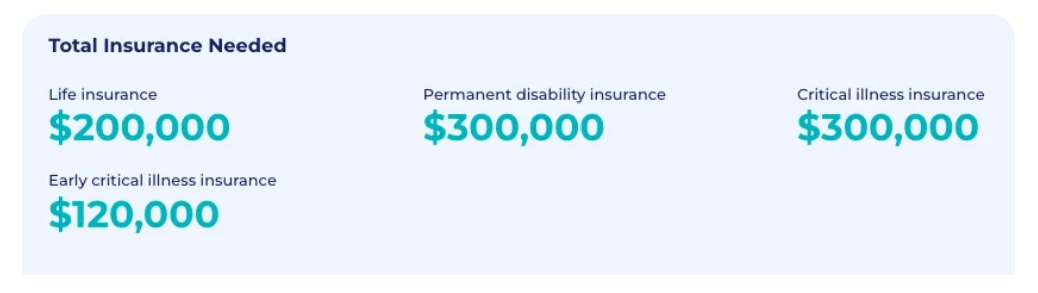
For example, Jenny, a single professional earning $5,000 a month with monthly expenses of $2,500 and no debts or dependents, would need around $200,000 in life insurance and $300,000 in critical illness insurance to be adequately covered.
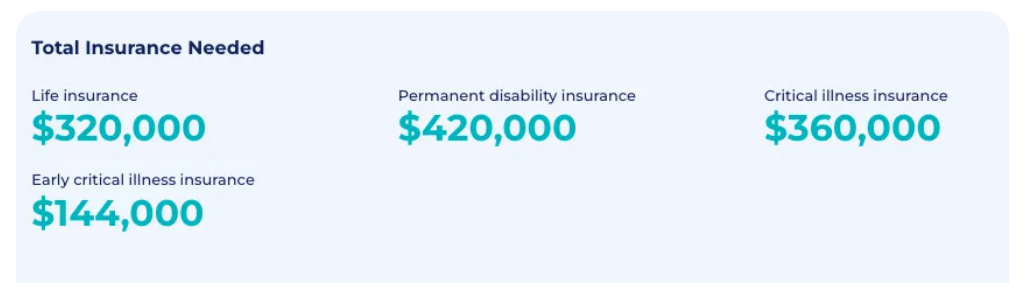
For Maria, a single mother of one earning $6,000 a month with monthly expenses of $3,500, she would require significantly higher coverage to ensure her family is adequately protected.
Choosing the right women-specific CI insurance for your life stage
Women’s health risks and financial needs change with age, so it helps to choose insurance that matches your life stage. Here is a guide to help you make informed decisions:
In your 20s to 30s
At this stage, fertility and reproductive health are important. Early detection of breast and cervical cancer is also a priority. Look for women-specific CI insurance that includes wellness benefits such as health screenings and support for reproductive issues. Make sure the sum assured is enough to cover your lifestyle and potential treatment costs that are not covered by your health insurance.
In your 30s to 40s
The risk of chronic conditions increases, and pregnancy-related complications may become relevant. Consider women-specific CI plans with optional CI riders or term life coverage if you have dependents. Check if the plan offers premium waivers after a claim and covers maternity or reproductive health issues.
In your 50s and above
The focus shifts to higher risks of cancers, heart disease, and arthritis. Choose plans that provide comprehensive coverage for late-stage illnesses, reconstructive surgery, and chronic conditions. Look for policies that can be renewed long-term and review the exclusions carefully.
General tips for all ages
- Check whether reconstructive surgeries, early-stage CI, and wellness benefits are included.
- Compare premiums against coverage to ensure value for money.
- Use insurance calculators to confirm that your sum assured reflects your financial goals and responsibilities.
In conclusion
Insurance is about planning ahead so life’s unexpected events do not derail your financial goals.
Women-specific critical illness insurance can play an important role in a woman’s financial safety net. When combined with other types of insurance, it helps protect against major illnesses as well as health risks unique to women.
If you need help reviewing your insurance policies to identify any gaps, or if you would like to speak with an experienced financial adviser, you can email us at [email protected]
Read more: New to Insurance? Here’s How To Avoid Being Under- or Over-Insured
Comments
9
13
ABOUT ME
Your Personal Mobile Financial Advisor Application Join us at telegram! https://t.me/plannerbee
9
13
Advertisement
No comments yet.
Be the first to share your thoughts!