Advertisement


OPINIONS
What to focus on when invest in buisnesses?
Earnings, PE and free cashflow.
Earnings
Investment returns are perfectly correlated to the performance of the underlying buisnesses and performance is measured through Earnings. Earnings are the oxygen of any company, it can use for future growth, pay dividend or buy back shares which are beneficial for their investors.
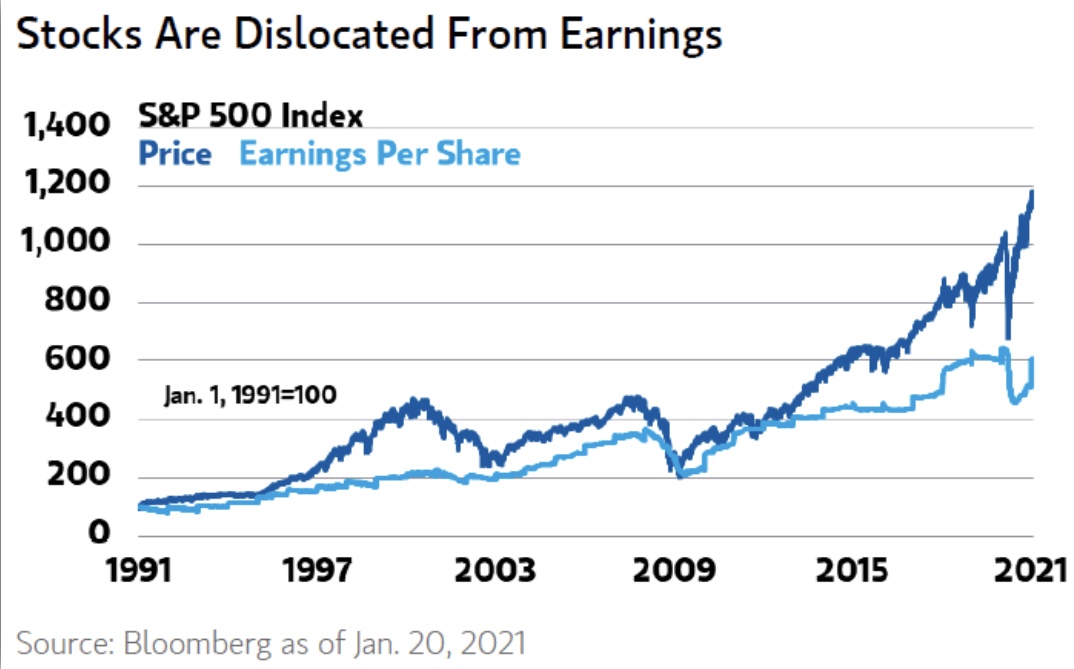
S&P500 price and earnings are highly correlated, with the price occassional fluctuation. There is a clear divergent during the 1900s (dot com bubble), 2008 (housing bubble) and now epic high due money printing. Over time the earnings and the price will converge, either the earnings improved or the price go down.
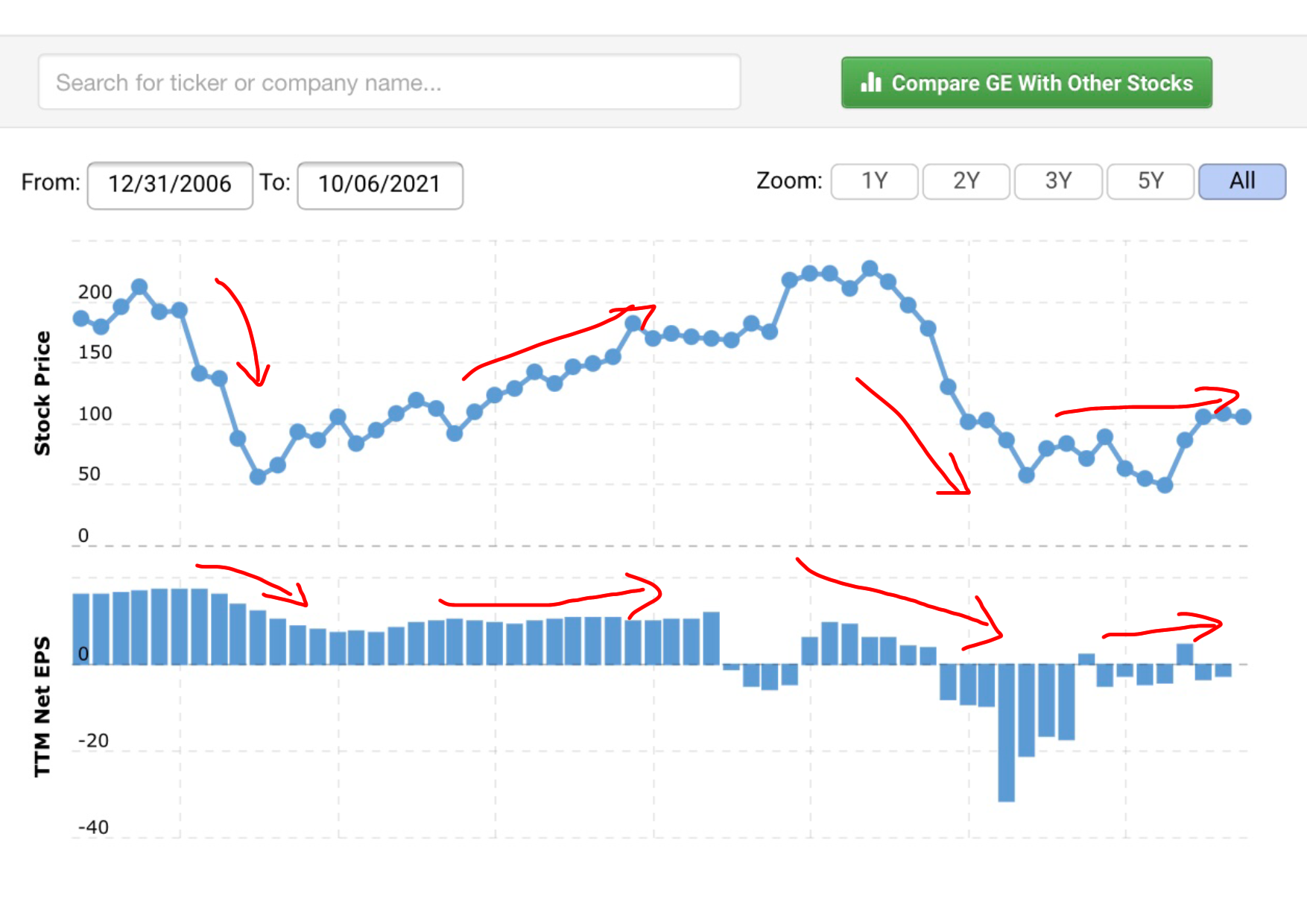
Another example below showing the correlation between GE's earnings and the stock price. Thus if you focus on earnings, you are investing in a buisness and it make investing much easier. You are a buisness owner and the earnings are your stock market returns.
Power of Compounding and Dividend Re-investing
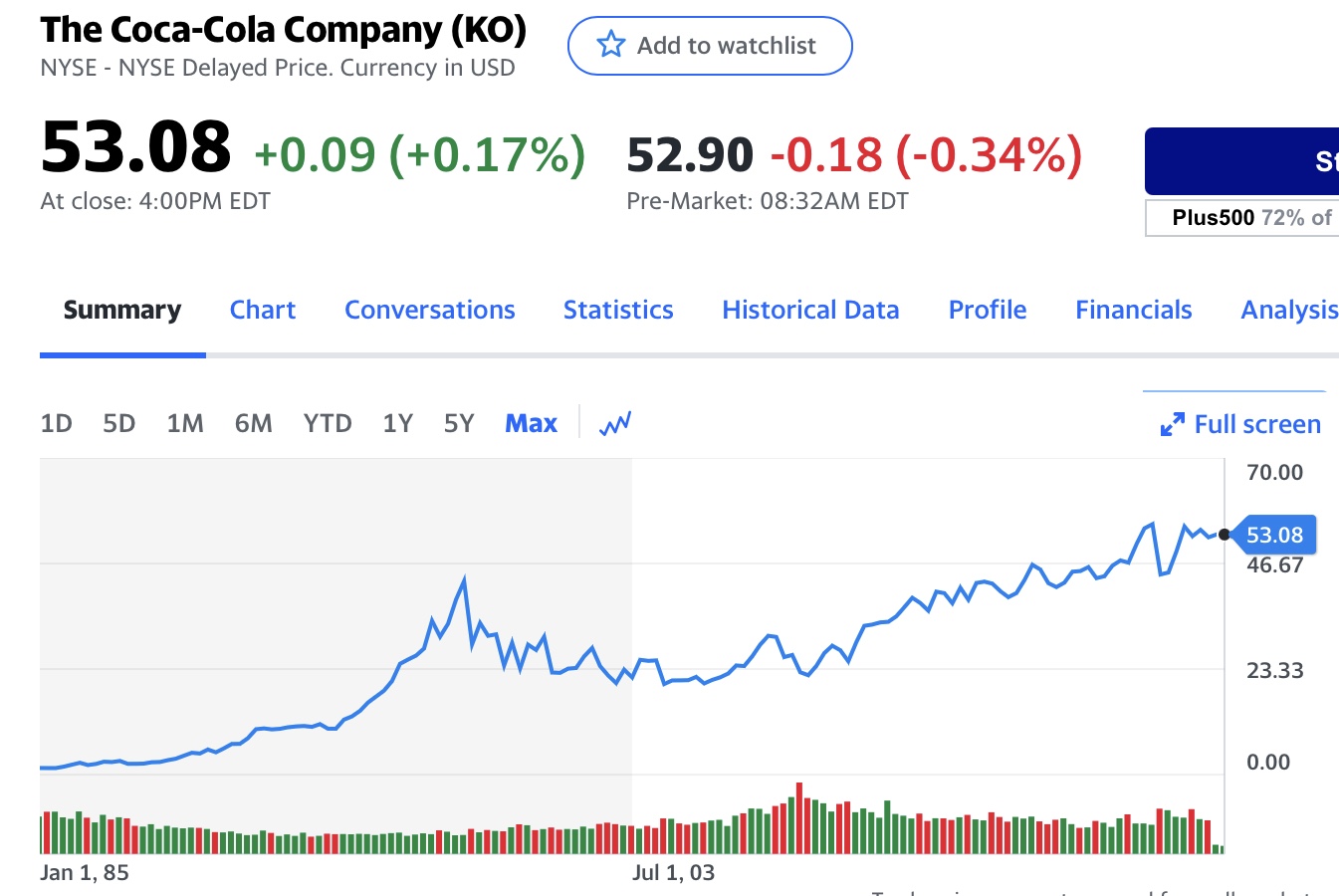
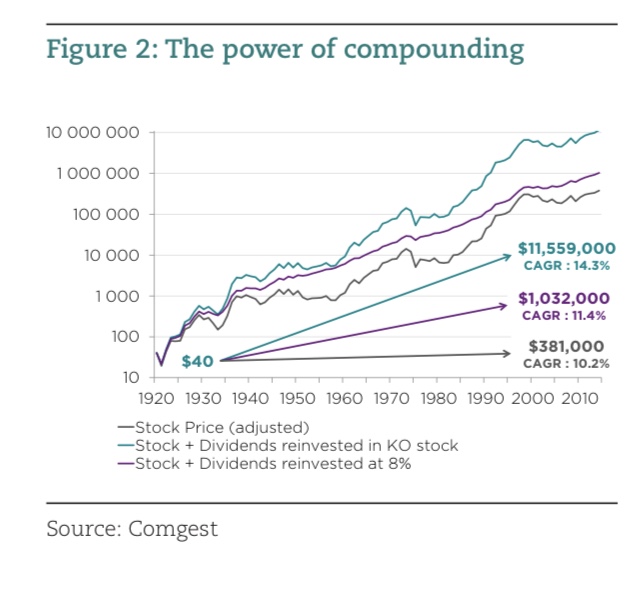
Sometime company can distribute the earnings in the form of dividend to the investors. Coca-Cola IPO in 1919 @$40 per shares, over the years Coca-cola had done a total of 11 stocks splits. 1 shares are equivalent to 9216 shares today. $40 invested in Coca-Cola will be compounded to $489,185, excluding dividend. With dividend re-invested the portfolio would have grown to $11.5 millions (2013) with an initial investment of 1 shares at $40.
Price-to-Earning Ratio
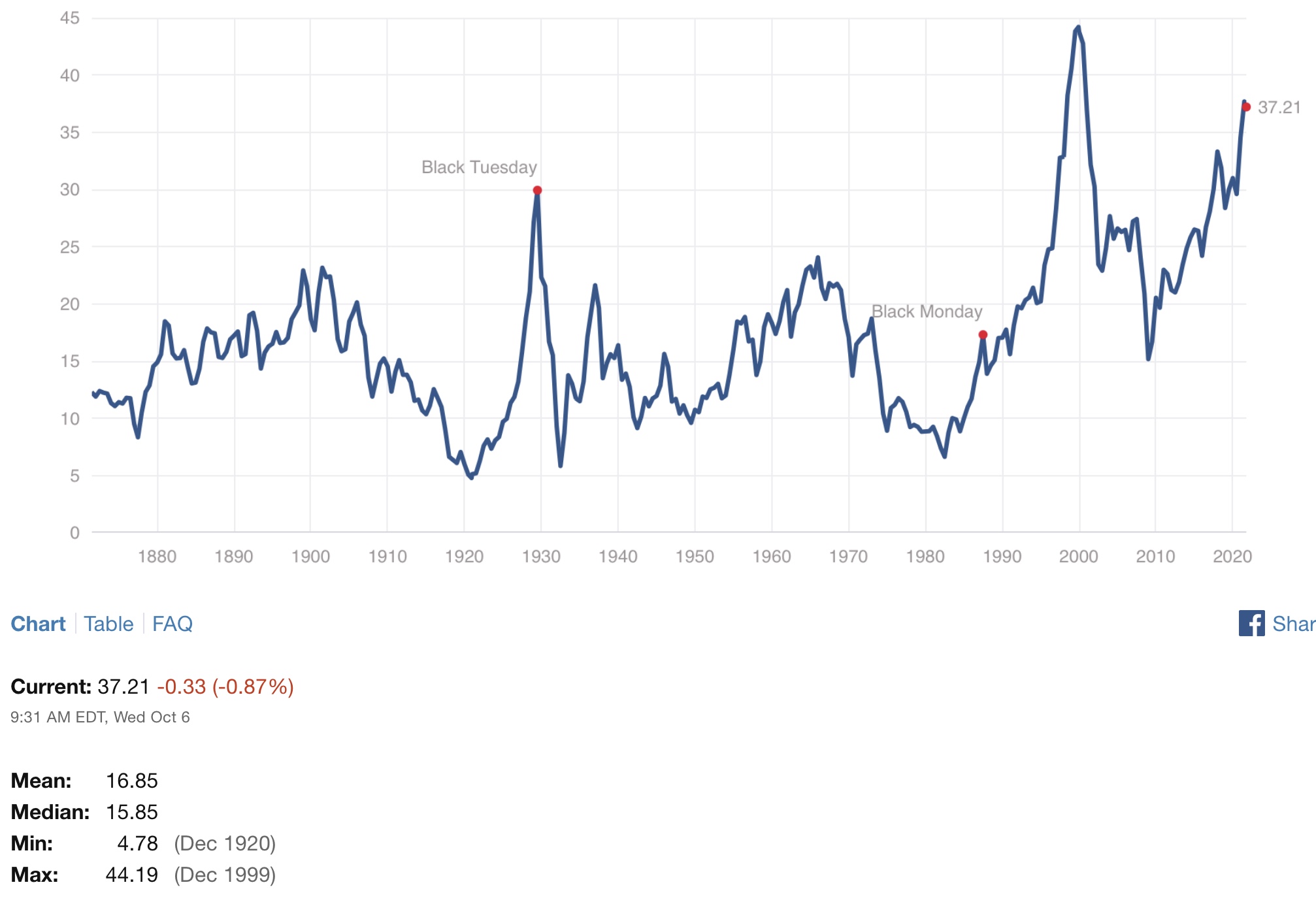
PE ratio have an important role in the returns but a shorter term compared to earnings. Whenever, there is a divergent between the price and earnings, the PE ratio will spike. The Shiller PE ratio (CAPE- cyclical adjusted PE), which taken account of the 10 years average earning of S&P500 (below image), shows S&P500 is currently trading at 37x of earnings compare to the median is 15x, this expansion drive returns. However, price and earnings will converge over time and there are only 2 ways.
Investing perspective- Intrinsic value
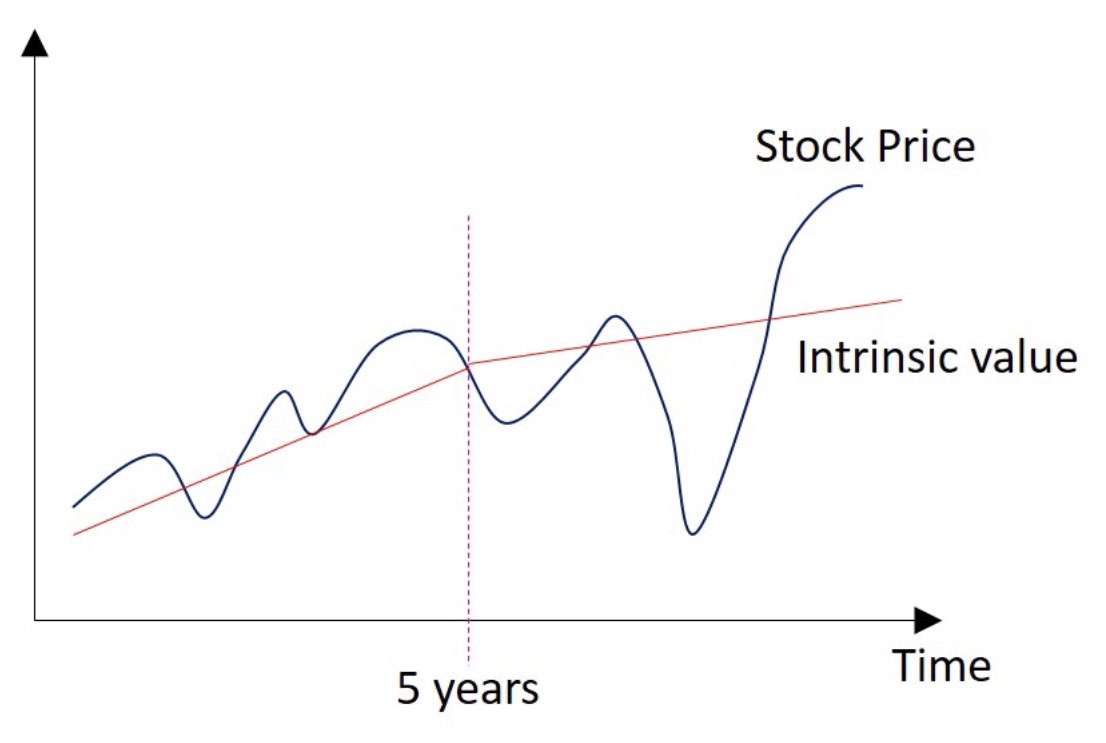
“Intrinsic value is the number that you get if you can predict all the cash the business can give you between now and judgement day, discounted at a proper discount rate.”
I'll let Buffet explain.
https://www.youtube.com/watch?v=Bxqre8vPYBo&t=294s
The purpose of determine the intrinsic value is not to time the market but to bulid a watchlist of stocks you wanted to invest so that you can look through which are the stocks that provide most value (long-term) when DCA or lump sum.
The Concept
Calculating intrinsic value is not a precise method to value a stock, but there isn't any method that is precise anyway. However, it is one of the best way to compare investment opportunities by comparing their respective intrinsic value. The idea is to project the earnings at an estimated growth rate over a period of time, typically 10 years, at a discounted rate to forecast the earnings line then multiply by a terminal multiple (P/E)
Usually when calculating intrinsic value Free cashflow are used instead of earnings, Net income (earnings) is an accounting term and can be manipulated, while free cashflow is much harder. For a stable company, free cashflow and earnings are mostly in line. For those not yet profit company, we may use net income to project.
Example: Google
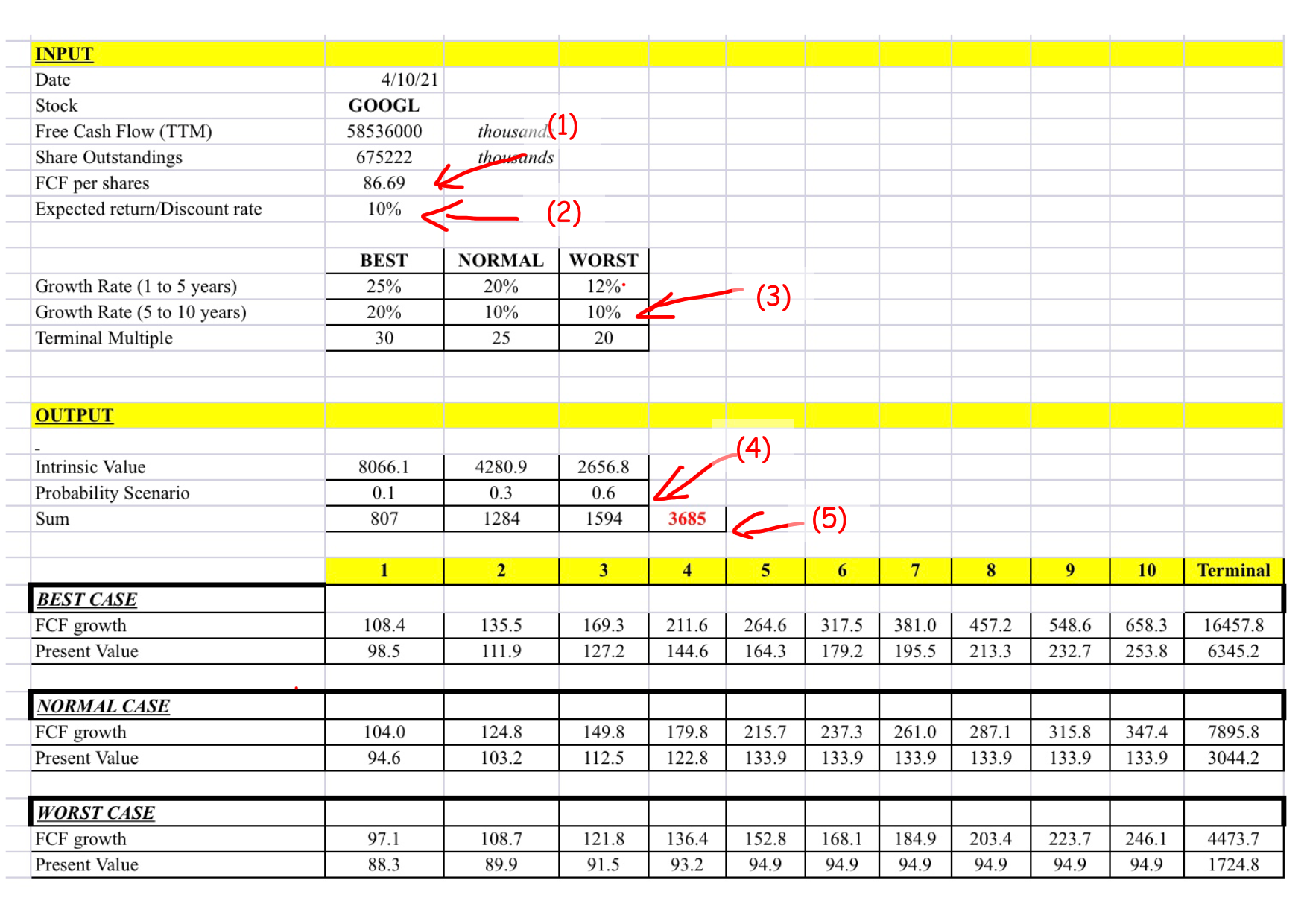
1) From the yahoo finance, we can find FCF and number of shares, then we can find FCF per share
2) Discount rate. Some may say use the US risk free-rate, some may say use WACC, to keep it simple always use 10% (your expected returns or long term S&P returns)
3) You may enter your assumption in the table using past data to forecast.
As you can see the calculation are all based on individual assumptions. The intrinsic value will be different for everyone. Thus, i separate into, Best, Normal, Worst case to have a perspective.
https://www.macrotrends.net/stocks/charts/GOOGL/alphabet/pe-ratio
4) Then how probable each case going to turn out. Using 10%, 30%, 60% for Best , Normal and Worst case respectively. To cope with the uncertainties.
5) Then the final weighted intrinsic value $3685. This price does not mean the google is worth this price, it just mean if you want an expected returns of 10%, you should buy at this price.
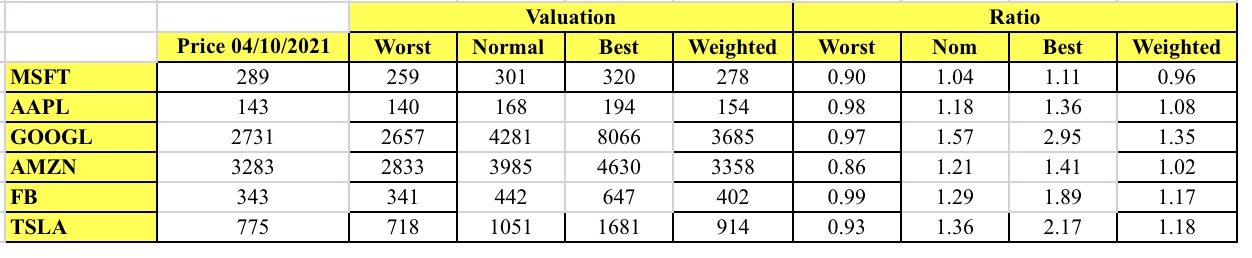
6) Then compare the weighted value with the current stock price and GOOGL have a ratio of 1.35 meaning if i buy at the current stock price there is a potential of 13% returns compared to other companies. With a optimistic returns of 29% and worst case 9% to give a perspective of risk and reward.
Conclusions
1) Always focus on earnings when invest with buisnesses for long-term
2) There is no precise way to value a company. It is based on individual assumptions and expected returns. Any investment can 10x if your assumption is very optimistic, but a good investor is to be conservative.
3) But always have a process so you will not overcome by emotion, same go for passive investing, stick to the plan. Consistent is king.
Question:
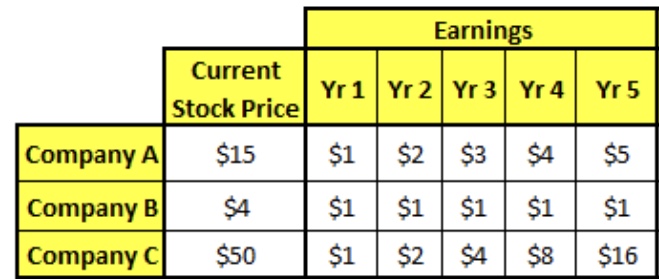
Assuming there are only three companies, if we have a "crystal ball" and we are able to predict how much earnings for the next 5 years. (1) As a buisness owner, which is a better investment? (2) If your time horizon is only 5 years will the choice still be the same?
Comments
425
7
ABOUT ME
Deal with your problem by being rich
425
7
Advertisement
No comments yet.
Be the first to share your thoughts!