Advertisement


OPINIONS
What Is a Rider in Insurance and Should You Add One?
Riders offer valuable, tailored protection despite added cost.
This post was originally posted on Planner Bee.
Insurance policies in Singapore often allow you to add a rider. A rider is an extra feature you attach to your base plan to extend coverage in ways that suit your needs.
Your main policy, whether it is life insurance, an Integrated Shield Plan (IP), or a critical illness plan, covers the essentials. Riders provide customised additional protection in areas that matter to you.
Whether it is worth adding a rider depends on your health risks, family responsibilities, and budget. Adding riders will increase premiums, but they will provide additional coverage, such as reducing out-of-pocket costs during hospitalisation when added to a medical insurance. For many, this extra cover brings peace of mind.
The difference between base plans and riders
A base insurance plan gives you the core protection.
For example, MediShield Life covers major hospital bills in subsidised B2/C wards. An IP adds higher coverage limits and access to private hospitals or better-class wards. A term life insurance policy pays a lump sum to your beneficiaries when you pass away.
Riders build on this foundation. They can limit deductibles and co-payments under an IP, or provide a payout from your term life insurance if you are diagnosed with a critical illness.
In short, your base plan covers the essentials, while riders add targeted protection that reflects your personal needs.
Benefits of adding riders to an existing insurance policy
Reduced financial burden
Riders under IPs can help limit out-of-pocket medical bills. For example, an IP with a rider that caps co-payments may reduce your maximum annual out-of-pocket cost to about S$3,000.
Without it, you could face much higher out of pocket costs for treatment in private or A-class wards. This makes large hospital bills easier to manage.
Peace of mind
A waiver of premium rider ensures your policy is active if you are unable to work due to illness or disability. For instance, if you are diagnosed with cancer and cannot continue paying, the insurer waives your premiums while your cover remains in place. This ensures you do not lose protection when you need it most.
Flexibility across life stages
Riders let you adjust your policy as your needs change. A young parent might add a critical illness rider to secure funds for childcare and household expenses if illness strikes.
Someone approaching retirement might prefer a hospital cash rider, which pays a daily allowance during hospital stays to offset living costs. Riders allow you to tailor cover without buying a new policy.
Read more: How To Make a Nomination for Your Life Insurance in Singapore
Insurance riders worth considering in Singapore
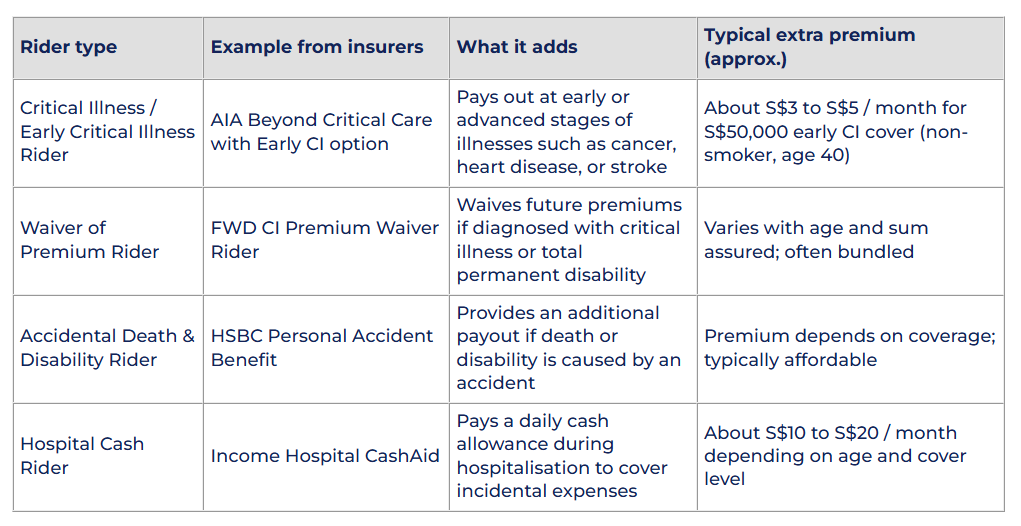
Critical illness rider / Early critical illness rider
This rider provides a lump sum if you are diagnosed with a critical illness such as cancer, stroke, or heart disease.
An Early Critical Illness Rider provides cover at earlier stages, when treatment costs are lower and recovery chances are higher. For example, an early-stage cancer diagnosis could trigger a to cover specialist fees and replace income during recovery.
Types of policies you can add to: Whole life, term life
Waiver of premium rider
If you become permanently disabled or critically ill, this rider waives your premiums while keeping your policy in force. For a family breadwinner, this prevents the risk of losing cover at the most critical time.
Types of policies you can add to: Whole life, term life
Accidental death and disability rider
This rider provides an extra payout if death or disability results from an accident. It is especially relevant for people who drive often, ride motorbikes, or work in higher-risk occupations such as construction. The additional benefit can help families manage expenses if the main income earner is seriously injured.
Types of policies you can add to: Whole life, term life, personal accident
Hospital cash rider
This rider provides a daily cash allowance for each day spent in hospital. The benefit is flexible and may be used for transport, meals, or to replace lost income during recovery. It is especially useful for self-employed individuals who do not have paid medical leave.
Types of policies you can add to: Whole life, term life, personal accident
Examples of insurance riders in Singapore
Read more: How To File for Critical Illness Insurance Claims and Steps To Take Note Of
How to choose the right riders
Begin by assessing your risks and financial priorities. If your household depends on your income, a critical illness rider or waiver of premium rider may provide more value than an accident rider. If you drive frequently or ride a motorbike, an accidental death and disability rider could be more relevant.
Next, review what your base plan already covers. Many Integrated Shield Plans (IPs) provide partial protection against hospital bills. Adding the wrong rider could mean paying twice for similar benefits.
It is also important to weigh long-term affordability. Rider premiums may look modest at first, but they rise with age and can add up significantly. Finally, compare policies across insurers. Definitions of illnesses, payout triggers, and exclusions vary, so never choose on price alone. Always read the fine print before making a decision.
Common mistakes to avoid
- Buying unnecessary riders. Some riders sound appealing but only add value if they address a real risk in your life. Match a rider to your needs instead of collecting extras.
- Underestimating long-term costs. Premiums often increase with age. Over time, the total you pay for riders can be much higher than expected.
- Not reviewing coverage regularly. A rider that fits your needs in your 20s may be less useful in your 50s. New priorities, such as hospital cash or enhanced critical illness cover, may emerge later. Review your policy regularly to keep it relevant.
Are riders worth it?
Riders are not essential for everyone, but when chosen carefully, they can add meaningful protection. They let you shape your insurance to suit your lifestyle, health risks, and financial responsibilities, often at a lower cost than buying separate policies.
The key is to understand what your base plan covers, identify the gaps that matter, and add only the riders that fill those gaps. Make sure the extra premiums remain affordable as your needs and circumstances change over time.
Read more: Everything You Need to Know About Standalone Cancer Insurance
Comments
54
19
ABOUT ME
Your Personal Mobile Financial Advisor Application Join us at telegram! https://t.me/plannerbee
54
19
Advertisement
No comments yet.
Be the first to share your thoughts!