Advertisement


OPINIONS
The Hidden Costs of Group Travel and How To Travel Smart
Group travel is not always cheaper. Understand hidden costs so you can make smarter spending decisions together.
This post was originally posted on Planner Bee.
Travelling with friends, family, or colleagues often sounds ideal. Shared meals, familiar company, and the excitement of exploring somewhere new together.
On paper, group travel promises convenience and cost savings. After all, splitting accommodation, transport, and tours should lower your expenses, right? In reality, group travel is far more complex.
While it can be deeply rewarding, it often comes with hidden costs that travellers only notice once unexpected expenses and logistical frustrations pile up. These costs are not purely financial. They also include lost time, emotional strain, and missed opportunities.
Here’s a closer look at what drives up the true cost of group travel, and how to minimise it.
1. The compromise premium
One of the most overlooked costs of group travel is compromise.
Every group includes different travel personalities, the budget traveller, the foodie, the night owl, the early riser, the planner, and the spontaneous wanderer. The more diverse the group, the more adjustments everyone must make.
How compromise increases costs:
- Paying for activities you would normally skip.
- Upscaling meals to suit one person’s preferences.
- Choosing taxis or private transport over public options for convenience.
To reduce this, align expectations early. Discuss budgets, travel styles, and non-negotiables before booking anything. Build optional segments into the itinerary so people can split up when preferences differ, and agree on general dining guidelines to avoid pressure spending.
2. Unequal expense splitting
Few things damage group harmony faster than money disputes. Expenses that appear simple often become complicated when people have different consumption habits.
Common problem areas:
- Shared groceries or snacks, despite unequal consumption.
- Ride-hailing when some prefer public transport.
- Accommodation upgrades driven by individual preferences.
Use an expense-tracking app to keep everything transparent. Agree on splitting rules before the trip and choose accommodation with flexible room arrangements so each person pays for what they actually use.
3. Hidden accommodation costs
Group accommodation often looks affordable upfront, but additional charges can add up quickly.
Hidden fees to watch for:
- Extra bedding or guest charges.
- High cleaning fees for large properties.
- Parking fees when renting multiple vehicles.
- Security deposits that become contentious if damage occurs.
Always review the full cost breakdown before booking. In some cases, booking smaller units or hotel rooms instead of one large group property can reduce stress and improve sleep quality.
Read more: Best Credit Cards in Singapore for Travel and Rewards
4. The “slow group syndrome”
Larger groups move more slowly. Checking in, ordering food, navigating transport, and deciding on plans all take longer. This inefficiency often translates into direct financial loss.
How delays increase costs:
- Missing discounted time slots
- Paying surge prices after long deliberation
- Resorting to taxis instead of trains
- Rushing attractions and losing value
Set clear meeting times and appoint a timekeeper if needed. Allow smaller groups to split off and reconvene later. This keeps the itinerary moving without making the trip feel rigid.
5. Conflicting schedules and last-minute changes
Not everyone commits to an itinerary equally. Sleep preferences, procrastination, and unspoken expectations often lead to sudden changes.
Hidden costs include:
- Cancellation fees
- Higher walk-in prices
- Paying extra for alternative plans
- Wasted non-refundable tickets
Only lock in activities that everyone genuinely wants to do. Collect small deposits for reservations to increase commitment. Even a modest upfront cost encourages follow-through.
6. The social pressure premium
Group dynamics often lead people to spend more than planned. Even budget-conscious travellers may give in to avoid appearing difficult.
Common pressure points:
- Agreeing to expensive meals or bars
- Shopping more because others are buying souvenirs
- Paying for convenience to match the group
- Joining optional activities to avoid missing out
Be upfront about your budget early. Offer affordable alternatives instead of rejecting plans outright, and remember that a polite no is better than overspending and feeling resentful later.
7. Emotional toll and missed experiences
Group travel also carries emotional and experiential costs. Constant compromise, slow decision-making, and money tension can drain enjoyment and energy.
Hidden non-financial costs:
- Resentment over spending
- Frustration with indecision
- Fatigue from constant compromise
- Guilt about holding others back
- Missed solo moments or spontaneous detours
Protect your well-being by scheduling downtime and normalising solo activities. Reserve at least half a day for personal exploration and include individual non-negotiables in the itinerary.
Read more: The Ultimate List of Travel Hacks for the Budget-Conscious Traveller
A practical breakdown of group travel costs
Breaking down common group travel costs reveals how small, often overlooked expenses can quietly inflate your overall travel budget.
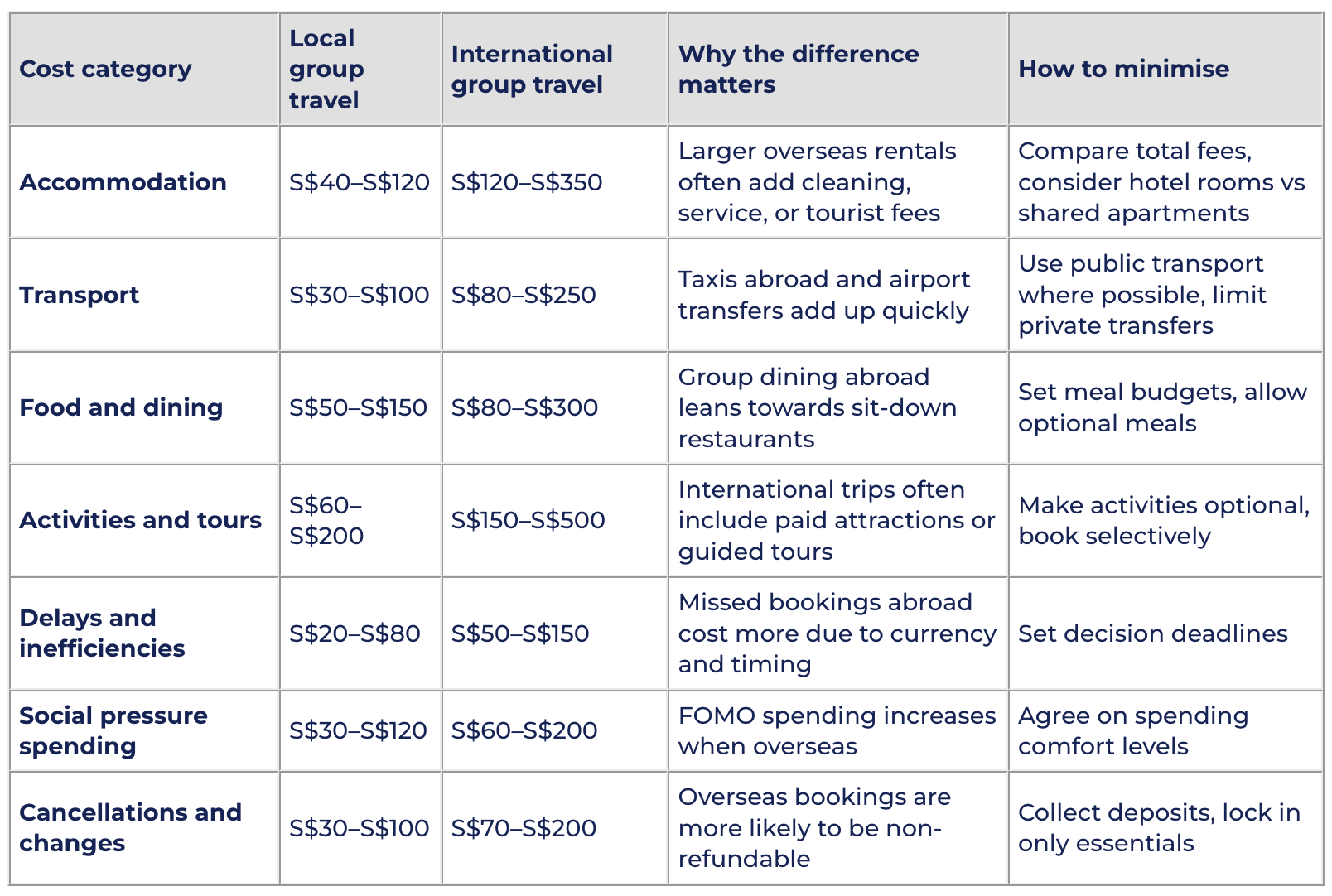
Estimated hidden group travel costs
- Local group travel: S$260 to S$870 per person
- International group travel: S$610 to S$1,950 per person
Notes: Estimates are per person for a 4–6 person group, over 4–5 days. Figures are illustrative averages based on typical travel patterns, not guarantees.
Read more: 5 Ways To Ensure Your Travel Insurance Claims Get Approved
How to travel in a group without overspending
Group travel does not become expensive by accident. Costs rise when expectations stay unspoken, decisions drag on, and spending boundaries remain unclear.
If you want to keep group travel costs under control, take action before the trip begins:
- Set a clear per-person budget early, and confirm that everyone is comfortable with it.
- Agree on non-negotiables (accommodation standards, transport preferences, must-do activities).
- Make plans flexible, with optional activities instead of all-or-nothing bookings.
- Track expenses in real time to avoid resentment and confusion.
- Normalise splitting up occasionally so no one feels pressured to overspend.
During the trip, check in regularly. If plans start to drift or costs creep up, adjust quickly instead of pushing through frustration.
The best group trips are not the cheapest or the most perfectly planned. They are the ones where expectations are clear, spending feels fair, and everyone has the freedom to enjoy the journey in their own way.
Plan with intention, communicate early, and your next group trip can be memorable for the right reasons, not because of the bill at the end.
Comments
10
2
ABOUT ME
Your Personal Mobile Financial Advisor Application Join us at telegram! https://t.me/plannerbee
10
2
Advertisement
No comments yet.
Be the first to share your thoughts!