Advertisement


OPINIONS
STI ETF: THE END OF THE BEGINNING?
This article covers both technicals (top) and fundamentals (btm) of one of the hottest ETF in Singapore.
Check us out at https://dpivotal.wordpress.com/ for more financial content!
STI ETF (ES3.SI), probably the mostly talked about ETF in Singapore. Today, we will be taking a deep dive exploring whether the STI ETF is worth buying at its current price and its potential future outlook.
Technicals
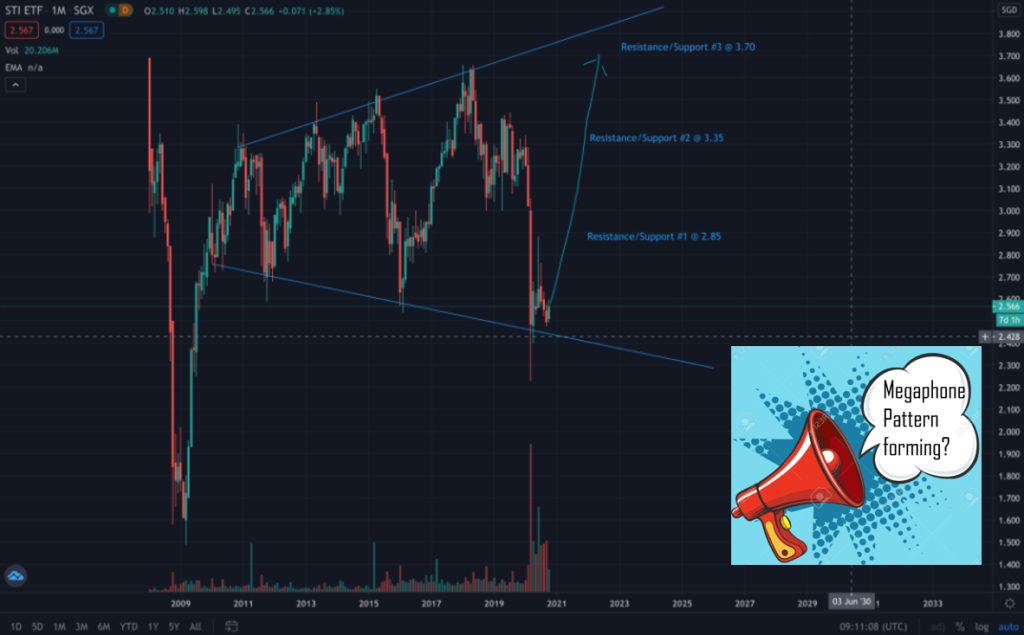
At the current price of 2.566, it seems that STI ETF is at a steep discount right now. For the past 10 years, it has been trading in a broadening wedge pattern. From the chart, we can see that current prices are near the bottom wedge support line and even made a 10 year low at around 2.25. We see major upside potential in the next 2-3 years ahead. There are 3 major resistance levels that the STI have to overcome, with first resistance at around 2.85, second resistance at around 3.35 and finally 3.70, which will propel the STI to test its record high before the Great Financial Crisis in 2008. Also, on the assumption of the Elliot Wave theory, the STI have just completed the 5-3 wave pattern and a bull trend to start the cycle again is very likely.

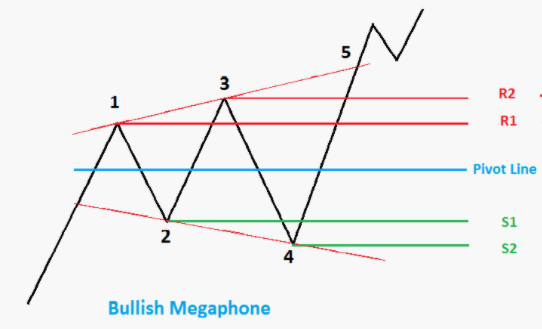
The STI ETF is currently trading in a megaphone pattern. The pattern is generally formed when the market is highly volatile in nature and traders are not confident about the market direction. Normally this pattern is visible when the market is at its top or bottom. The greater the time frame is better the pattern will work.
Things to look out for in the pattern.
- Volume
Volume plays an important role when it comes to the recognition of this pattern. In the Megaphone Top, volume usually peaks along with prices.An increase in the volume, on the day of the pattern confirmation is a strong indicator.
2) Underlying Behaviour
When the pattern is forming it represents that the bulls and bears are fighting to build control of the stock.The pattern takes place when the bulls take the prices higher.
At the time of formation of the Megaphone Top, then again, bears make the prices fall because of which lower lows are formed.
Trading Conditions and how to trade them.
Megaphone pattern is known to give multiple trading opportunities to the trader.
A trader can trade Megaphone pattern as
Breakout Trades
Swings trades (while making higher highs and lower lows)
When the Price fails to give a breakout.
Breakout Trades

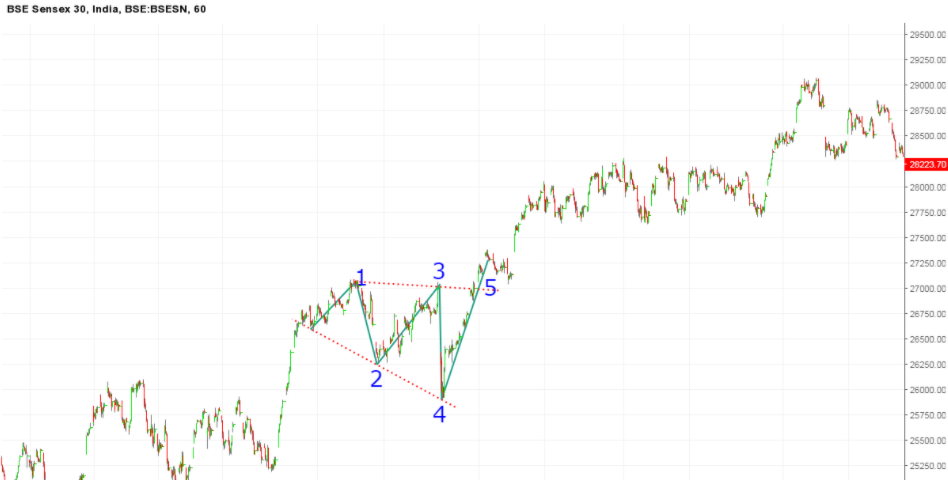
[This is the chart of July 2016 Sensex. As we can see the market was in a strong uptrend. From the beginning of June, the pattern started taking shape and finishes in one month. The trend remains in an upward direction after price breaks the upper line of the pattern (Point number 5) .]
When the price breaks the trend line after making the 5th swings and closes outside the pattern, a breakout is confirmed. Breakout may happen in positive or in a negative direction. Depending upon the market condition and the position of the pattern in the chart, bullish and bearish breakout happens.
After a prolonged bull run, when this pattern is formed at the top and the price closes below its lower trend line, then it acts as a trend reversal pattern.
But, if the price closes above the higher trend line and makes new higher highs in the chart then it will be termed as a Continuation Pattern.Traders can take a trade when price closes outside the pattern (in whichever direction) to get the best possible confirmation of the breakout.
Swing Trades
Though this is a Geometrical pattern, it has a tendency to respect Fibonacci levels. Respecting and maintaining Fibonacci levels without respecting Pivot lines is not possible. So it is obvious that this pattern will have a certain line which will be its pivot line and accordingly resistance and support lines will also be there in that pattern.

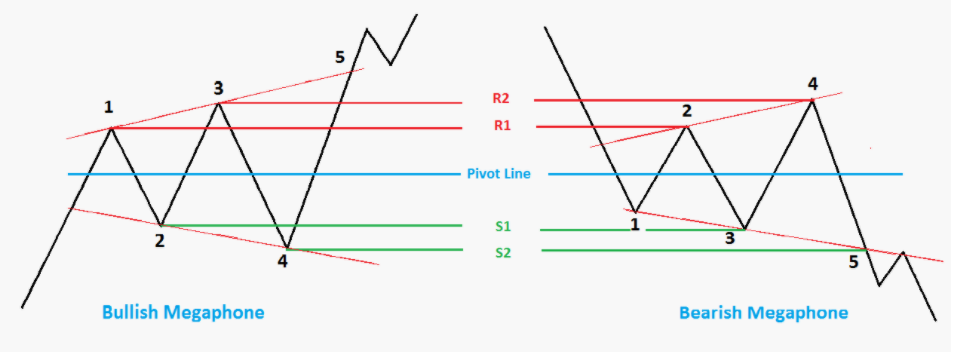
For long trades, RI and R2 may act as a probable resistance while S1 and S2 may act as a probable support for a short position.
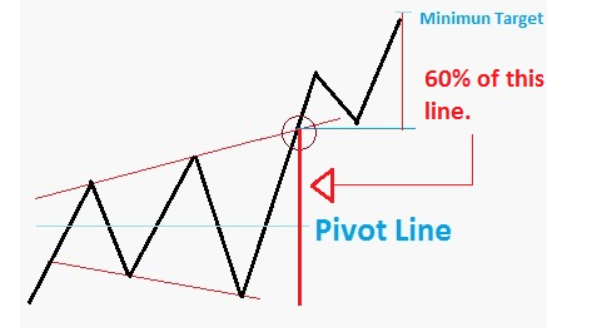
In case of breakouts finding the target is a bit tricky. Because it is nearly impossible to find out the perfect exit. But there is a way to make an exit. Generally, traders calculate the distance between two trend lines from the point it breaks and books partial or full profit when the price reaches 60% of that Redline (upside or downside) as shown in the figure.

Failures:
This pattern also can be traded when it fails however it is necessary to identify the failure perfectly. Now how to spot the failure?
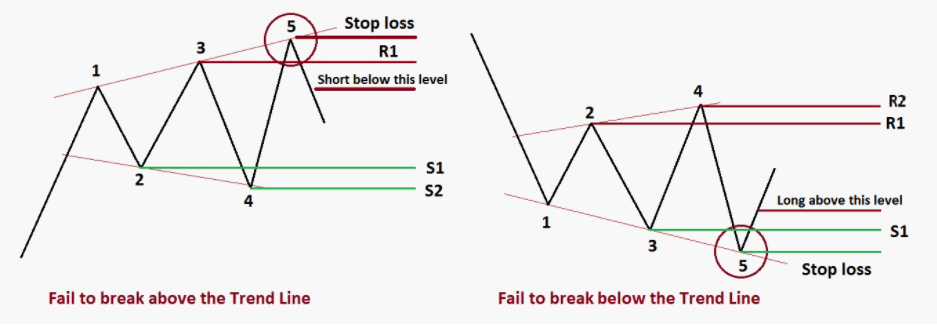

A failure can be spotted when it fails to break the trend line (upper or lower as the case may be) after completing the 5th swing.
Suppose in a bull market condition, this pattern is formed and if it fails to break the upper trend line, traders go short when the price goes below 3rd swing high (R2).
Similar is the scenario, when the market is in a bear phase and it fails to break lower trend line (S2), trader take a long position when price closes above 3rd swing high.
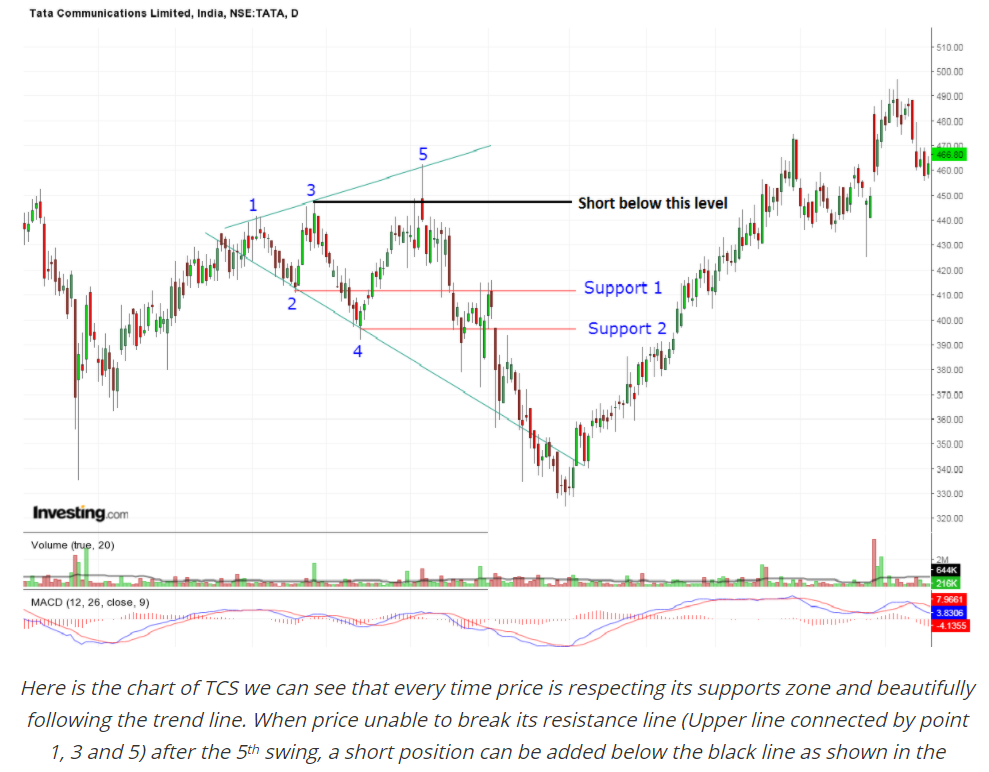

Patterns are easy to trade. But finding the pattern from the chart and identifying it properly is the main art of trading.
Sometimes only pattern is not enough to take best trading decisions you may need multiple indicators to identify better entry and exit points.
Fundamentals
However, it is important to note that the 3 banks, namely DBS, OCBC and UOB will continue to make up a significant portion of the STI. With the current COVID-situation, interest rates are expected to remain low for the next few years. Furthermore, the implementation of Basel III accord in the near future might further worsen the banks profitability in a low rate, low growth environment. This might hurt the banks profit margin and will potentially slow the growth of the STI's recovery.
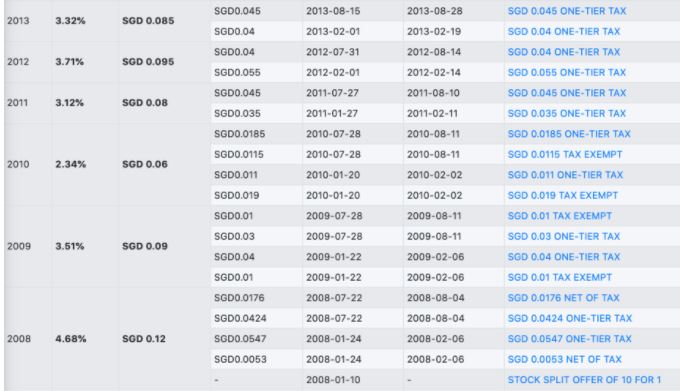
Another important aspect to look at is the dividend history of the STI ETF. For the past 10 years, there have been an steady increase in the dividend payout with the exception of 2020 due to the COVID-19 outbreak. However, a yield of 4.49% is still impressive despite the pandemic backdrop.

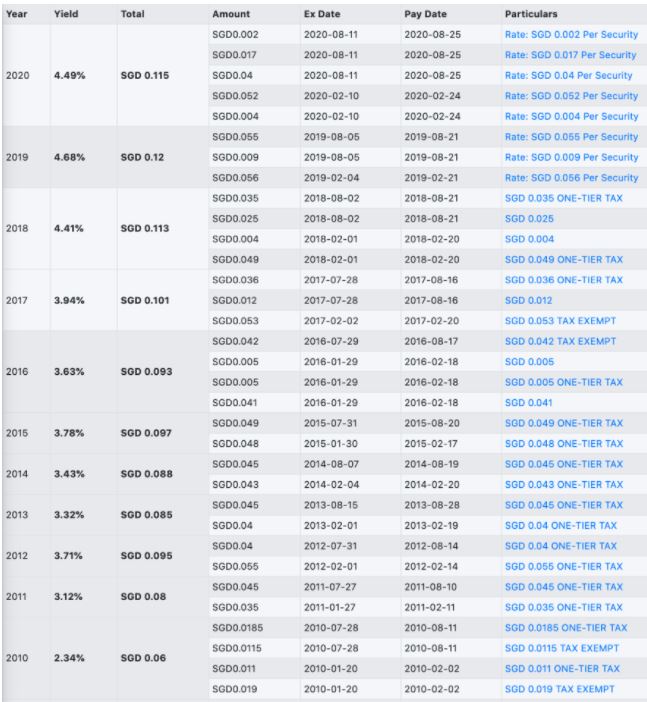
We are expecting a slight downward trend in yield as the effects of the COVID-19 slowly unfolds in the next 1-2 years. Firms are likely to cut dividend payments and hold more liquid funds in the event of a second, or even third wave of infection as future outlooks still remains unstable. Based on the table below, we can see that after the 2008 Financial Crisis, dividend yield have fallen from 3.51% to 2.34% in the next 2 years before its gradual recovery in 2011. Thus, we expect that yield for 2021 will be around 3.5% to 4.2%.

On the bright side, Singapore continues to be a regional sweetheart for major investments and corporations relocating. One such example is ByteDance, the parent company for the viral app, TikTok. The setting up of head office in Singapore no doubt proves that investors still have strong confidence in the stability and governance of Singapore. This might directly or indirectly present opportunities for companies in the STI in the form of projects and new ventures. In the near future, we also expect the constituents of the STI to have some slight changes, with REITS rising up to take the spots and also, holding a heavier weightage composition.
Conclusion: We know that when the STI ETF is mentioned, general comments includes "Doesn't go up", "Keeps on dropping" etc. However, we believe that fundamentals should come first to determine whether if an asset is even worth buying. Then, using technical analysis for entry and exit points. At the current price, it is definitely a bargain as we are looking at a potential upside of 10 to even 30% in just price appreciation alone in the coming years despite a foreseeable lower dividend yield. If you are someone who is risk-averse or investing for retirement, the STI ETF might be a good option to add in to your portfolio.
Disclaimer: This analysis is just for educational purposes and does not constitute to any financial advice given.
Comments
1298
0
ABOUT ME
Pivotal is founded by two young aspiring investors/traders dedicated to deep analysis of equities.
1298
0
Advertisement
No comments yet.
Be the first to share your thoughts!