Advertisement


OPINIONS
Singapore’s High-Demand Jobs in 2025 and How To Qualify
Getting ahead in Singapore is less about the job you choose and more about how willing you are to keep learning.
This post was originally posted on Planner Bee.
Singapore is known for its strong economy and vibrant city life, but its job market is changing faster than ever. As the world moves towards digital, sustainable, and high-skill industries, the most sought-after jobs in 2025 include both new roles and modern twists on traditional careers.
Whether you’re a fresh graduate, a mid-career professional, or planning to future-proof your career, this guide will help you understand the job landscape with confidence.
If you have ever asked yourself, “Where are the best opportunities? Which skills will help me stand out?” you are in the right place.
Snapshot: The top sectors driving job growth in 2025
Singapore’s job market is evolving, but certain industries are leading the way.
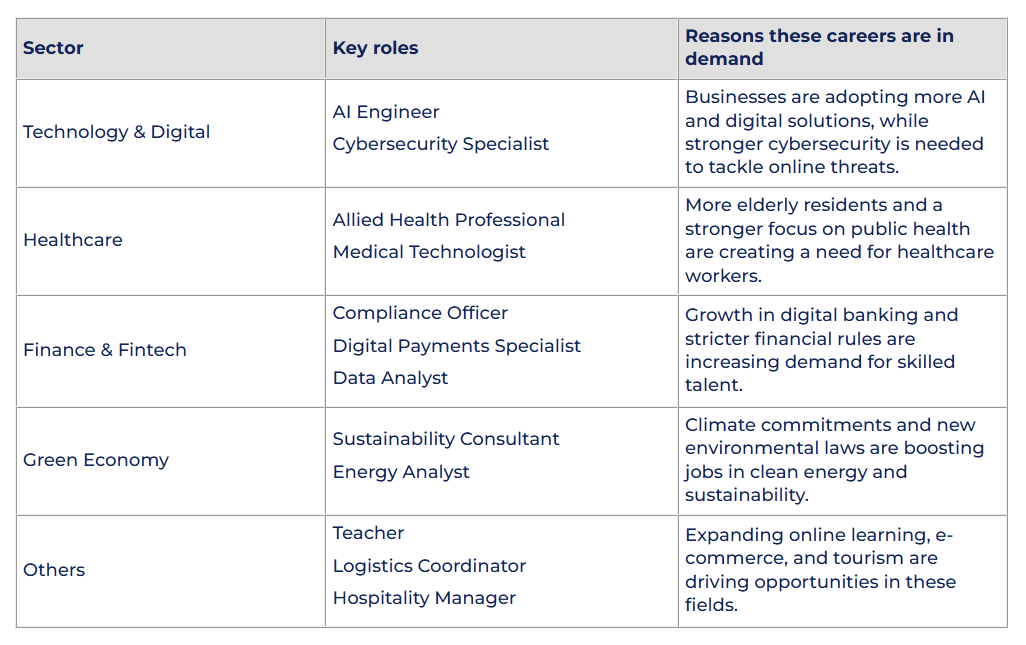
Here are the sectors to watch:
Technology and Digital
AI engineers, cybersecurity specialists, and data scientists
If you love gadgets, coding, or problem-solving, the technology sector could be a strong career path. In 2025, demand for AI engineers in Singapore, data scientists, and cybersecurity specialists is expected to keep growing. Employers are looking for experts who can build smarter applications, protect sensitive data, and turn large datasets into useful insights.
In-demand skills in tech
- Programming: Proficiency in Python, Java, or C++ is essential.
- Cloud computing: Skills in AWS, Azure, or Google Cloud create strong career opportunities.
- Cybersecurity awareness: Understanding cyber risks is now a basic requirement.
- Data analytics: Turning data into useful insights is highly valued.
Healthcare and Life Sciences
Essential medical and allied health positions
Healthcare remains a stable career path. In 2025, Singapore will see rising demand for allied health professionals, including radiographers, therapists, and clinical researchers. These roles extend far beyond doctors and nurses.
Must-have skills in healthcare
- Patient care: Empathy and clear communication are key.
- Technical competence: Ability to operate medical technology and maintain accurate records.
- Interdisciplinary skills: Working effectively across different departments.
Many people worry about emotional burnout or the cost of retraining. However, hospitals and polyclinics are offering more flexible work arrangements and financial support for training.
Finance and Fintech
High-paying roles in banking and digital payments
Banking is evolving beyond traditional roles. Growth areas include digital payments, compliance, risk management, and financial technology.
Key skills for finance professionals
- Digital literacy: Using data tools and automating processes.
- Regulatory knowledge: Keeping up to date with MAS guidelines and global regulations.
- Analytical skills: Interpreting financial data to identify trends and risks.
Green economy and sustainability
Emerging sustainability careers
Singapore is accelerating its shift towards sustainability. Careers such as sustainability consultant, environmental analyst, and green finance manager are becoming more common.
Skills powering the green sector
- ESG knowledge: Understanding environmental, social, and governance principles.
- Project management: Delivering sustainability projects on time and within budget.
- Data interpretation: Analysing reports and sustainability metrics.
Read more: Singapore’s Green Plan 2030: How It Impacts Working Adults
Other fast-growing industries
Jobs and skills to watch
- Logistics: E-commerce growth is boosting demand for supply chain analysts and robotics operators.
- Education: There is a need for EdTech specialists and curriculum designers to support digital learning.
- Hospitality: As travel recovers, roles such as experience curator and digital marketing specialist are in demand.
Some fear that automation will replace jobs. In reality, most roles will require working alongside technology rather than competing with it.
Essential skills needed across all industries
No matter which industry you want to work in, some skills remain valuable everywhere.
Digital literacy and adaptability
You don’t need to be a software engineer to succeed at work. However, knowing how to use digital tools such as spreadsheets, basic data analysis, cloud platforms, and collaboration apps will give you an advantage. Employers also value people who can learn new digital skills quickly and adapt to change.
How to upgrade
- SkillsFuture Singapore provides many free and subsidised courses on topics ranging from Microsoft Office to basic coding and digital marketing.
- Community centres and libraries run digital skills workshops for all ages.
- Online learning platforms like Coursera and LinkedIn Learning let you earn certificates at your own pace.
Communication and collaboration
Strong communication means explaining ideas clearly, writing concise emails, listening actively, and working well in a team. This applies whether you are meeting in person or online. Employers in Singapore value people who can work well with colleagues from diverse backgrounds and communicate with confidence.
How to upgrade
- Take short courses in business communication, public speaking, or teamwork through SkillsFuture or local polytechnics such as Ngee Ann Polytechnic and Temasek Polytechnic.
- Join clubs like Toastmasters Singapore to practise public speaking in a supportive environment.
- Volunteer with community organisations to build collaboration and interpersonal skills through real-life experience.
Critical thinking and problem-solving
While technology can process large amounts of data, employers still rely on people to analyse situations, ask the right questions, and create workable solutions. Critical thinking helps you approach problems logically and respond effectively, even in fast-changing situations.
How to upgrade
- Join hackathons or case competitions organised by universities or professional associations.
- Attend workshops on design thinking, a popular problem-solving approach in many industries. The Singapore University of Social Sciences (SUSS) and Singapore Management University (SMU) offer such programmes.
- Read widely and challenge yourself with puzzles or brain teasers to sharpen your mind.
What jobseekers struggle with in Singapore
Jobseekers in Singapore often face two big challenges. The first is intense competition, not only from fellow Singaporeans but also from highly skilled foreign professionals. Many people worry about how to stand out to employers.
The second challenge is keeping skills current in fast-changing industries. This can be especially stressful for mid-career professionals who are concerned about being left behind as new technologies and job requirements emerge.
Key strategies for job seekers
Upskill and continue learning
Keeping your skills current is essential if you want to remain competitive. Take advantage of local resources such as SkillsFuture, join workshops, or enrol in short online courses related to your field. Even setting aside a few hours each week to learn something new can make a noticeable difference.
Develop your personal brand
Highlight your abilities by sharing projects or insights on LinkedIn, starting a simple blog, or taking part in industry discussions online. Being visible and genuine about your expertise can help you attract the attention of potential employers and recruiters.
Read more: How To Create the Perfect LinkedIn Profile
Use your networks
In Singapore, many roles are secured through referrals and professional contacts. Get in touch with past colleagues, attend networking events, or participate in professional groups within your industry. Even an informal chat over coffee can lead to valuable opportunities.
Preparing for a bright future in Singapore’s job market
The most sought-after jobs in Singapore in 2025 will offer strong prospects for those who are ready to learn, adapt, and act. Whether you want to work in technology, healthcare, finance, or the green economy, the right skills and mindset can help you succeed.
Stay curious, keep improving your abilities, and be willing to stand out. Your next opportunity could be closer than you think!
Read more: Smart Ways To Financially Plan for a Midlife Career Change
Comments
54
22
ABOUT ME
Your Personal Mobile Financial Advisor Application Join us at telegram! https://t.me/plannerbee
54
22
Advertisement
No comments yet.
Be the first to share your thoughts!