Advertisement


OPINIONS
Sector Investing: Seeking High Growth in Future Trends!
Ever wanted to get exposure to a particular industry that you were bullish on but didn't know which stock to pick? 💰
Chris
24 Mar 2021
Owner and Writer at Tortoisemoney.com
This article was first posted on my blog: TortoiseMoney!
Do check out my site if you're interested in more FIRE or investing related posts!
So you’ve understood Index Investing and you’ve built up a nice comfortable foundation of solid low cost, index funds. Your money-making machine is chugging along nicely and you’re adding money in every month like clockwork. But one day, you read this headline:
“The renewable energy industry is expected to reach $1,512.3 Billion by 2025, registering a CAGR of 6.1% from 2018 to 2025”
And maybe you’re thinking how you’d like to get some exposure to renewable energy. After all, climate change has become one of the main focuses of today’s governments and various measures are being put in place to transition into greener energies. In fact, many countries have elected to ban the sales of traditional ICE vehicles by as early as 2026.

Photo by Science in HD on Unsplash
Maybe you’ve also heard of some green energy companies such as Enphase Energy and Plug Power, but you’re not really sure how to evaluate them or how they stack up against their competition.
Well, fear not, this is where Sector Investing comes in handy for the average retail investor.
What is Sector Investing?
Sector Investing, is a practice in which investors invest into a particular sector, that is expected to be bullish, in order to take advantage of the upward trend in the sector.
But How Can I Take Part in This?
Well, Sector Investing can be done through the various ETFs available on the market. With the popularity of ETFs, many new ETFs have sprung up to meet the needs of investors that are seeking options to get into certain sectors, but do not have the necessary knowledge to evaluate specific companies in the sector.
Let’s take a look at some specific sector ETFs that have caught my eye in the last few months:
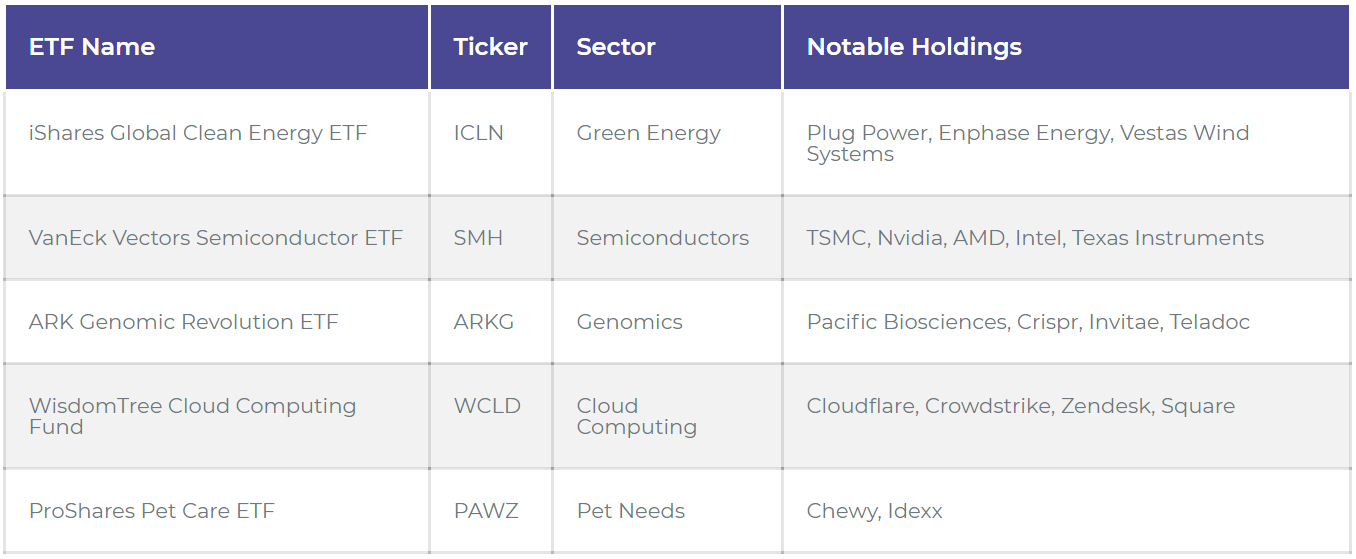
Many of the ETFs are in fast growing industries and indeed, many of them have had quite the run-up in the last 1 year. At the point that this post was written, the performance of the above ETFs are as follows:
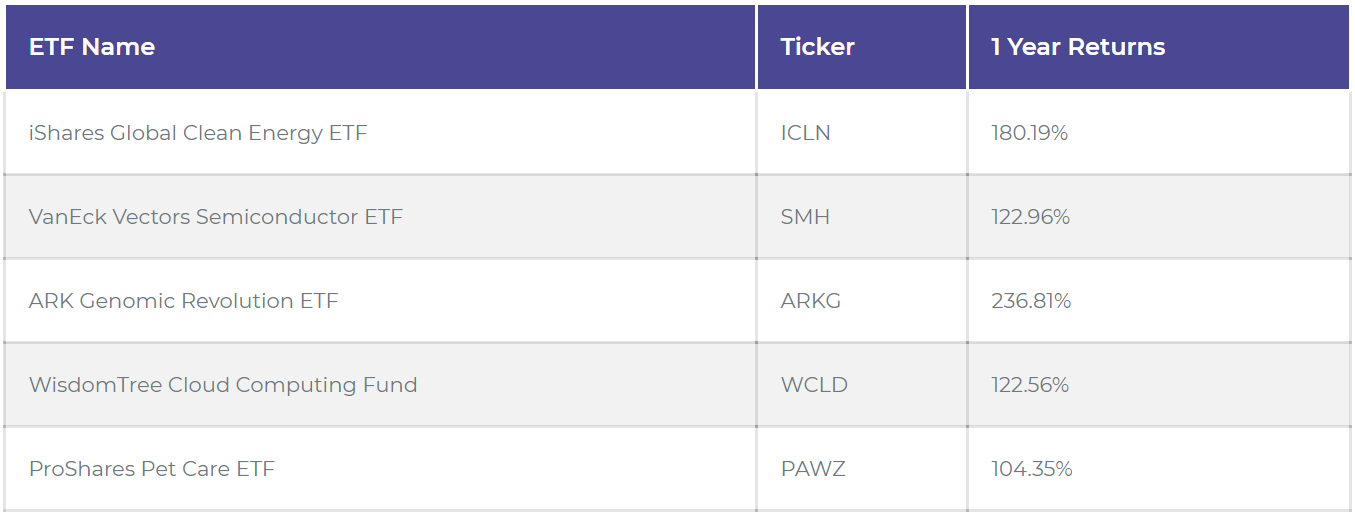
Impressive isn’t it?
This doesn’t mean that all sector ETFs do well.
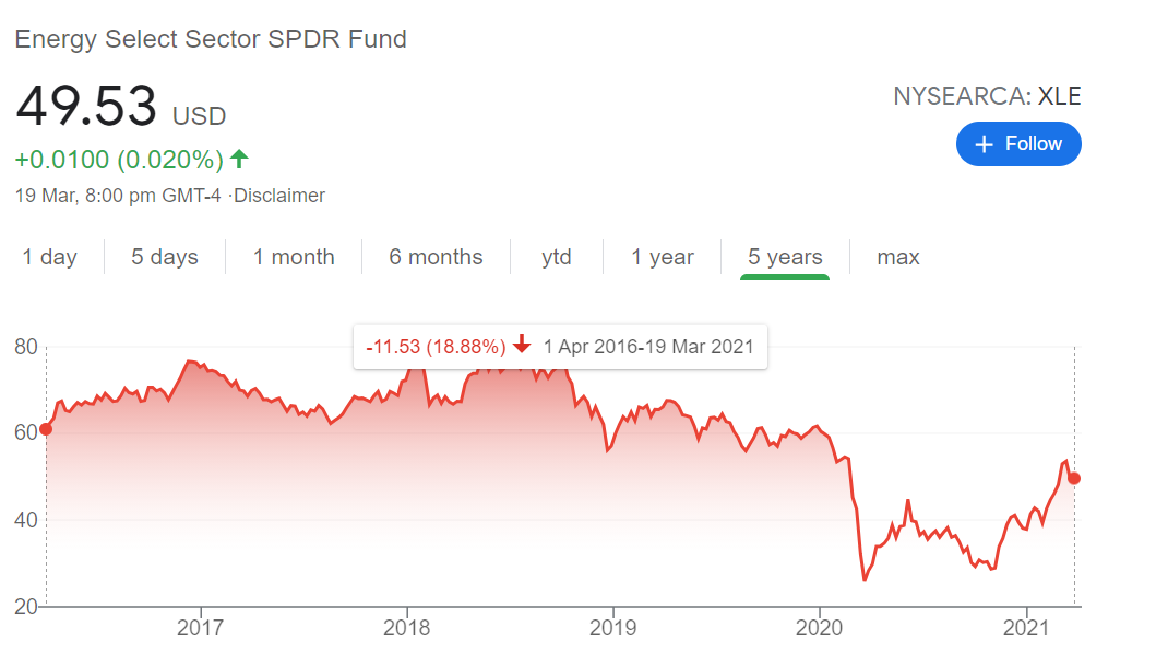
Sectors that don’t do well, such as those that are falling out of favour or those of sunset industries will, as expected, not perform as new and booming sectors. One fine example would be the oil industry, which has been taking a huge beating. The Energy Select Sector SPDR Fund (NYSE: XLE) was down more than 57% in the Covid-19 crash and is still down around 18.88% since 5 years ago!
Sector Investing Bridges the Information Gap
One of the main benefits of sector investing is the way that it bridges the information gap. I’m sure many of us are not particularly savvy about the tech that goes on behind genetic modification and genomics. Most of us probably can’t even get through some of the jargon that they use.

Photo by National Cancer Institute on Unsplash
Sector Investing allows us to invest into a particular sector without having intimate industry knowledge. As you can see from many of the earlier mentioned ETFs, many of such sector ETFs hold notable names as well as many of their competitors too. Hence, regardless of which one of the companies dominates eventually in the field, the ETF allows their investors to capitalise on the growth of all of the companies in the field.
That being said however, some research on the industry as well as on some of their top holdings will likely aid you in choosing an ETF that is in line with what you are looking for in a sector ETF.
Sector Investing Weeds Out the Losers
If you choose to invest in a particular stock in a sector, let’s say Invitae Corp (NYSE:NVTA) for the genomics sector, if Invitae ends up falling apart, you might lose a substantial portion of investment.
However, in an ETF, the losers will tend to form a smaller and smaller part of the holdings in the ETF as the ETF will rebalance itself regularly, based on the market cap of these companies. As such, the losers will get removed slowly while winners are kept as core holdings.
Closing Thoughts
Sector investing can be a good way to get some exposure to various sectors which may be facing tremendous growth in the upcoming years. It allows investors to get in without having too much in depth knowledge of the field and remain diversified across the key players in the sector. ETFs also rebalance regularly, which easily weeds out weak companies and keeps the stronger ones.
At the end of the day, while sector investing should not replace index investing in broad market indices entirely, it can be a useful tool for the retail investor to get a piece of the action in the fast growing industries that we can observe around us.
Photo by Patrick Hendry on Unsplash
If you found this article useful, do consider checking out my other articles at https://tortoisemoney.com as well as subscribing to my email list to get new articles straight to your mailbox!
Comments
134
1
ABOUT ME
Chris
24 Mar 2021
Owner and Writer at Tortoisemoney.com
I am a personal finance/investing blogger in my mid-20s, currently working in Accounting. Contact me at [email protected]!
134
1
Advertisement
No comments yet.
Be the first to share your thoughts!