Advertisement


OPINIONS
Portfolio Review (November 2024)
Portfolio Review (Tips to improve cashflow and achieve financial flexibility)
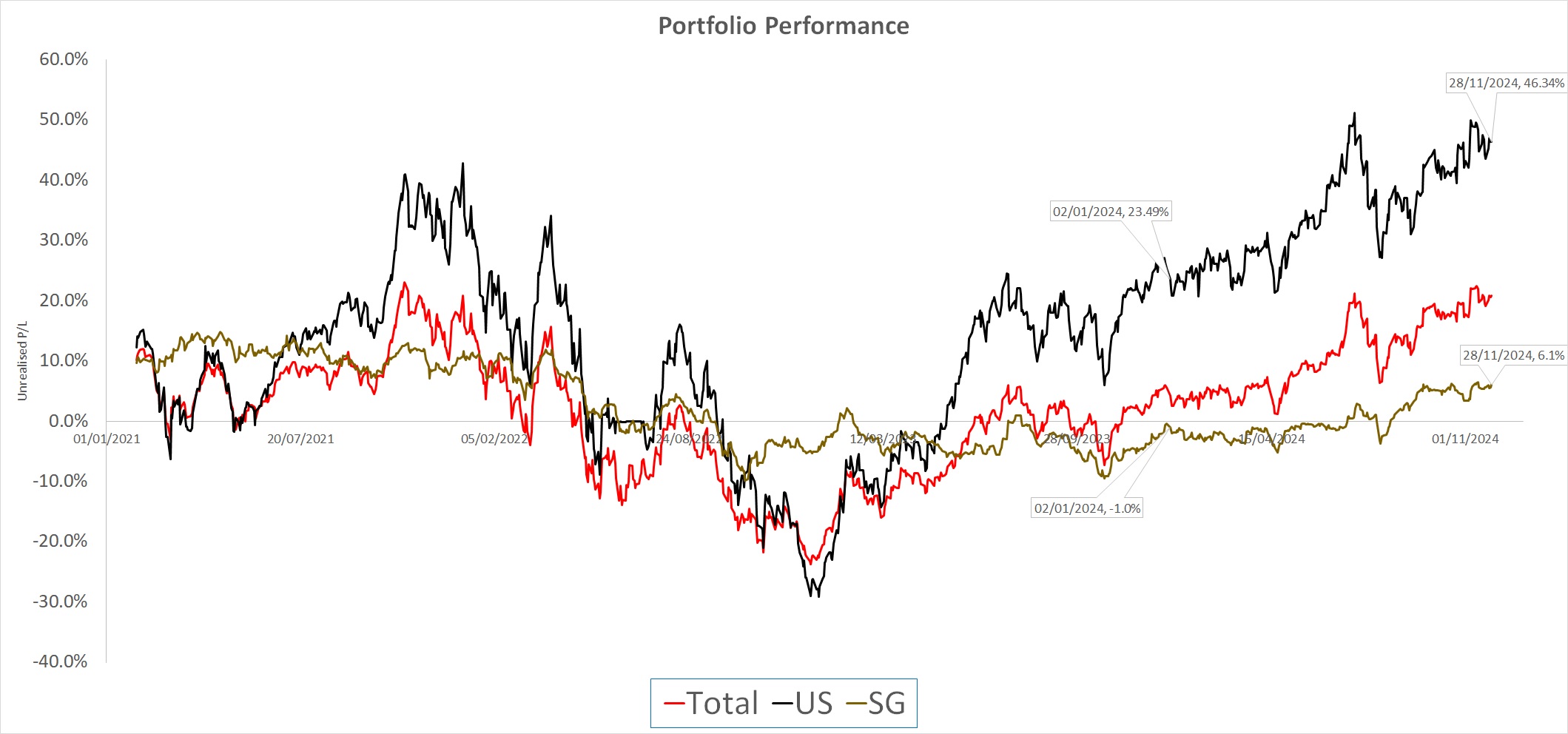
Review of my Portfolio (28/11/2024)
Total unrealized profit: + 20.8%
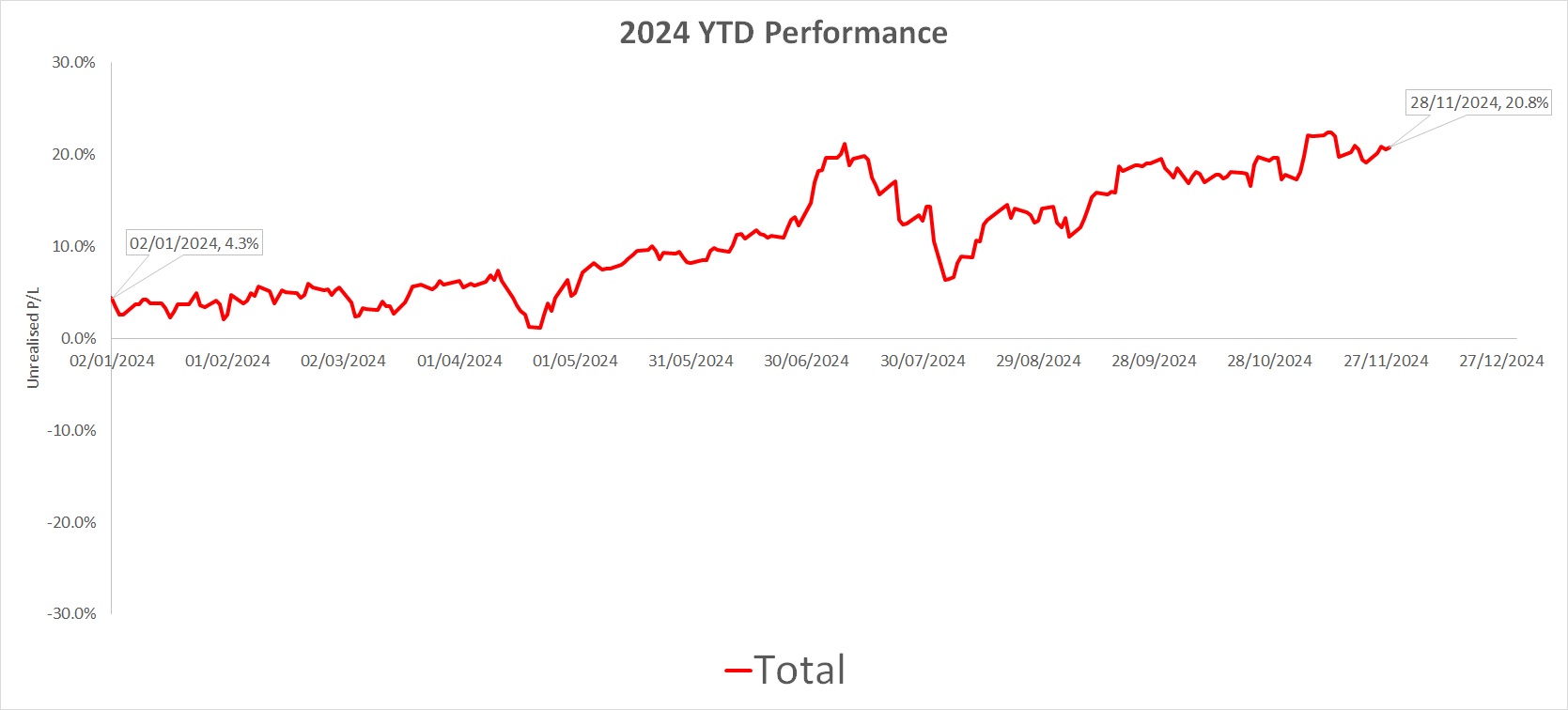
YTD performance: +16.5 %
Added in November
Goal 1: ( $ 69,001.91 / $ 81,594) ⚔️
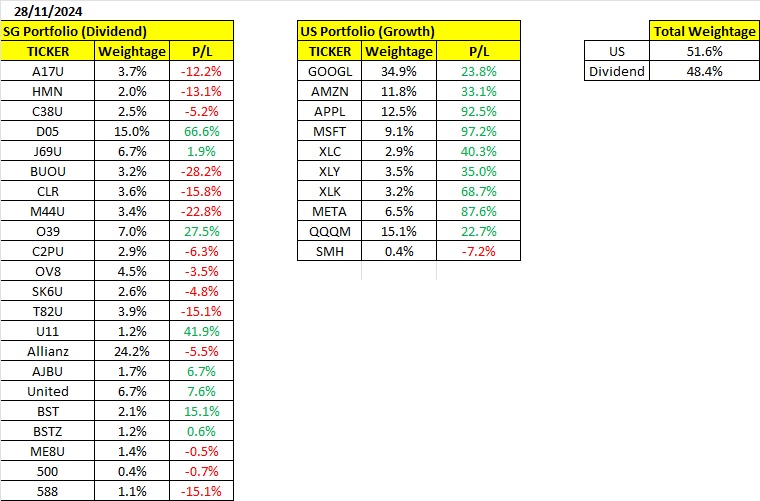
Growth Portfolio: GOOGL
Dividend Portfolio: AJBU, ME8U, BUOU, United Global Durable Equities
Portfolio Weightage
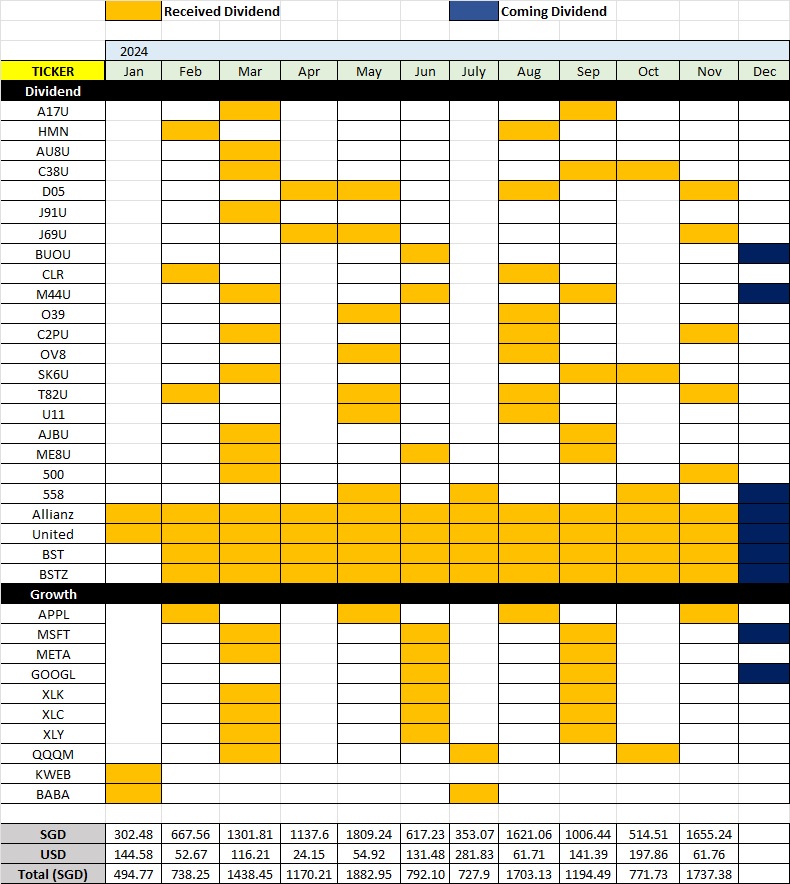
Dividend Recieved
Goal 2: ($ 12,651.36 / $ 14,212) ❤️
Dividend recieved in November = $ 1,737.38
Tips to Improve cashflow and achieve Financial Flexibility
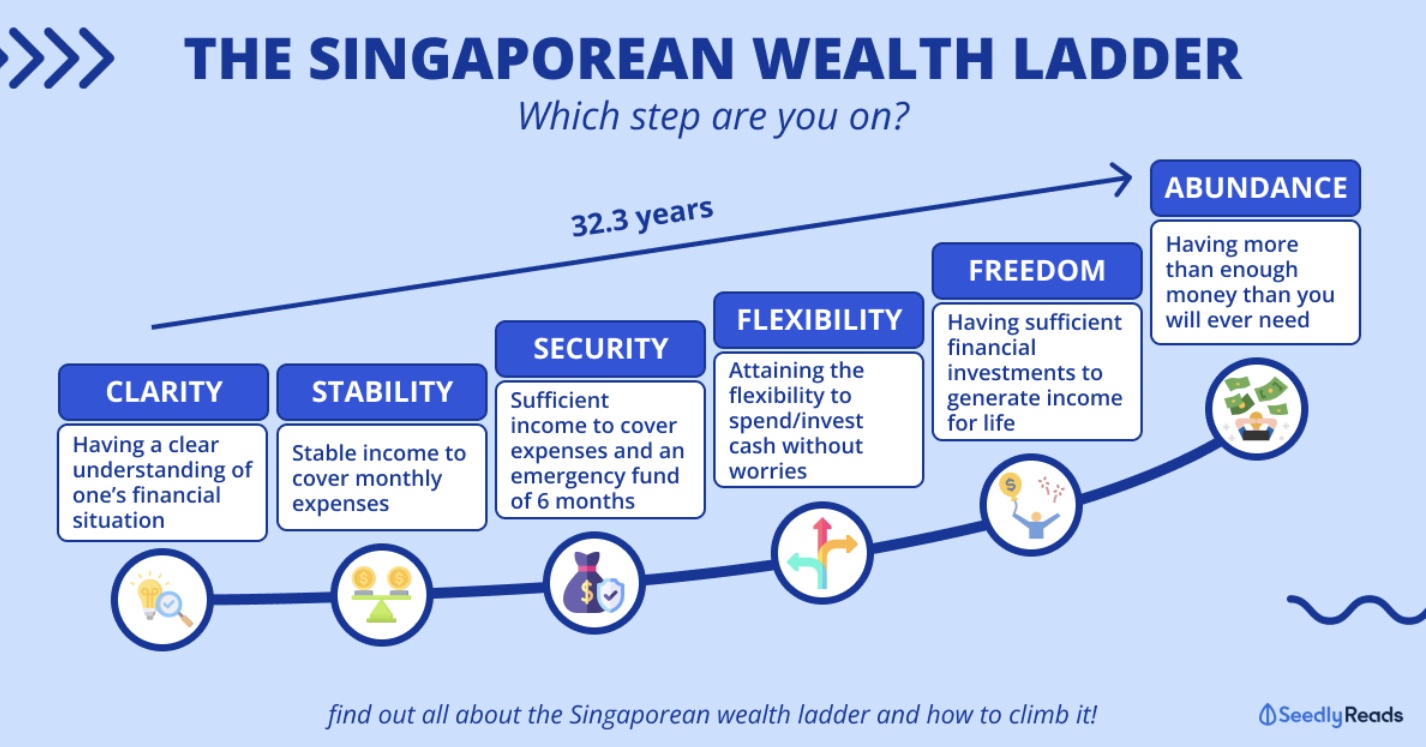
- The key to reach financial flexibility is to have plenty of buffer, graduate from budgeting and progress to cashflow management.
- You need 32 years to reach abundance if you follow convention wisdom.
1. Emergency Fund (Min. $100k for Married, $50k for Singles) & Build a passive income stream
- While the general guideline suggests having 3-6 months' worth of emergency funds.
- There are two category of emergency as mention previously.
- The pandemic highlighted the insufficiency of this amount, especially given the challenges of finding employment in a struggling economy.
- The 3-6 months of emergency fund is typically just enough to cover daily expenses in the event of income loss, serving as a temporary financial lifeline.
- However, we should also prepare for the unexpected events, a funeral and surgery for example may cost more than $10,000.
- This may happen to us or our dependents who need our financial support.
- Some may argue that a $100,000 emergency fund is excessive and that the opportunity cost of not investing it is too high.
- However, when our family member's life depends on the money, we'll be glad to have the cash on hand.
- A permanent solution to address the issue of income loss is to build a passive income source, while a cash reserve is for real life and death situation.
With this settled, we are ready to focus 💯 on wealth building without any worry.
2. A job is just an vehicle to achieve our goals
- It's crucial to remember that our jobs are not our identities.
- If we were to pass away tonight, our employer would likely advertise to fill our role by the end of the month and our kids will not be able to inherent the job.
- We work for money and cash is an enabler to help us achieve our goals.
- Doubling our working time will not double our income and our salary will never keep up with inflation.
- For average worker, it will take approximately 7 to 8 years for our salary to increase another $1,000, before CPF deduction.
If we want to expediate the wealth journey process, we cannot depend just on our salary.
3. Stop Tracking every Transaction, Is a waste of time!
- Many people who advise others to budget don't actually do it themselves.
- This is because it can be time-consuming to record every single transaction daily.
- Budgeting is often seen as a backward-looking process, where you review past spending to identify areas for improvement.
- This can sometimes lead to feelings of guilt or regret, motivating you to avoid similar spending patterns in the future
If we practice "pay ourself first" we would have already set aside money for saving / investment every month before spending.
- A simpler approach is to focus on three key numbers:
- Fixed costs: Essential expenses like rent, utilities, and loan payments.
- Investments: Regular contributions to retirement accounts or other investment vehicles.
- Savings: Funds set aside for specific goals, such as a vacation or a down payment.
By tracking these three categories, we can gain a clearer picture of our financial situation without the need for detailed daily tracking.
4. Credit Cards Rewards Are Not Free Money
- While personal finance YouTubers often have good intentions, their focus on credit card rewards can sometimes lead to unintended consequences.
- The allure of rewards can tempt people to spend more than they would otherwise, just to meet minimum spending requirements.
- This can easily lead to overspending and debt accumulation.
- Rewards are a form of compensation for spending your money with a particular credit card company.
- The value of those rewards is often less than the amount you spend.
By not chasing rewards, we can save more money, many cheap places, such as coffeeshop, don't use credit cards
5. Dont payoff the Mortgage so soon
- Many people choose to pay off their mortgages early primarily for peace of mind and to reduce interest cost.
- However, keeping a mortgage and investing the extra money can potentially yield higher returns.
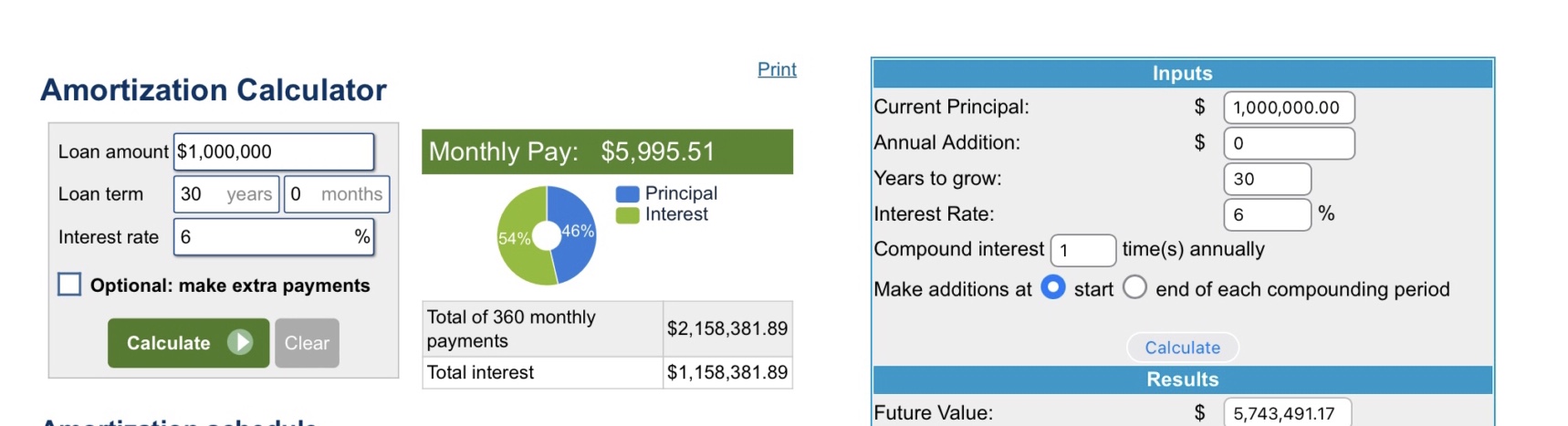
- For example, if we have $1 million in cash and a $1 million mortgage for 30 years at a 6% interest rate, we would pay approximately $1.15 million in interest over the life of the loan.
- However, if we invest that $1 million at a 6% annual return for 30 years, it could grow to approximately $5.74 million.
- Not to mention, the property that we own would also gone up in value.
- This is a very conservative assumption. Historically, the stock market has returned an average of around 10% per year.
- Additionally, interest rates are unlikely to remain at elevated levels indefinitely. So, the potential return on investment could be significantly higher.
- Paying off the mortgage can leave homeowners in an asset-rich, cash-poor position, where a significant portion of our wealth is tied up in the home equity, limiting our access to liquid funds.
6. Dont just invest in S&P500
- Investing in the S&P 500 offers significant diversification.
- While the S&P 500 primarily comprises U.S. companies, many of these firms generate a substantial portion of their revenue internationally, approximately 41%.
- Additionally, a global index typically has around 60% of its weightings allocated to U.S. companies, indicating the significant influence of the U.S. market.
However, to fully harness the power of compound interest, consistent investing is crucial. By regularly contributing to your investments, you can maximize your long-term returns.
- While the S&P 500 has a strong track record of long-term growth, it may not directly address our current financial situation.
- Dividend investing, on the other hand, can be a valuable strategy to improve cash flow by providing regular income from investments, increasing our financial security.
We can then choose to either reinvest these dividends back into our dividend portfolio to generate more cash, improve our current financial situation or invest them into the S&P 500 for future growth.
7. Insurance is a Temporary solution
- The Life Insurance Association (LIA) recommends coverage for Death and Total Permanent Disability (TPD) at 9 times annual income, and Critical Illness coverage at 4 times annual income.
- Medishield Life is a basic health insurance scheme provided by the government to cover hospital bills and outpatient payments.
- The purpose of insurance coverage is to protect against prolonged loss of income due to illness or to provide financial support for your family in the event of death.
- Term insurance is a type of insurance that provides coverage for a specific period of time, especially when you are young and have limited assets.
- It typically covers you up to age 65, and some policies may allow renewal after that.
- Premiums tend to increase as we age because the likelihood of a claim increases.
- As our liabilities decreases, wealth increases and our kids become independent, the need of coverage decreases.
- Remember, insurance only pays out when something bad happens, whereas building our own portfolio can provide returns even in the absence of adverse events.
- Having an insurance come with a cost so dont get over-insured.
- Also the payout from a plan that we intend to leave for our kids when we are dead will be relatively lower compare to investment portfolio.
- Our investment should be the one that eventually take care of us and our family.
Previous Review
Comments
136
4
ABOUT ME
Deal with your problem by being rich
136
4
Advertisement
No comments yet.
Be the first to share your thoughts!