Advertisement


OPINIONS
Portfolio Review (March 2024)
Portfolio Review
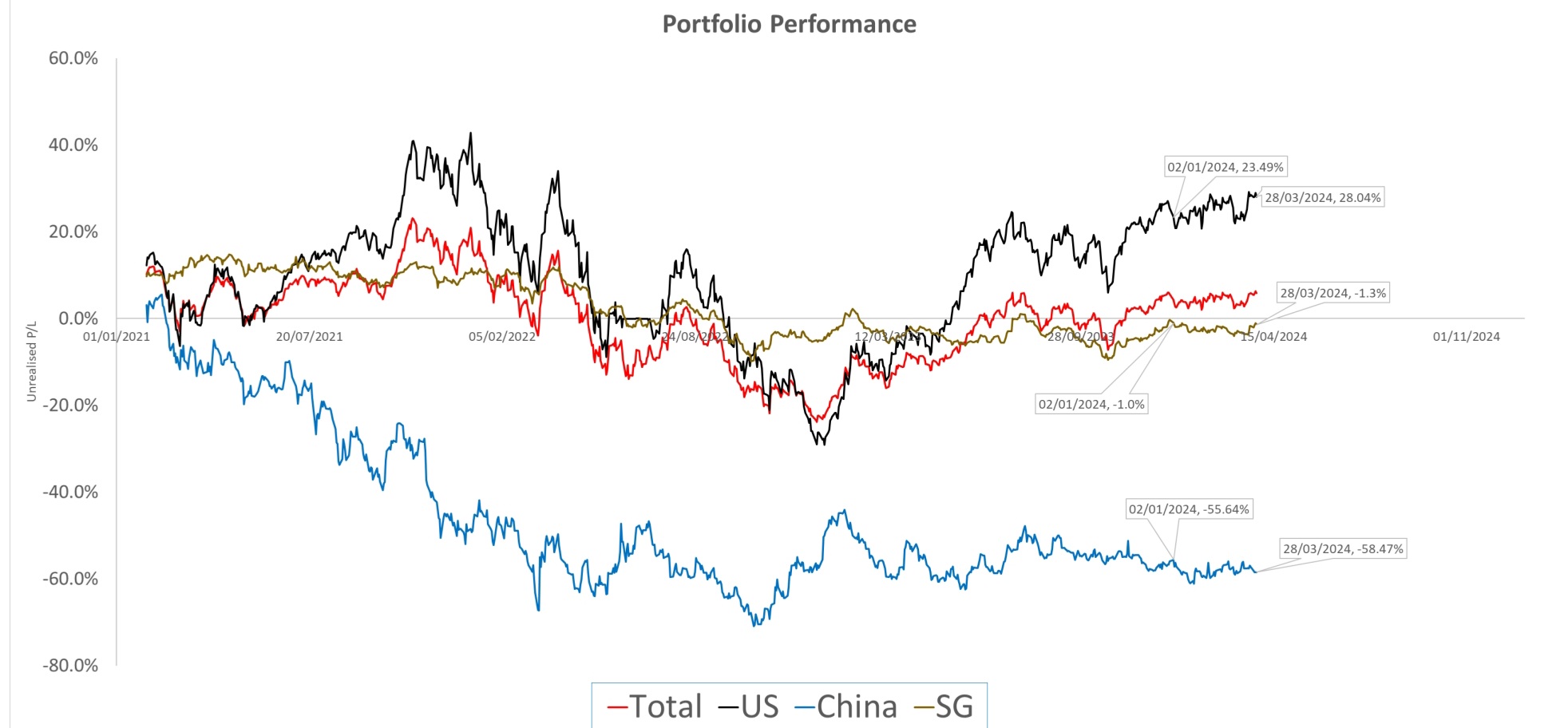
Review of my Portfolio (31/03/2024)
Total unrealized profit: + 5.8%
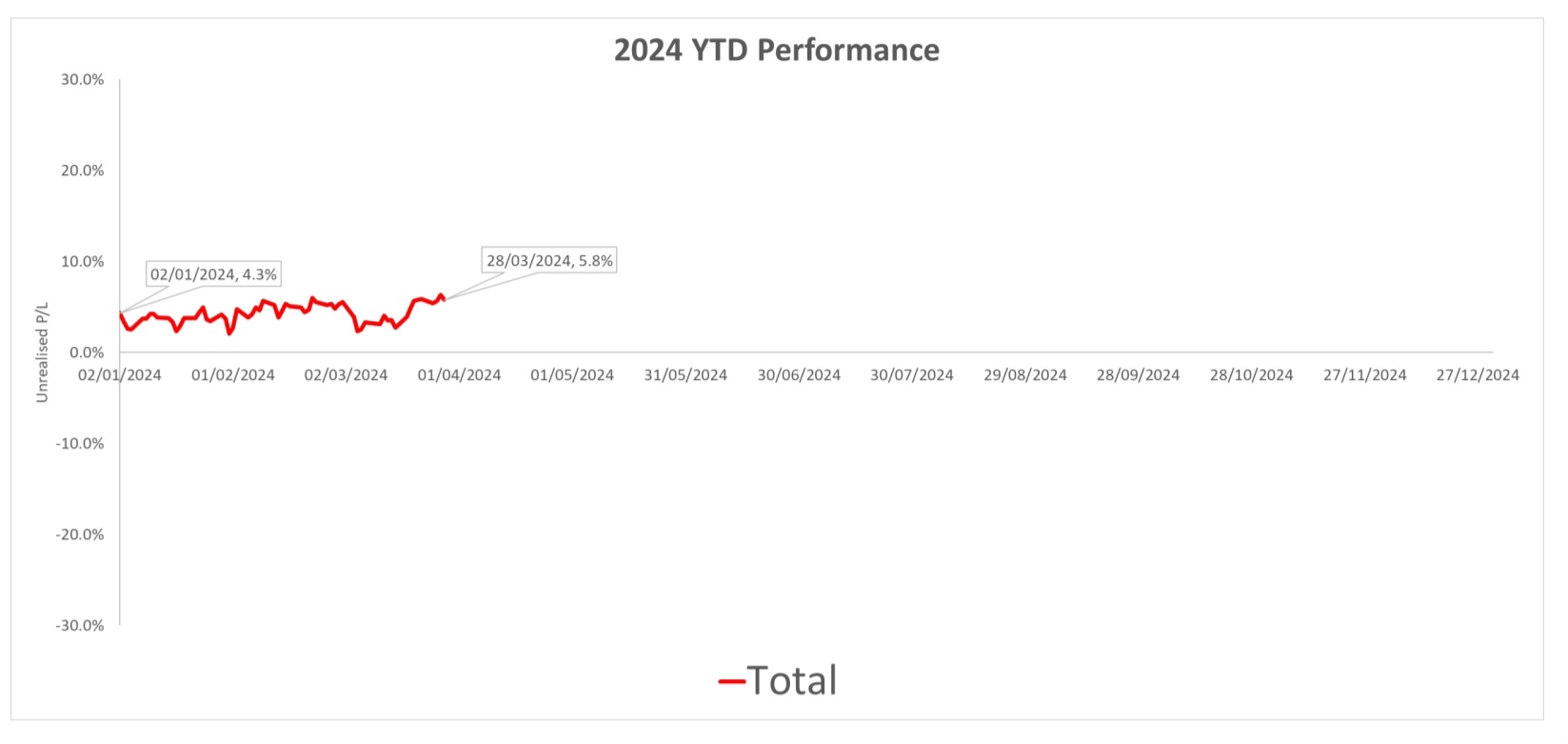
YTD performance: + 1.5%
Added in March
Goal 1: ( $28,573.18 / $81,594) ⚔️
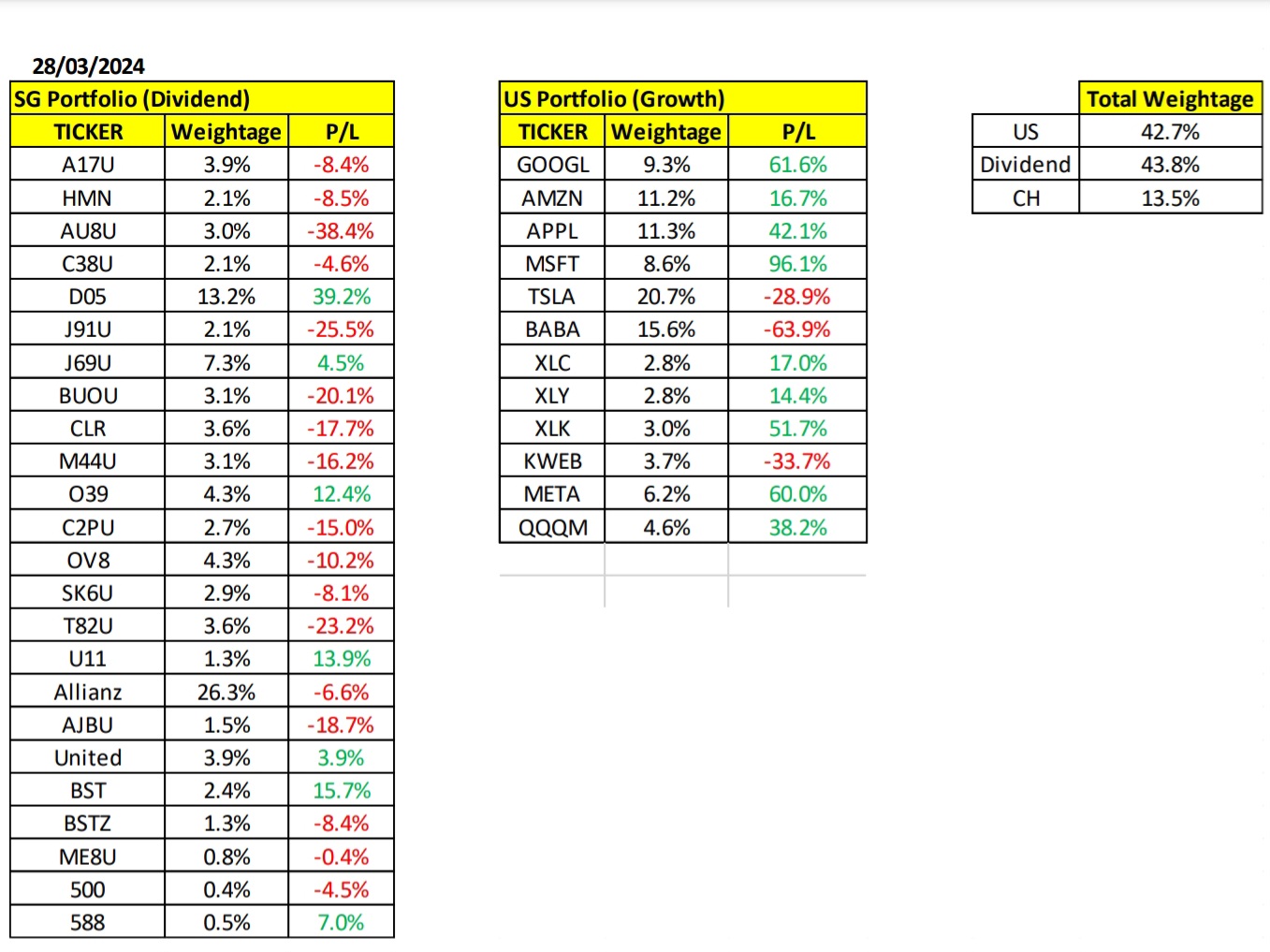
Growth Portfolio: QQQM, GOOGL
Dividend Portfolio: D05, OV8, United Global Durable Equities
Sold in March
PYPL
Portfolio Weightage
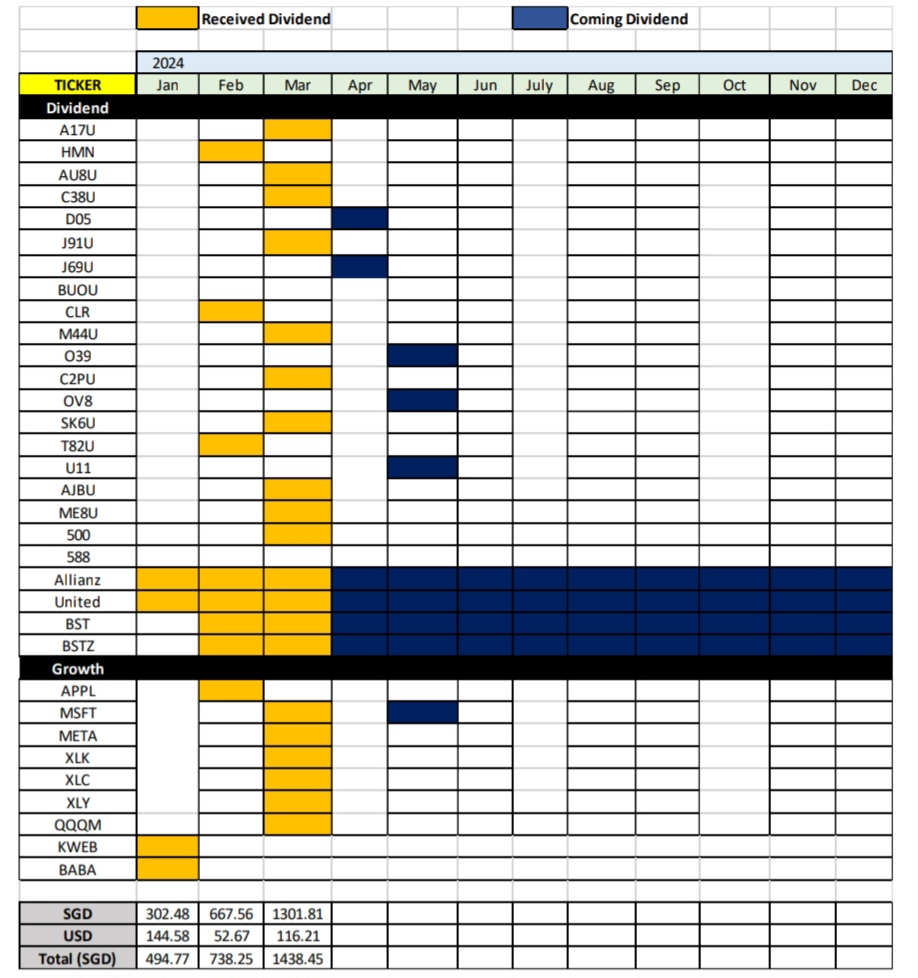
Dividend Recieved
Goal 2: ($2,671.45 / $14,212) ❤️
Dividend recieved in Mar = $1,438.45
Debt
- Debt is an instrument that let us access our future earnings, the price to pay is the interest.
- As shared previously, the equation to determine our debt affordability, which take our (1) income, (2) expenses and (3) financial goal into consideration.
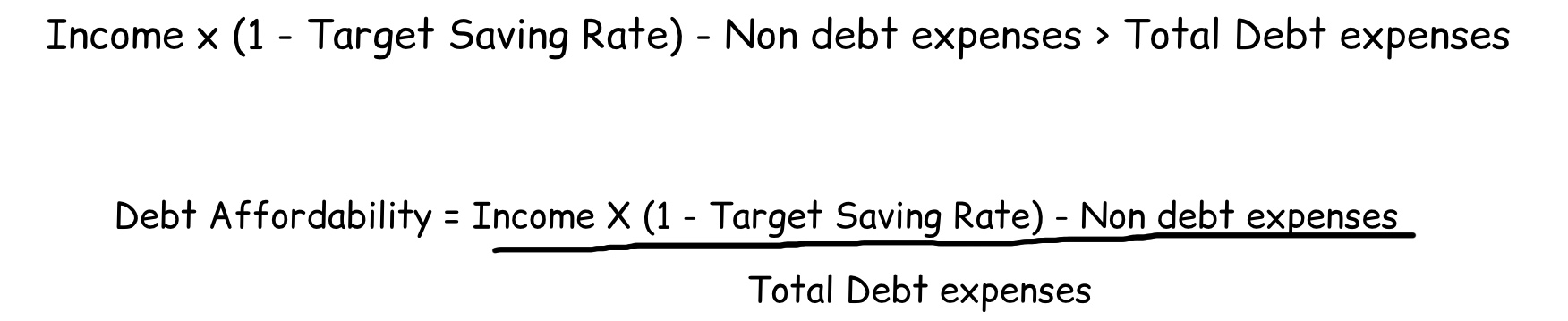
Determine Good Debt and Bad Debt
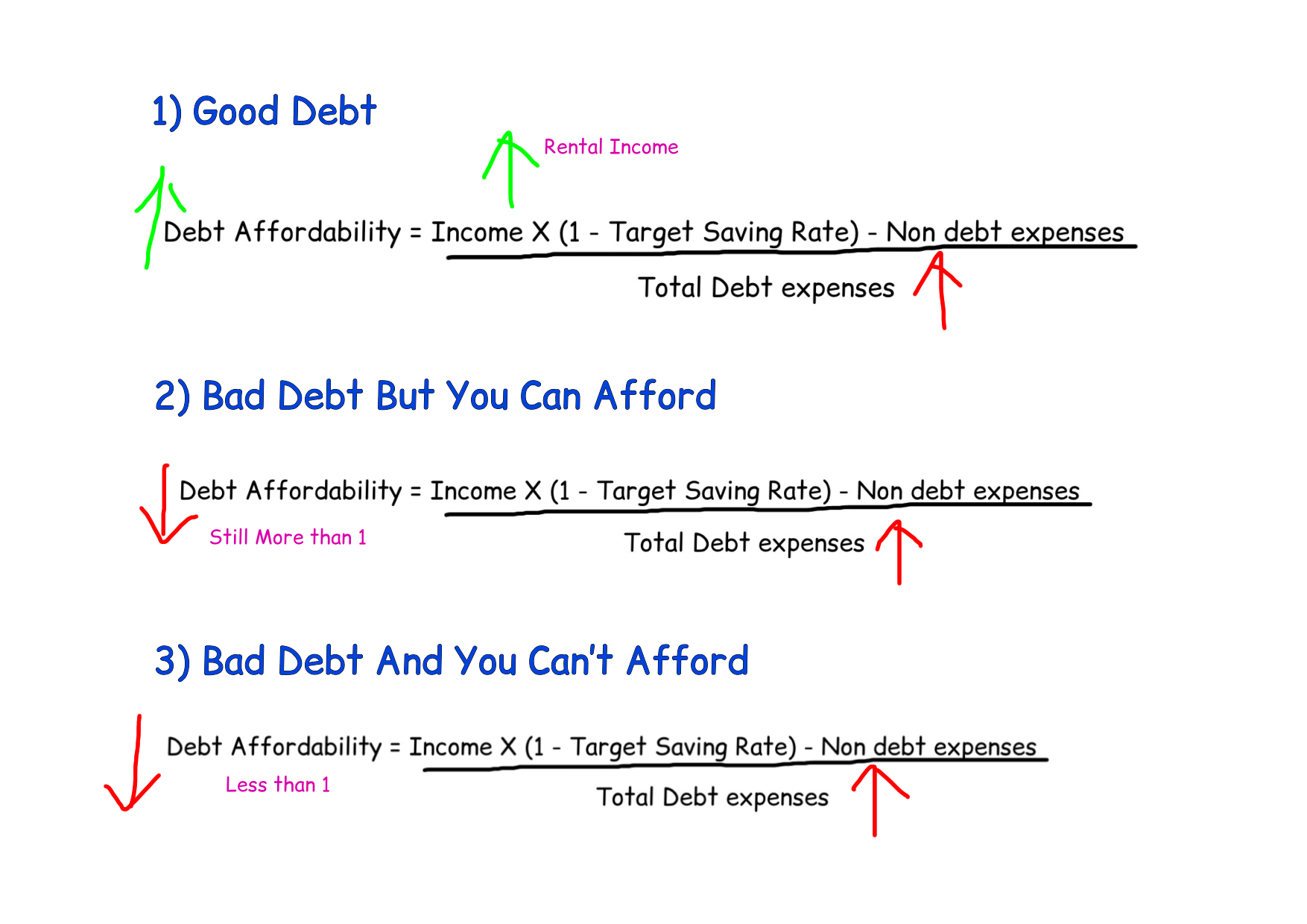
- The equation can also be used to determine if a debt is a good debt or bad debt.
- Mortgage are often refer as good debt? Not exactly.
- When we buy a rental property, it increases our debt expenses and income, if the equation increase our debt affordability, then it is a good debt.
- When the property do not generate any rental income, the increase of debt expenses reduce our affordability then it will be a bad debt, even if it is an investment property.
- The property value might appreciate over the long term, but do you have the holding power?
- However, even good debt can turn into bad debt very fast, thus is important to ensure our debt affordability is always more than 1 even without the rental.
- The larger the debt affordability number, the more safety margin we have.
What Should We Do When Debt Affordability less than 1?
There are actually only 3 ways.
- Option 1: reduce debt and non-debt expenses. Getting rid of consumer loans by taking public transport instead of owning a car, living in a smaller house.
- Option 2: Some people will not want to lower their standard of living, then they will have to rely on their skills and hard work to increase their income.
Option 3: Give up / delay your financial goals by reducing your saving rate.
Opportunity Cost From Consumer Debt
- The costs of unnecessary consumption are huge, if we are considering using debt to grow wealth.
- Some of us may take up loan to buy a car, aside from the interest cost there is also an opportunity cost.
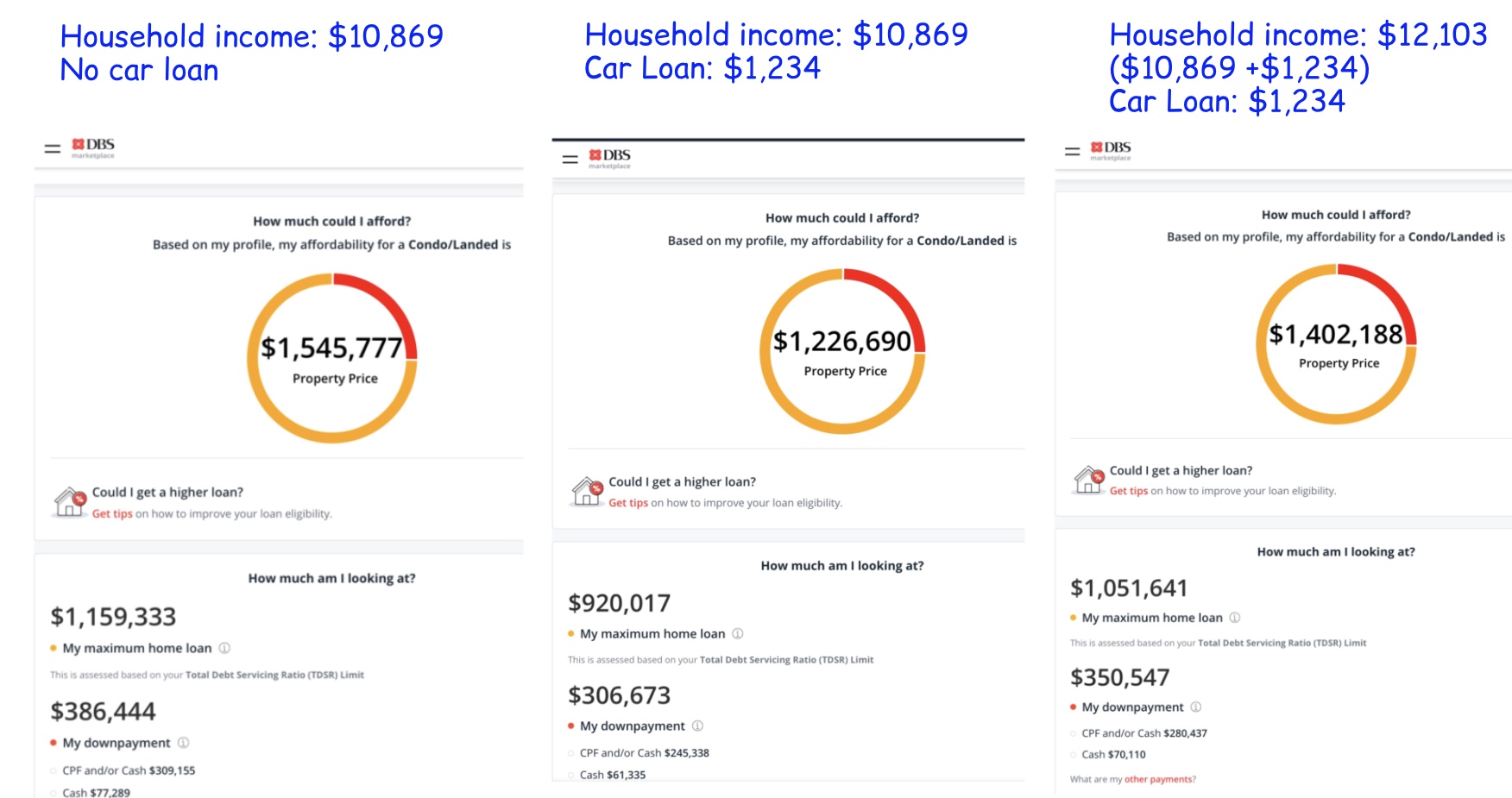
- For example, your household income is $10,869 a month, have a monthly car instalment of $1,234 and you want to buy a property either for own stay or investment.
- The amount of loan difference between having a car loan and without is about ~$240k.
- Even you were able to increase your income by extra $1,234/mth to offset your car instalment. The max loan will still be ~$107k short compare to without a car loan. We have not taken other personal debt and related expenses into consideration.
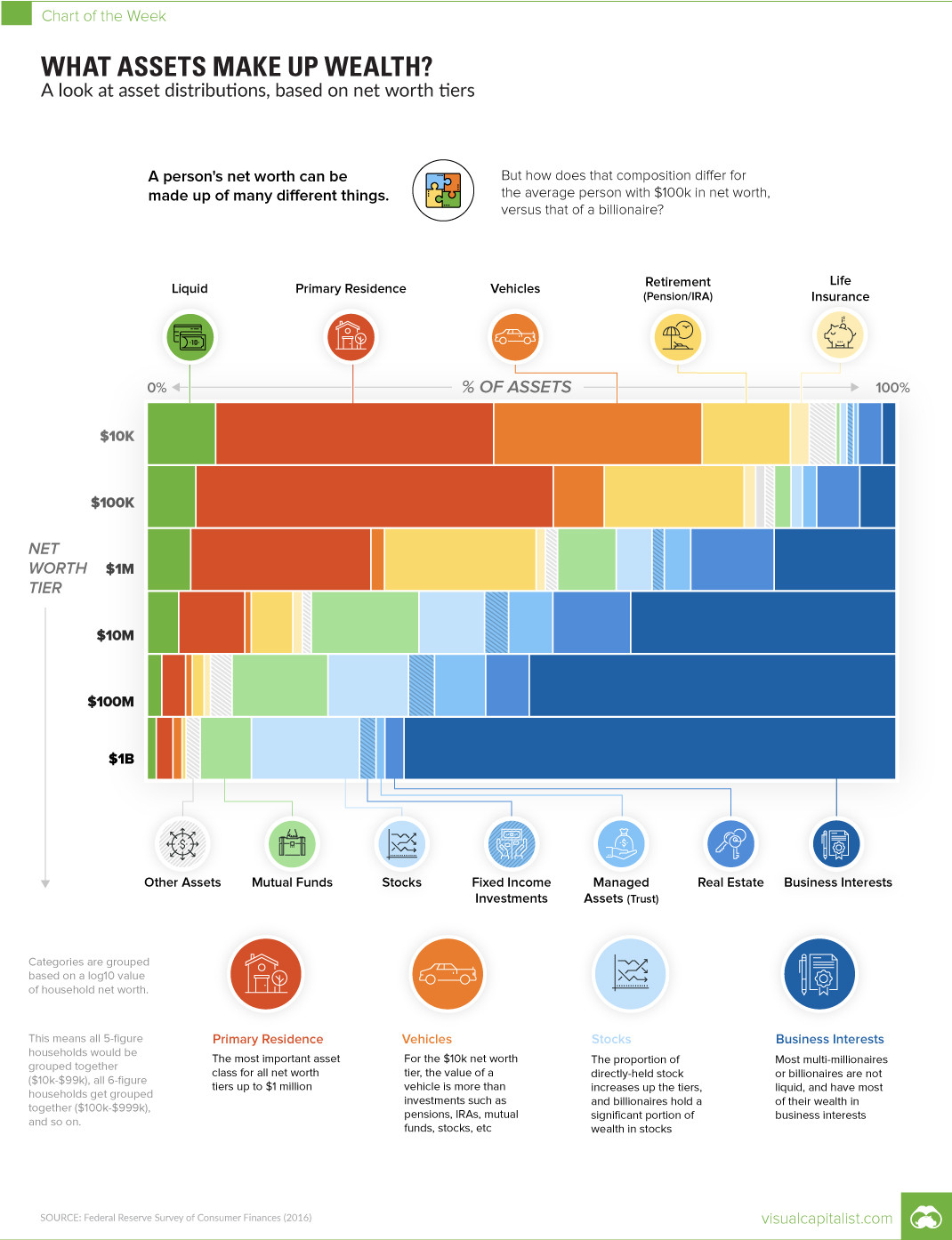
Asset Distributions based on Net worth Tiers
Using US net worth tier as a reference
- By knowing the asset allocation at different net worth tier, we will have an rough idea which assets to focus on if we have a target amount to achieve.
- For net worth below $1 million, primary residence have a very heavy weightage, they are likely to depend on government retirement scheme for retirement (Yellow box). At this tiers, been debt-free is important.
- At the $100k tier, real estate form a larger weightage in their investment portion.
- At the $1 million tier, shares and securities have a heavier weightage, but the real estate weightage have also increased.
- At the $10 million tier, shares and securities weightage continued to grow, while real estate allocation remain largely similar.
As we move up the tier, it is no surprise that buisness form huge portion of the Ultra High Net Worth wealth.
- For normal people with median income who just want to retire, our target net worth should be between $1 to 3 million. The top 1% in singapore is about USD $6M (SGD $8M) in 2024.
- Real Estate is a crucial asset class from $100k to $1M tier, up to $10M tier.
- Both real estate and buisness required us to get into debt. Optimum amount of leverage are good for growing wealth.
- Debt free ≠ financial free. Over leverage is not good for our finance, but under leverage is not ideal either.
Conclusions
- Increase income and saving money is one thing but growing wealth is another.
- Building wealth is about leverages, for stocks we leverage on time and compound interest, for property we leverage on other people money (debt) and for buisness we leverage on other people money, skills and time.
- There are only 3 things that are able to beat inflation (1) equities, (2) Property and (3) buisnesses.
- Our returns should minimally be able to keep pace with inflation.
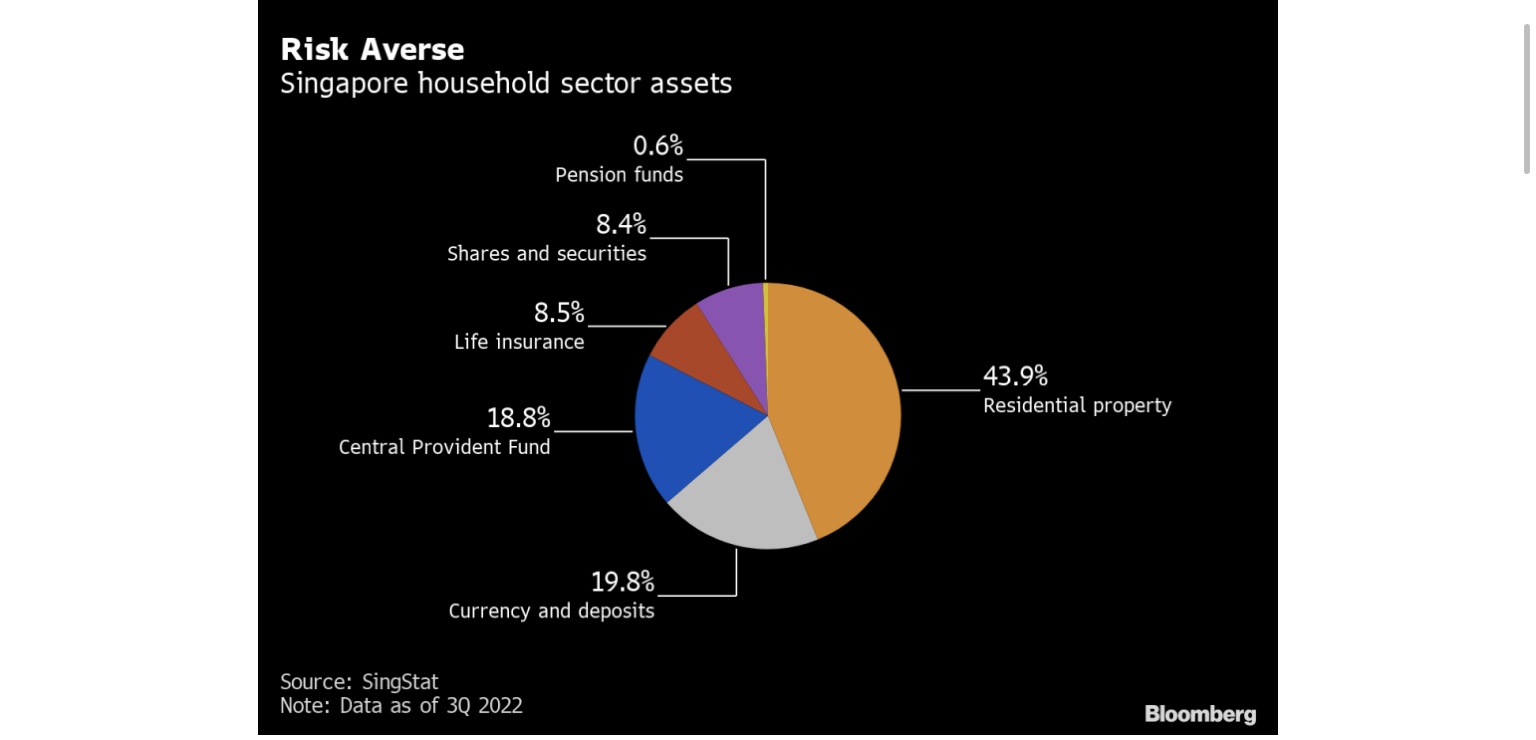
- Singaporean have a very high saving rate but being risk averse is one of the root cause of having difficulty for retirement. Only 8.4% of assets are in shares and securities, 38.6% in risk-free assets and 43.9% value untapped.
- With the asset allocation in the diagram below, you need to be a high income earner to be able to retire. Having more than enough for inflation erode your risk-free assets value.
- Even we are comfortable now, inflation will eventually catch up if we are too conservative.
Comments
What are your thoughts?
View 9 other comments
251
10
ABOUT ME
Deal with your problem by being rich
251
10
Advertisement
💬 Comments (0)
What are your thoughts?
No comments yet.
Be the first to share your thoughts!