Advertisement


OPINIONS
Portfolio Review (July 2025)
Portfolio Review (Passive Income)
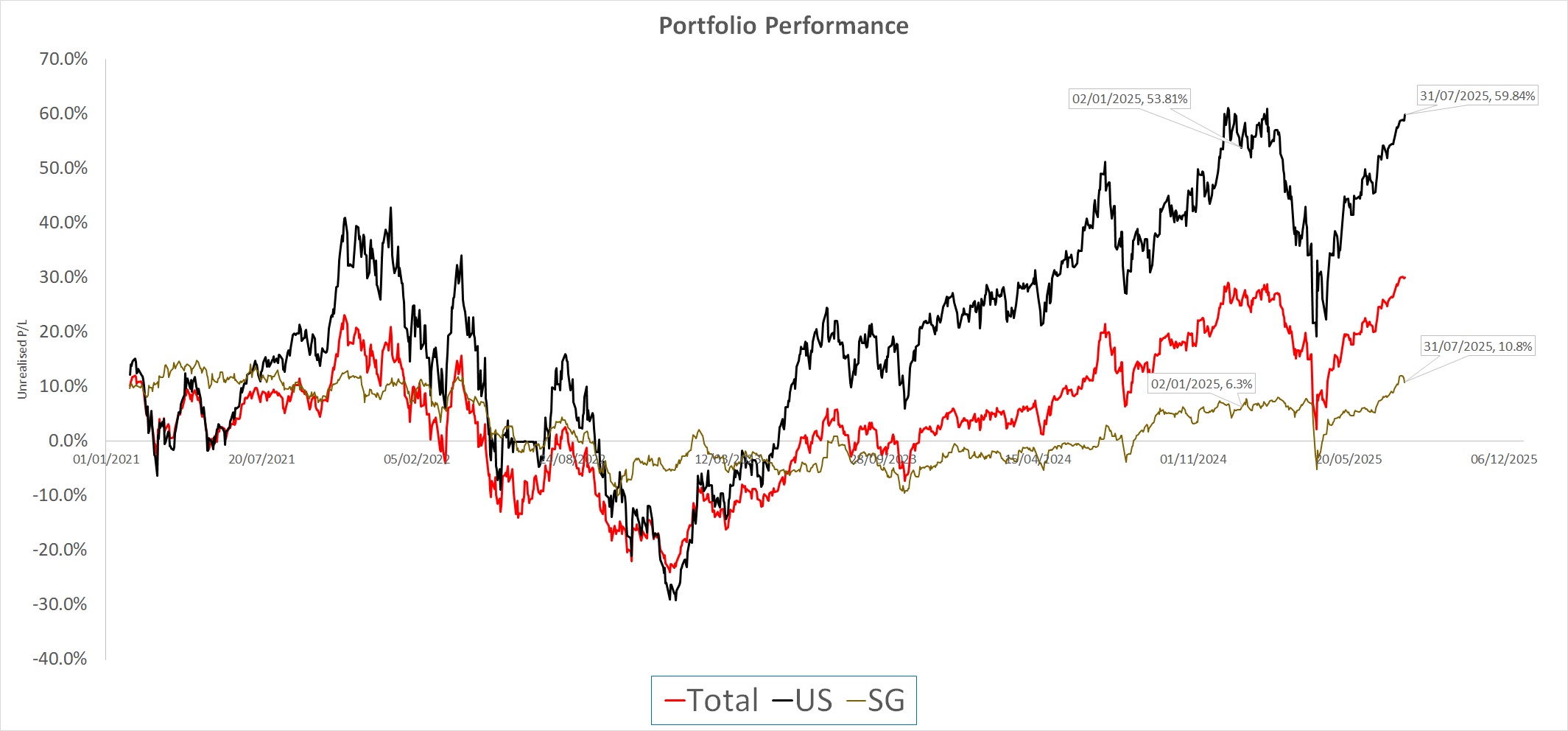
Review of my Portfolio (31/07/2025)
Total unrealized profit: + 30.0%
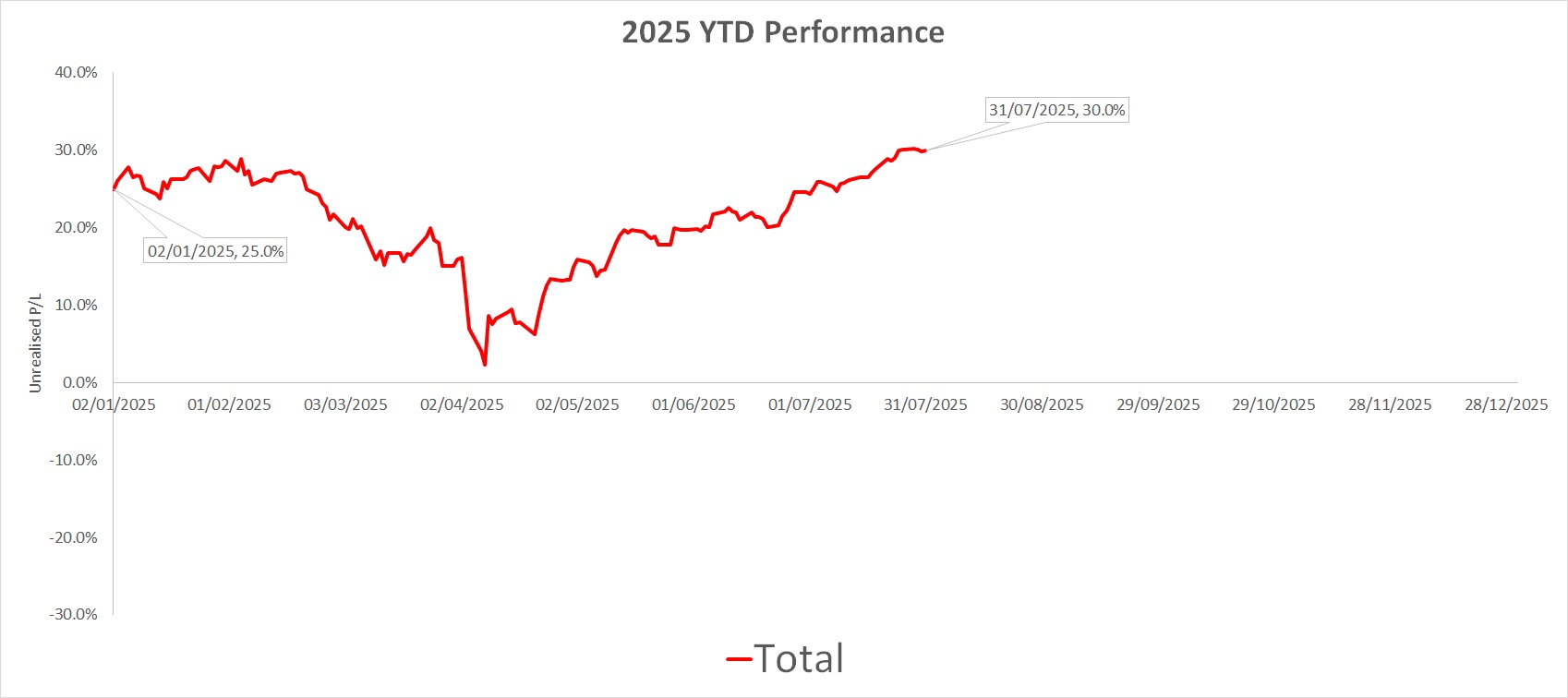
YTD performance: +5.0%
Added in July
Goal 1: ( $ 58,205.75 / $ 80,464) ⚔️
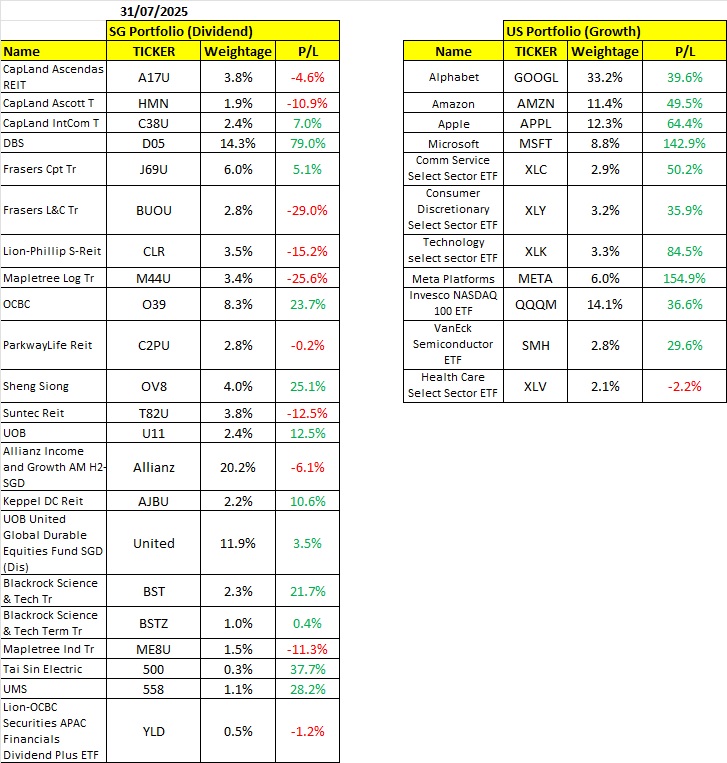
Growth Portfolio: XLV, AAPL
Dividend Portfolio: YLD, CLR, M44U, T82U, AJBU, United Global Durable Equities
Portfolio Weightage
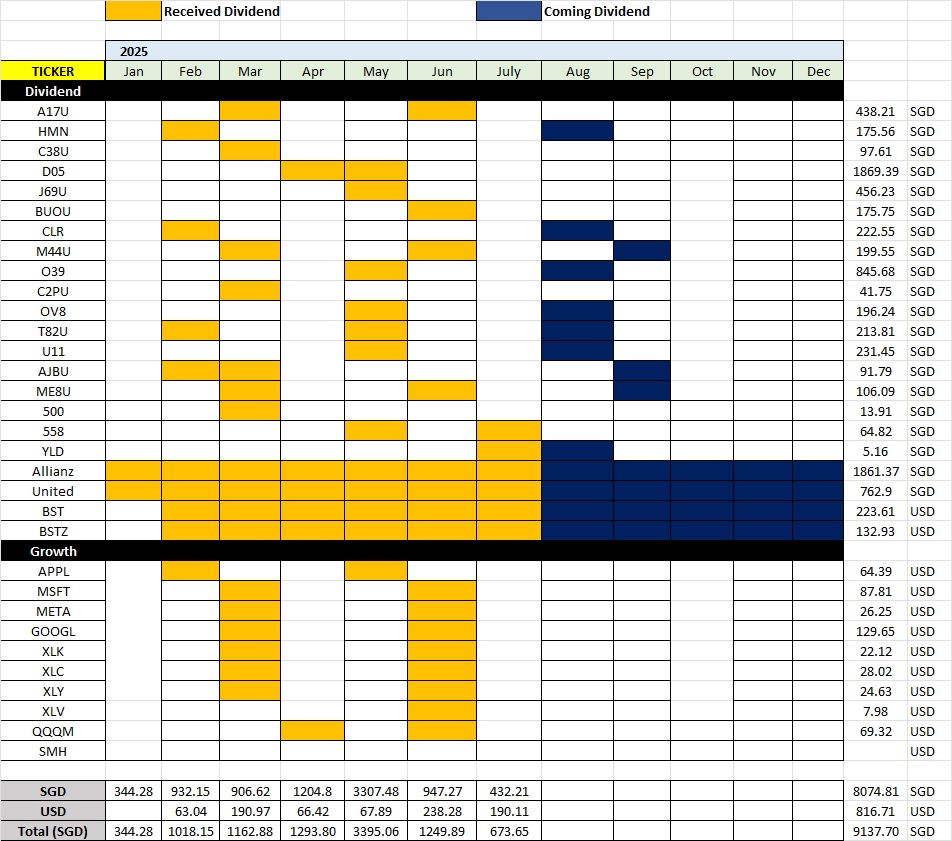
Dividend Recieved
Goal 2: ($ 9,137.70 / $ 17,117) ❤️
Dividend recieved in July = $ 673.65
Passive Income Portfolio
- Passive income is a cornerstone of long-term financial freedom.
- It is a powerful tool for reducing dependency on employment and building lasting wealth.
- Passive income provides a more sustainable and psychologically secure path to financial freedom than selling off investments to fund expenses.
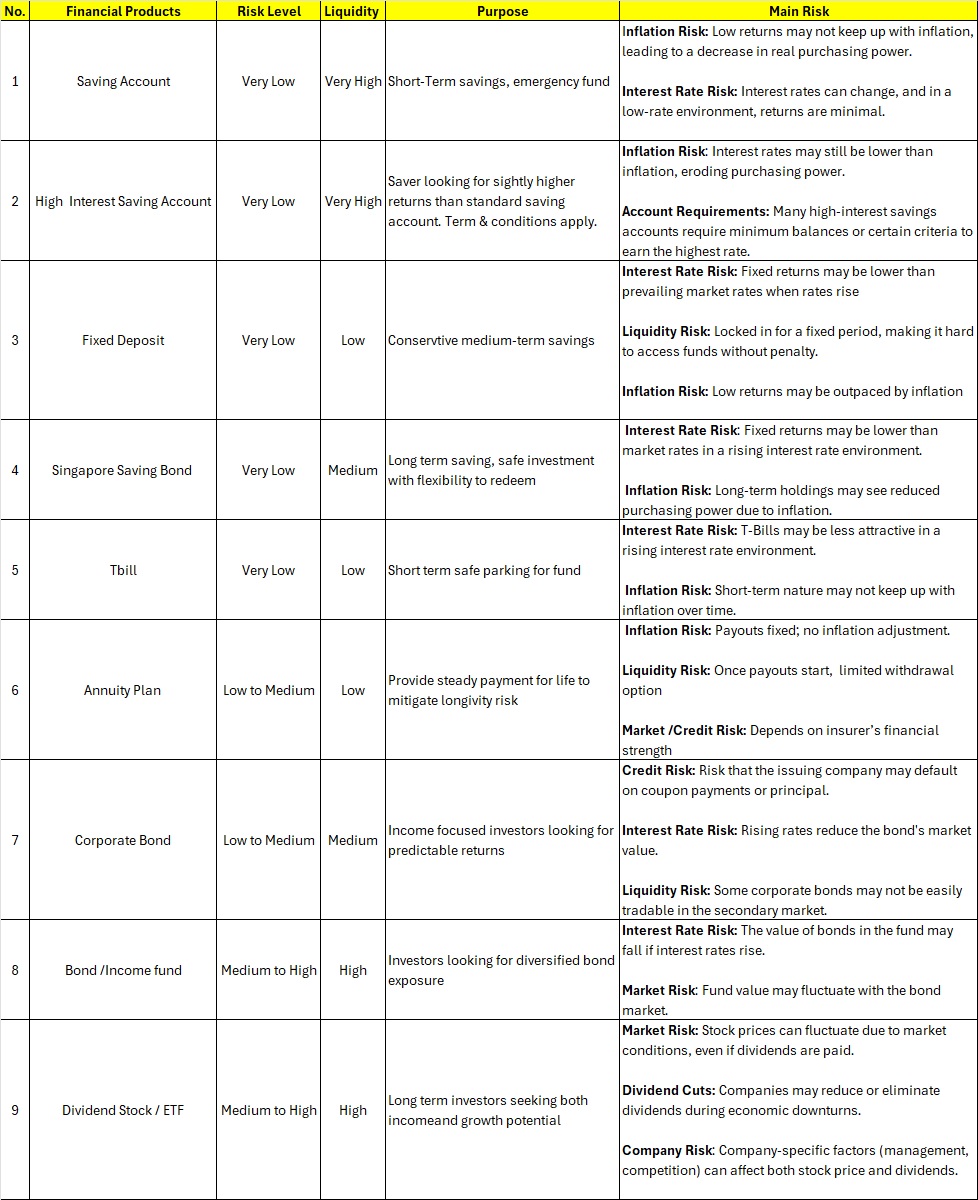
What does "safe" mean to you?
- There is no 100% risk-free financial products.
- Even the "safest" option carrying some form of risk.
- Principle Protection?
- No Volatility?
- Keep up with inflation?
Products / Purpose / Risks
- Instead of looking for risk-free products, a better approach is to build a passive income portfolio that balance safety, income and growth.
- Thus is important to understand the purpose and risks of different financial products and its risks.
Passive Income Milestones
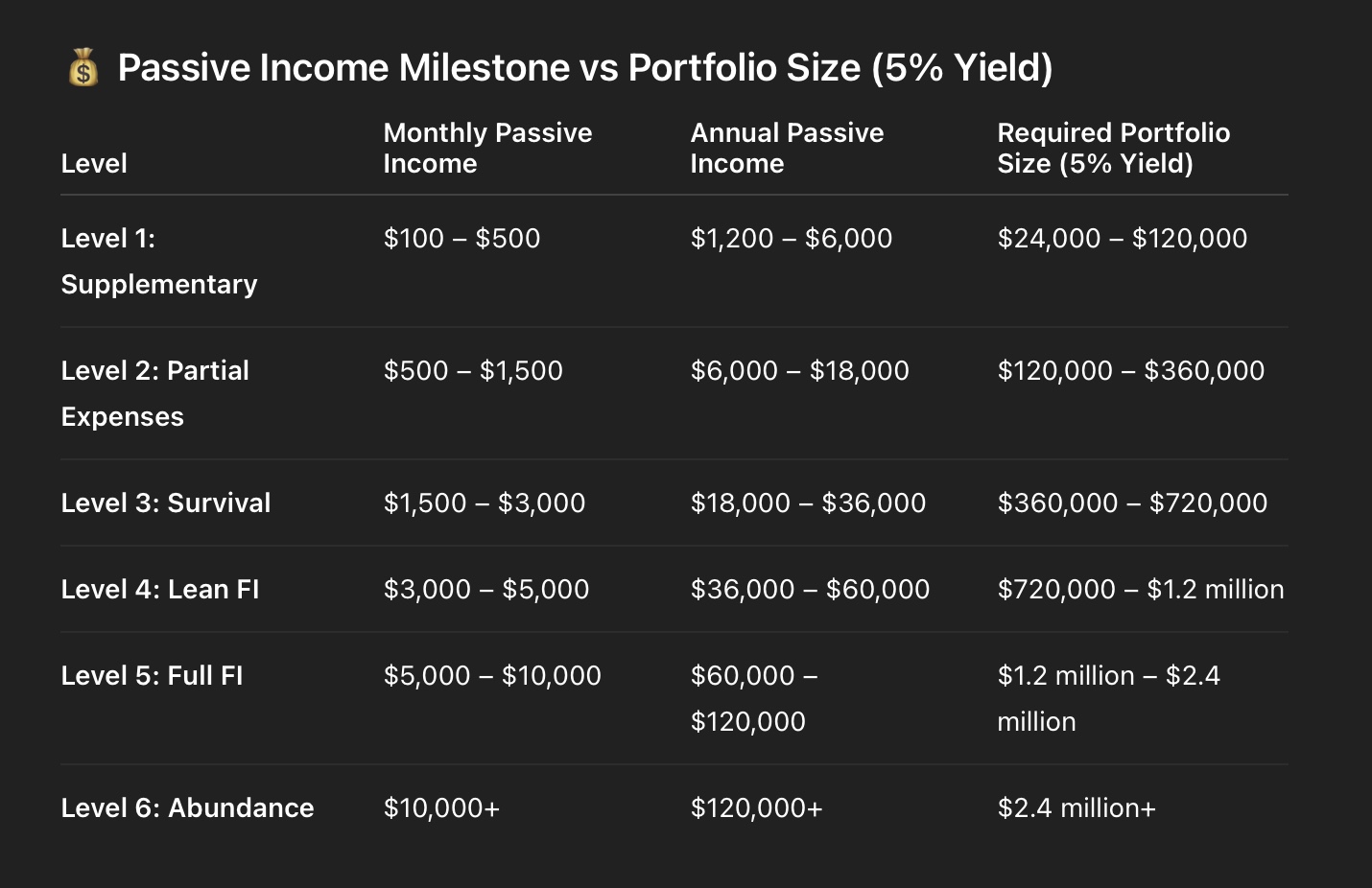
- In general, there a several milestones for different passive income level.
- At level 3, we will be able to survive in Singapore without a job, cover essential expenses (include housing), but no luxuries. We probably still to have to do some gig work if we choose to quit our 9 to 5.
- At level 4 financial independence is achieved.
- Singapore banks and Reits typically pay a yield of 5 to 6% p.a.
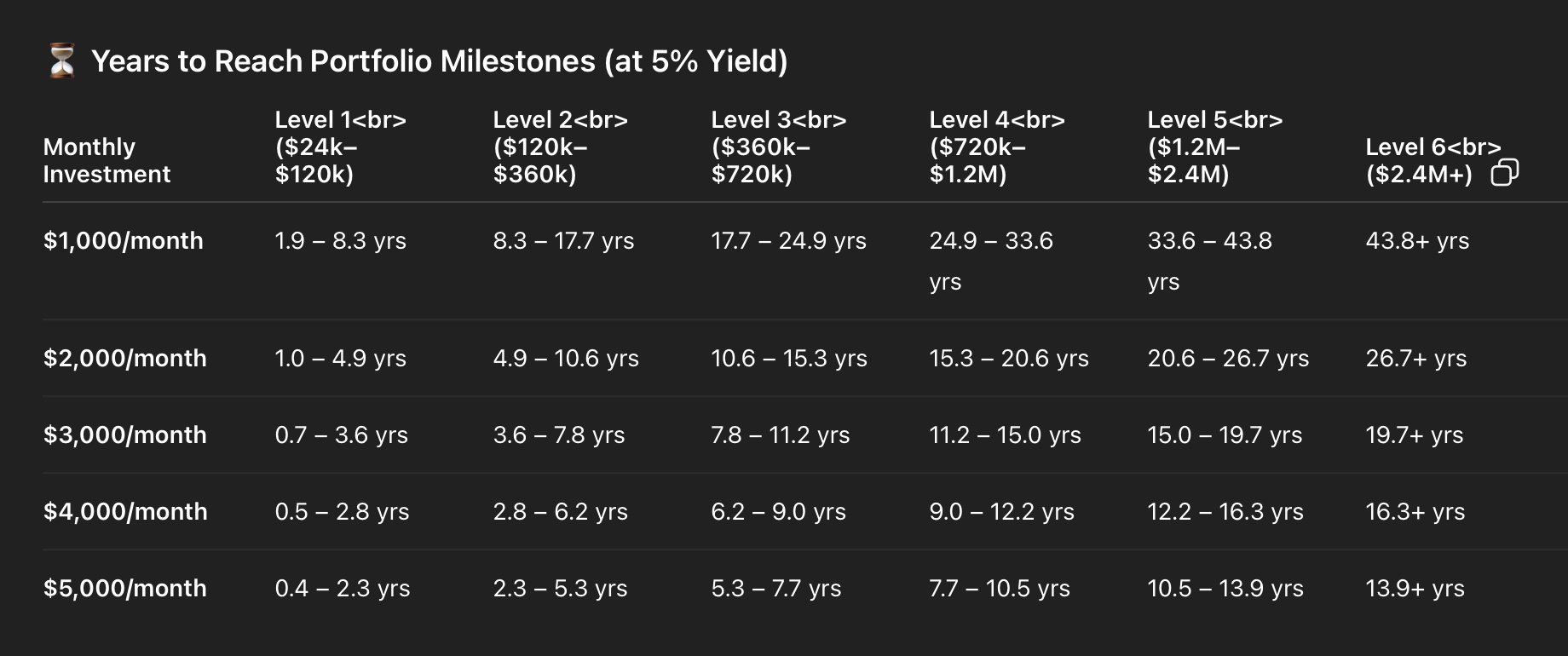
- If we will be able to invest consistently at least $3000 every month and reinvest the dividend, we will be able to achieve F.I. in less than 15 years.
Index/Growth investors VS Dividend investors
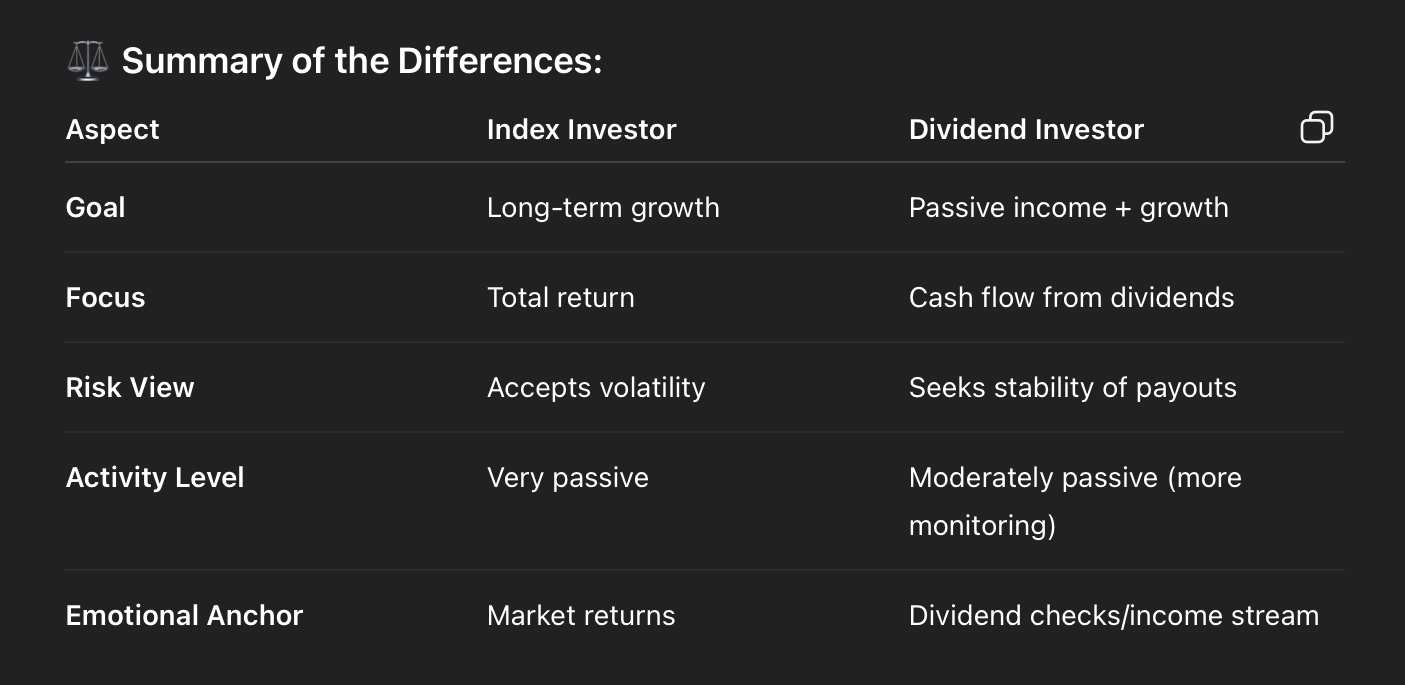
- An index investors focused more on net worth growth, while a dividend investors are more income-focused, enjoying cahflow hitting the account.
- Thus it’s not that easy to switch from growth investing to dividend investing later in life, despite how often that advice gets repeated.
- This shift in priorities takes mental rewiring, not just reallocating assets.
- A better strategy is to blend both strategies when young, gradually tilting toward dividend producing assets. This makes the transition smoother and less emotional.
Conclusions
- Financial independence is a progressive process of replacing active income with passive income, until passive income exceeds expenses, creating a surplus.
- However, the key to successful investing is not only giving it time to compound, but also consistently increasing our capital.
- Time fuels compounding, but growing our capital is what accelerates our journey to wealth.
- The fastest way to increase capital is to (1) maximise income through our job, (2) save aggressively (more than 50%), (3) reinvest dividend and (4) explore side hustle / scalable business.
Comments
What are your thoughts?
View 7 other comments
126
7
ABOUT ME
Deal with your problem by being rich
126
7
Advertisement
💬 Comments (0)
What are your thoughts?
No comments yet.
Be the first to share your thoughts!