Advertisement


OPINIONS
Portfolio Review (January 2025)
Portfolio Review (Insurance in Retirement)
Review of my Portfolio (31/01/2025)
Total unrealized profit: + 28.3 %
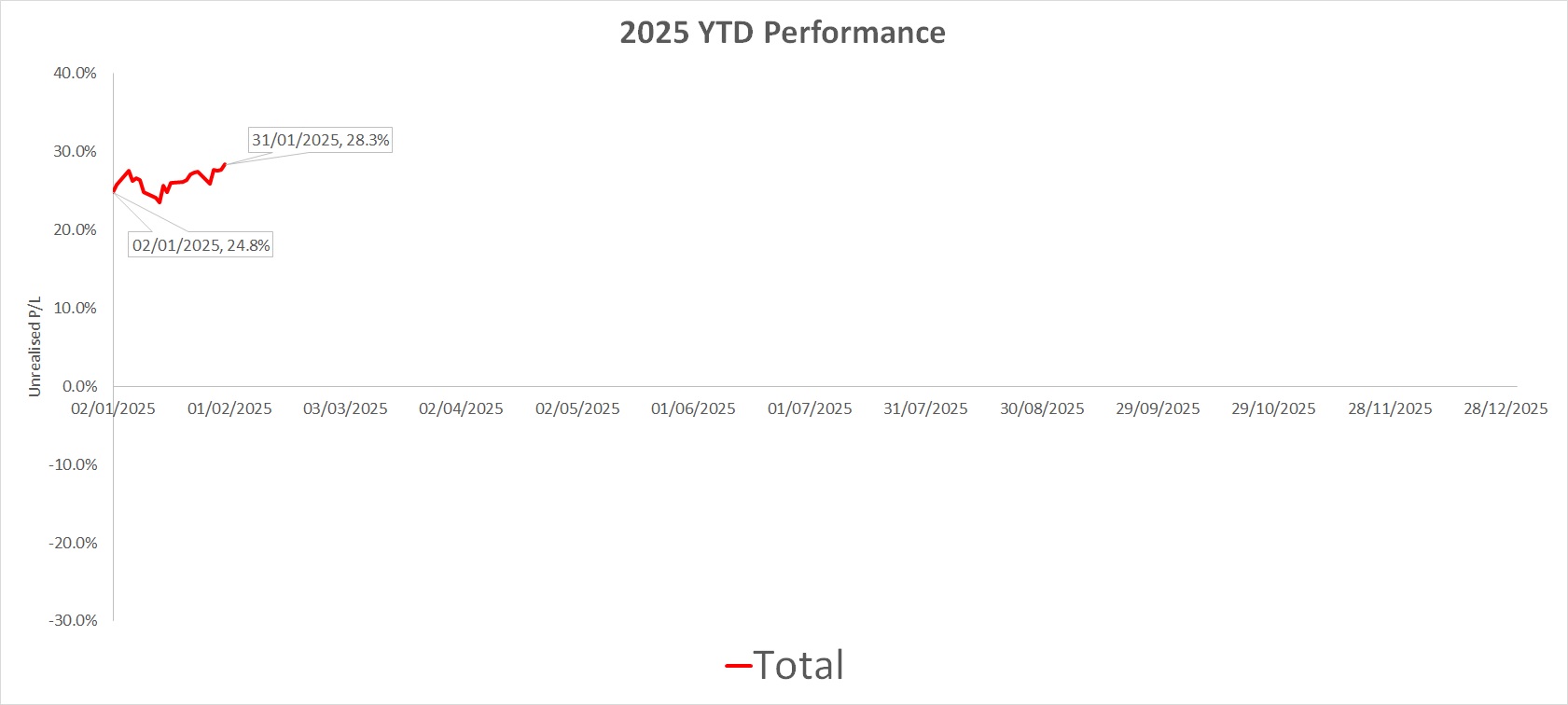
YTD performance: + 3.5 %
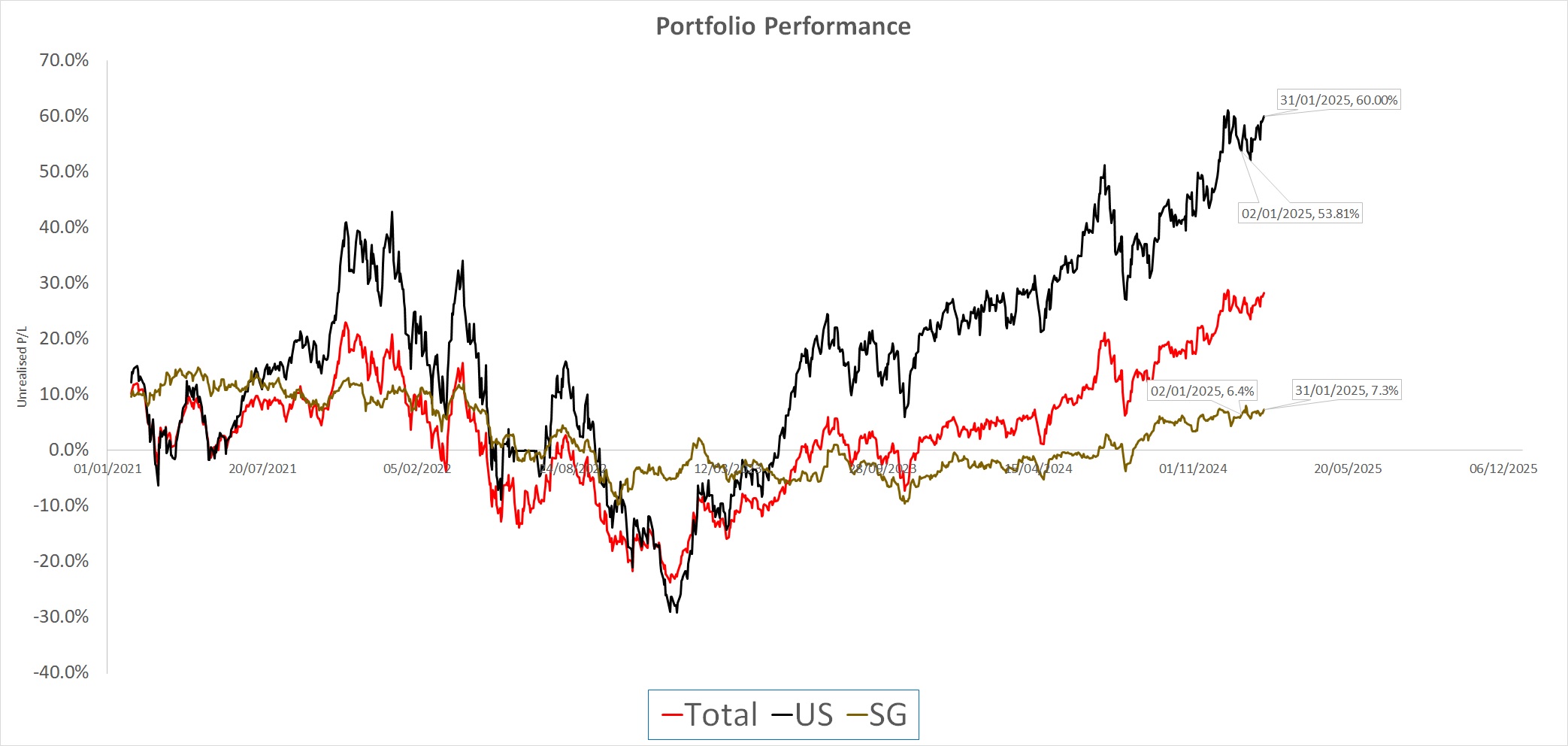
Added in January
Goal 1: ( $ 7,573.69 / $ 80,464) ⚔️
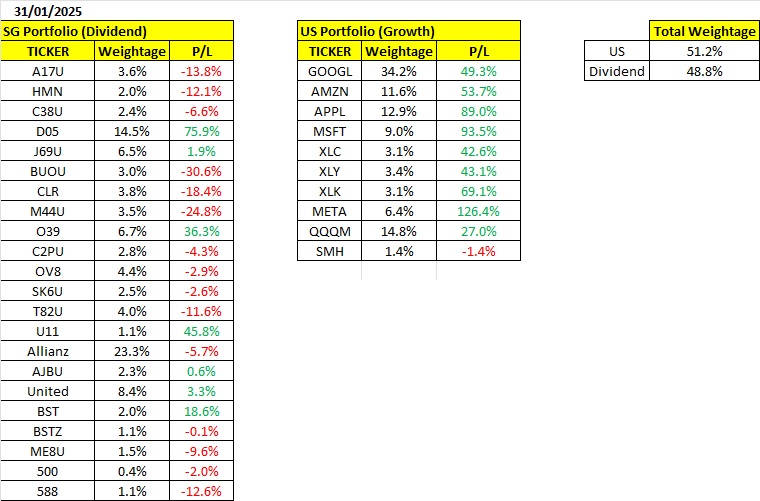
Growth Portfolio: XLC, SMH, AAPL
Dividend Portfolio: CLR, M44U, ME8U, T82U, United Global Durable Equities
Portfolio Weightage
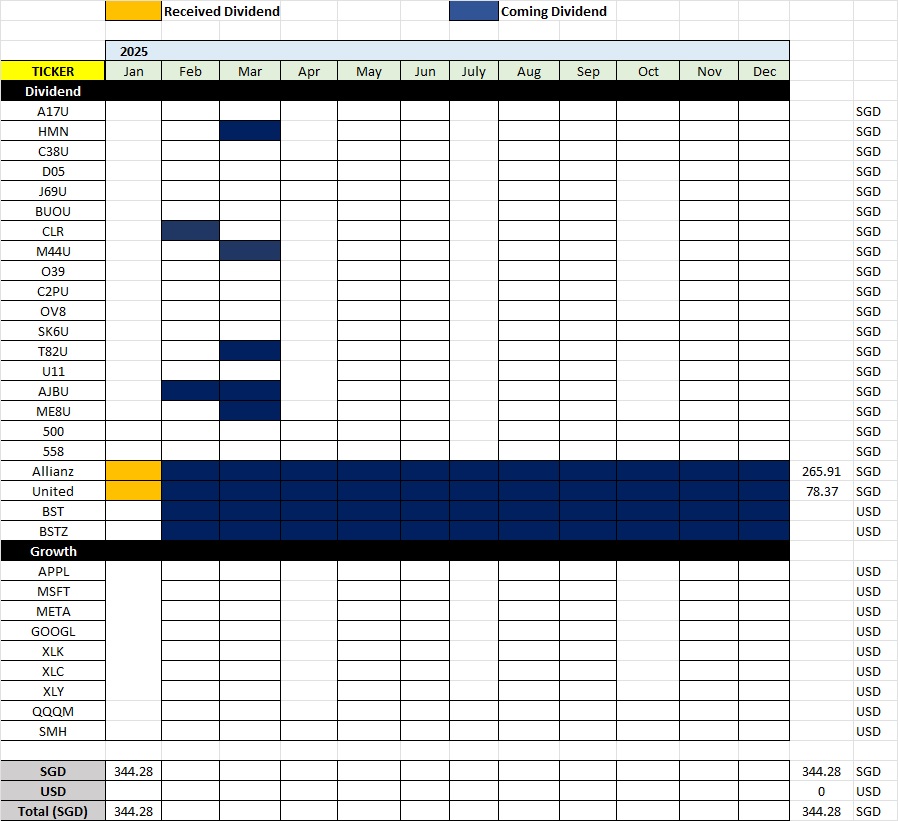
Dividend Recieved
Goal 2: ($ 344.28 / $ 17,117) ❤️
Dividend recieved in January = $ 344.28
Opinons: Insurance in Retirement
- Insurance is a risk management tool which come with a cost, it is never a wealth building tool.
- In general, insurance serves one of two primary purposes:
- Protection from medical and hospital bills: This type of insurance helps cover the costs of medical treatment, hospitalization, and related expenses.
Protection from loss of income: This type of insurance provides financial support when you are unable to work due to illness, injury, or disability.
1. Protect From Medical and Hospital Bills
MEDISHIELD LIFE (Default by Government)
- MediShield Life is a basic health insurance plan that helps Singapore citizens and permanent residents pay for large medical bills and some outpatient treatments.
It is sufficient for cover large medical expenses incurred from staying in subsidised B2/C-class ward in public hospital.
INTEGRATED SHIELD PLAN (Optional depend on budget)
- If we want a better treatment like a A-class ward in a public hospital or a private hospital, we will then look for individual insurance companies to do the upgrade the medical plan.
- All these upgrade will increase the insurance premium.
- When one decide to go beyond the basic coverage, it's important to know that premium will increase with age.
Another consideration, is getting coverage earlier in life before any medical conditions arise, pre-existing conditions are excluded from coverage or insurance companies can decline to cover applicants completely.
2. Protect From Loss of Income
(Protect Retirement fund for this case)
CARESHIELD LIFE (Default by Government)
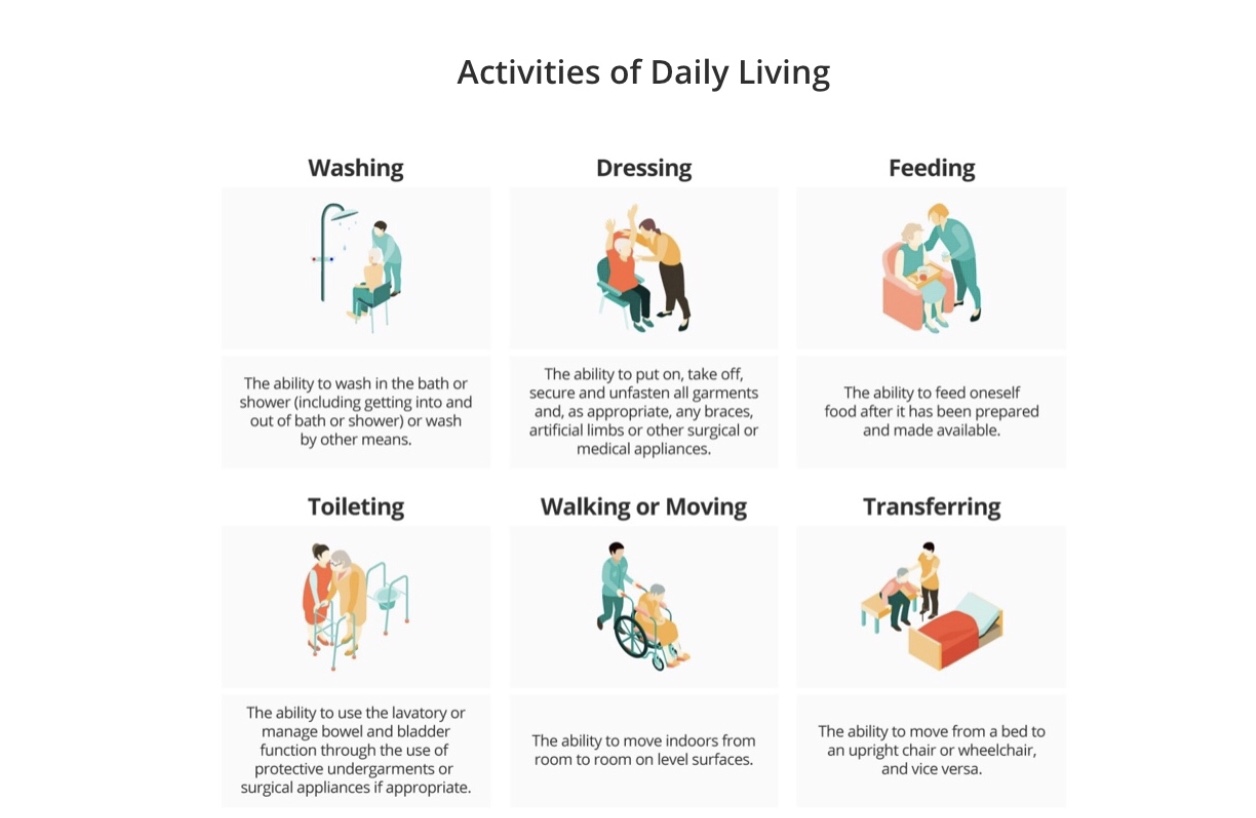
- Careshield Life provide a basic level of payout on a monthly basis in the event of severe disability, unable to do 3 out of 6 daily living activities.
DISABILITY INSURANCE (Optional depend On Budget)
- Some may think $600 monthly payout may not be sufficient and want a higher payout, they may engage the insurer.
But again all these enhancement will come at a cost.
CRICTICAL ILLNESS as a RIDER (Good to have)
- The rule of thumb for CI coverage is 4x annual income based on an assumed 5 years recovery period. Exact needs should based on individual expenses and liabilities.
- Critical illnesses can incur significant and prolonged costs, such as hiring a caregiver, purchasing mobility devices, and ongoing medical treatments.
- A Critical Illness (CI) plan provides a lump sum payout that can help cover these costs, ensuring that families are not financially burdened during a challenging time.
- Most critical illness term plan ends at 75 years of age. After that we won't be able to get into another CI plan due to age.
- One way to get critical illness coverage for life is through Whole life plan with a CI rider.
Whole life is useful for legacy planning for the UHNW and supplementing the integrated shield plan with the attached CI plan.
- Alternatively, we may also consider using ILP with insurance coverage, another form of permanent life insurance, with a Critical Illness (CI) rider. However, we need to :
- Identify suitable investment funds within the ILP. We are still responsible for your own investment returns.
- Understand the policy's rules regarding premium holidays and any potential penalties.
Determine the appropriate frequency and amount of top-ups to maintain adequate coverage.
Buy Term Invest the Rest (BTIR)
- The common financial advice is 'Buy Term Invest the Rest' (BTIR), as term insurance is typically a temporary solution.
- Term insurance offers lower costs and higher coverage compared to other types of insurance, but it typically has a limited coverage period.
- The intention is for policyholders to accumulate wealth during this coverage period.
- Insurance provides a safety net against unforeseen circumstances, while investing aims for long-term growth and financial independence.
- Insurance only pays out when something bad happens, whereas building our own portfolio can provide returns even in the absence of adverse events.
- This strategy emphasizes the importance of proactive wealth building and a diversified investment plan for long-term financial security.
Our investment portfolio should be the one taking care of us eventually.
Final Thoughts
- Insurance in retirement involves balancing affordability with needs and wants, as we no longer have an active income.
- MediShield Life is sufficient as long we dont mind going to a public, subsidized hospital and staying in B2/C ward.
- For CareShield Life, the payout is obviously not sufficient. One might consider buying a term plan when young if they feel it's necessary. But prepare for retirement by focusing more on wealth accumulation.
- Critical illness insurance is important and valuable, especially during old age when the likelihood of needing it increases.
- However, due to the cost of these permanent insurances, they are considered a "good to have" rather than an absolute necessity.
- A more cost-effective way is to simply build up a critical illness fund using our investments.
- As mentioned, our investments should be the primary source of our retirement income.
- If we feel any insurances are truly essential in retirement, we should factor the premiums into our expenses and plan to cover them with our investment returns.
Comments
170
20
ABOUT ME
Deal with your problem by being rich
170
20
Advertisement
No comments yet.
Be the first to share your thoughts!