Advertisement


OPINIONS
Portfolio Review (Aug 2024)
Portfolio Review
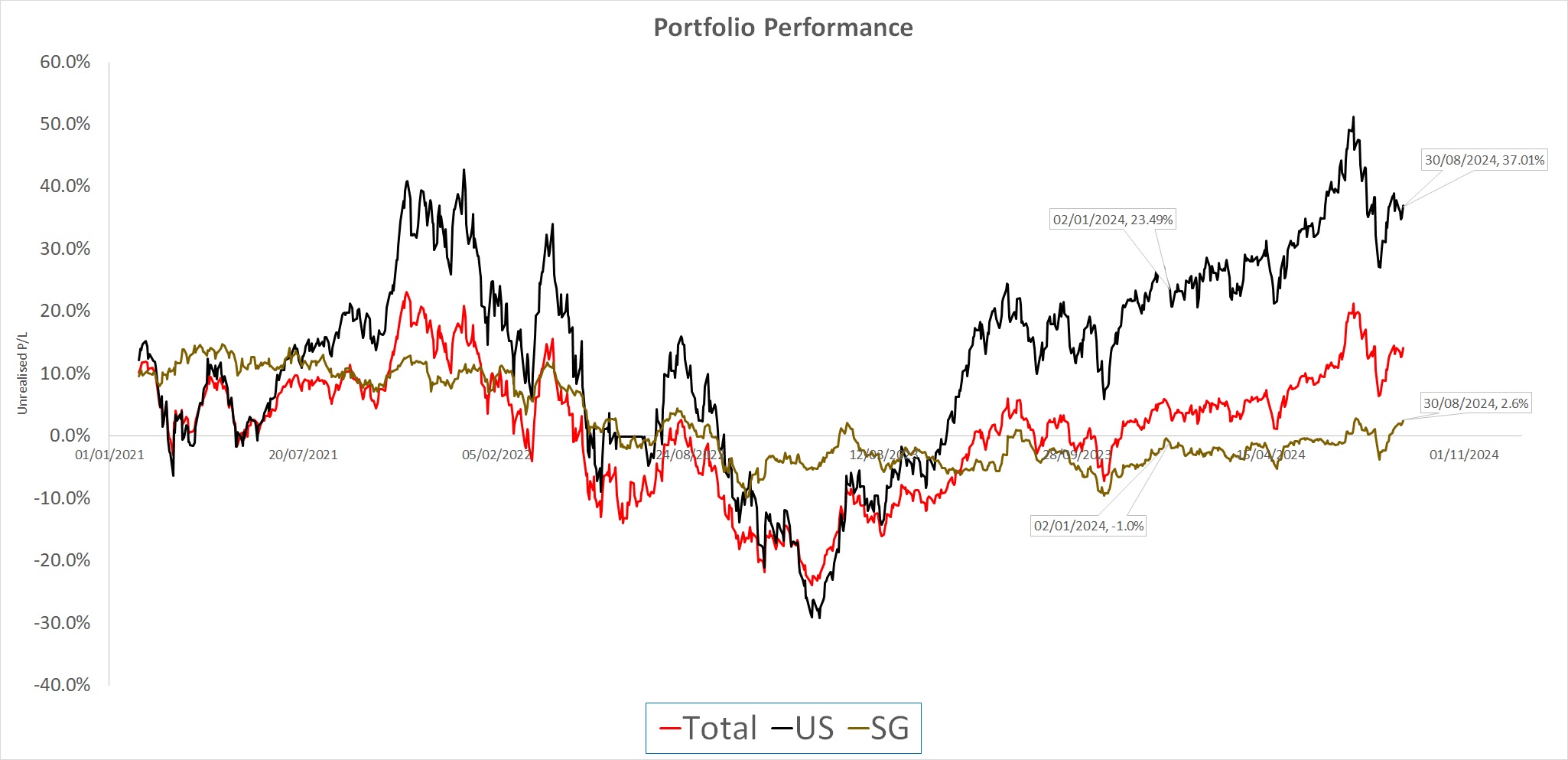
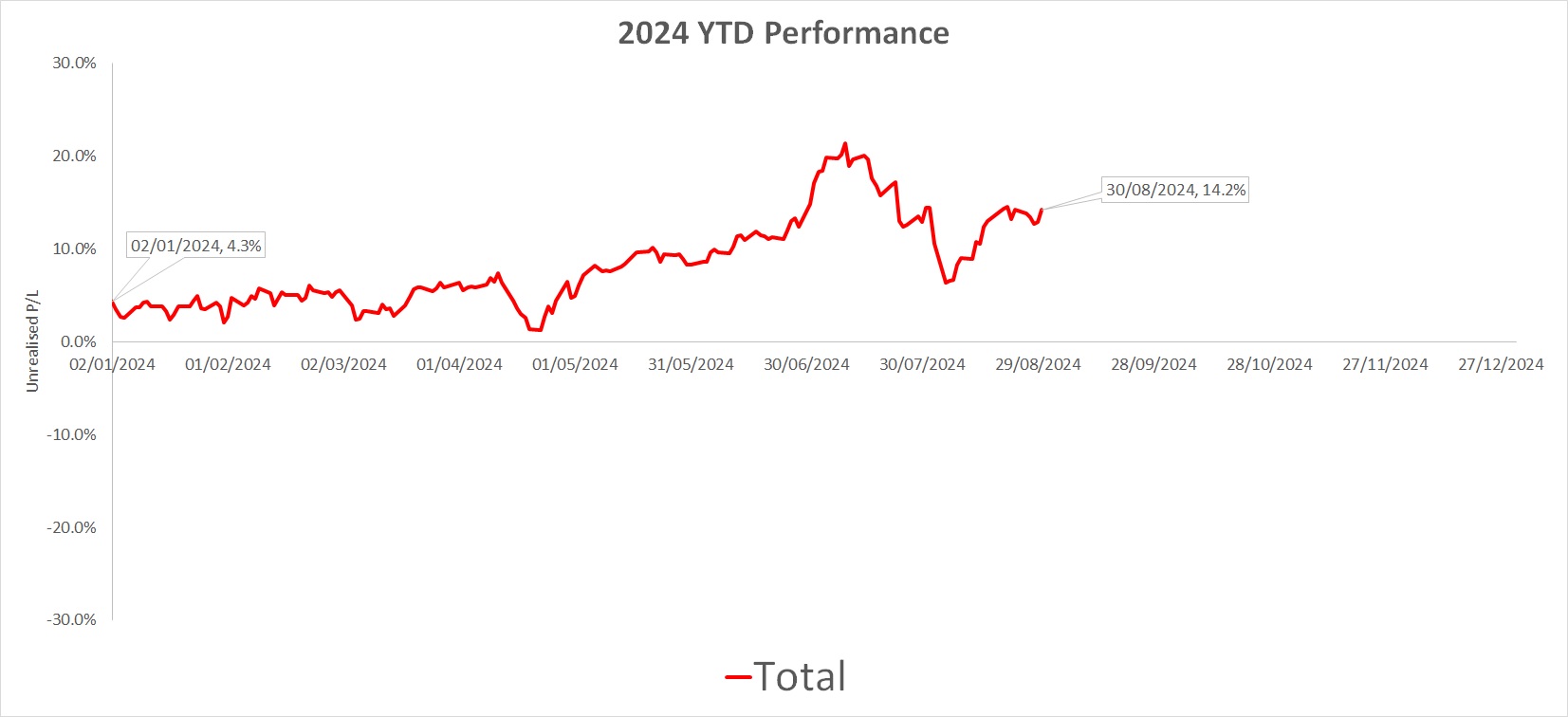
Review of my Portfolio (31/08/2024)
Total unrealized profit: +14.2 %
YTD performance: + 9.9 %
Added in July
Goal 1: ( $58,512.37 / $81,594) ⚔️
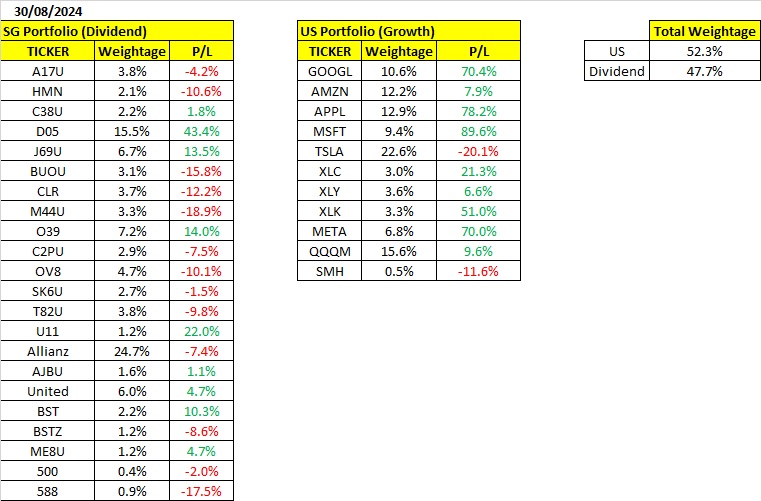
Growth Portfolio: GOOGL
Dividend Portfolio: D05, OV8, A17U, O39, C38U, United Global Durable Equities
Portfolio Weightage
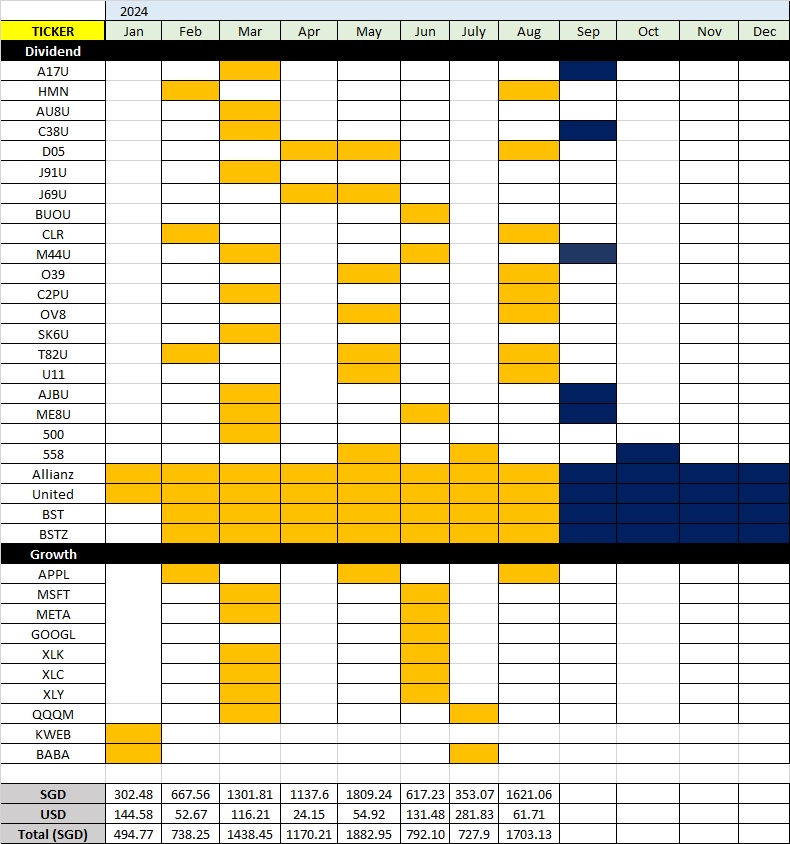
Dividend Recieved
Goal 2: ($ 8,947.76 / $14,212) ❤️
Dividend recieved in July = $1,703.13
Money Management Strategies for Retirement (Part 2)
- In order, incorporate all the money management strategies during retirement mention in previous review, we need to first know how much is enough.
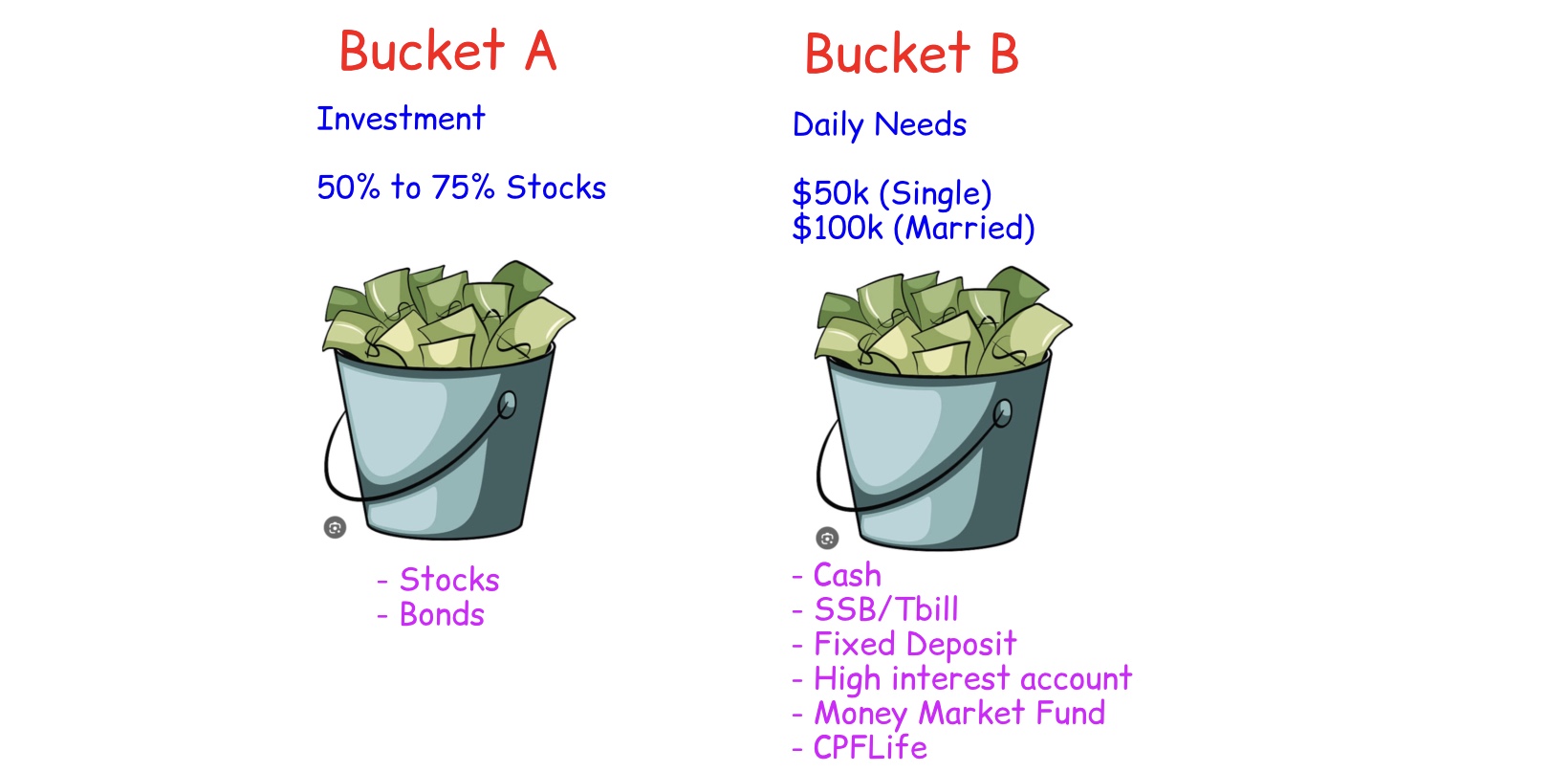
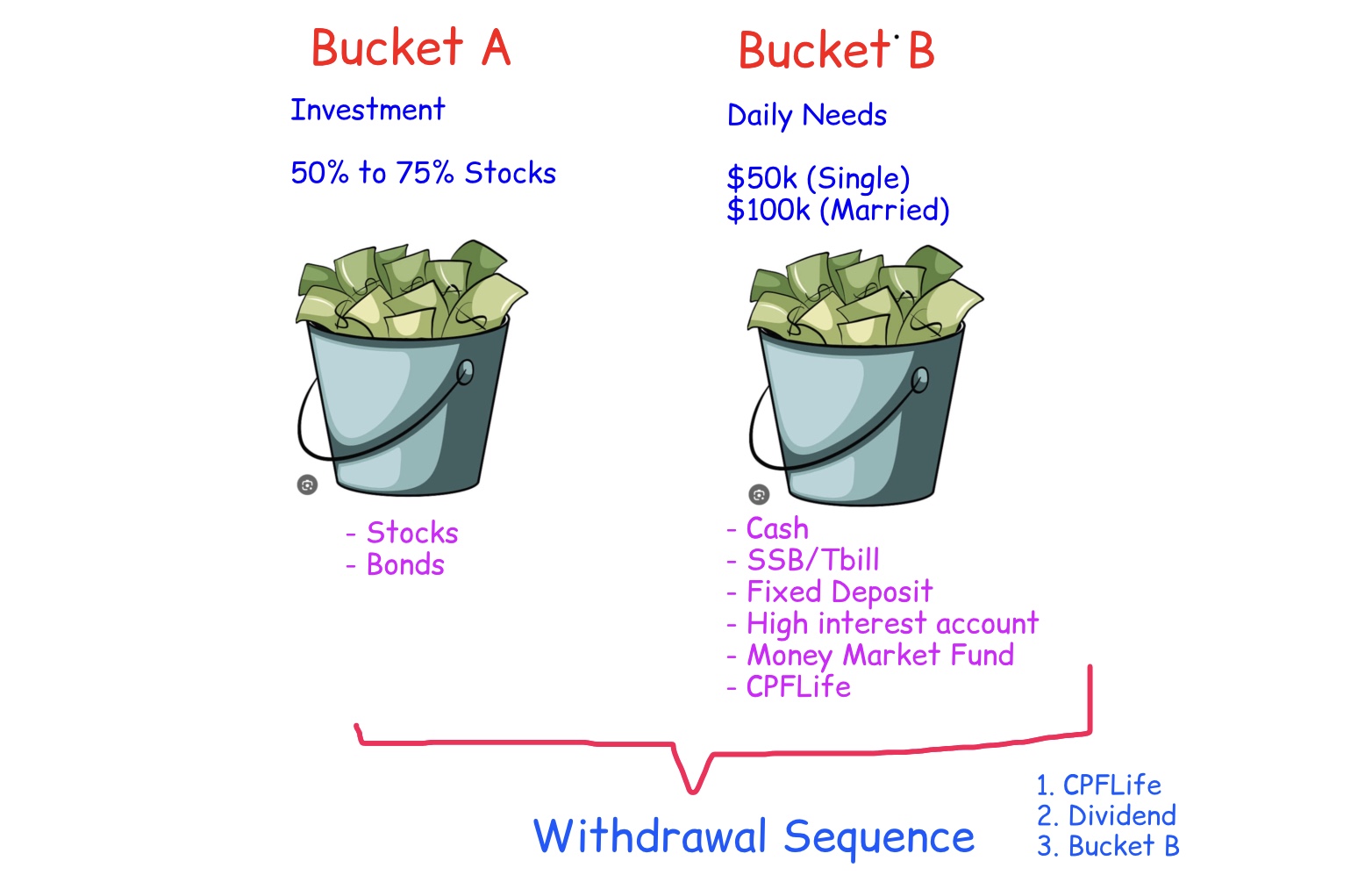
- The pre-requisite before getting into any investment we must ensure our water tank is already full. I would always suggest a cash reserve of at least $50k for single and $100k for married.
- Knowing the proper way to Get Rich Quick is the key, we dont need 30 years to reach ~$600k.
- We need focus on building the 3 assets in sequence (1) property, (2) equities and (3) CPF.
- Always put our money in the "strongest" asset first so it has more time to grow.
Paving the Path
In early 20s- Focus on Finding a correct Spouse and get a property
- Property will have the largest assets allocation in most of our portfolio, especially when our networth is below $1M.
- In Singapore, being single with a median salary is challenging to own a house, private is too expensive, while HDB only allows application at 35 years old.
- Thus, finding a correct spouse is probably the most important financial decision we will ever make in our life.
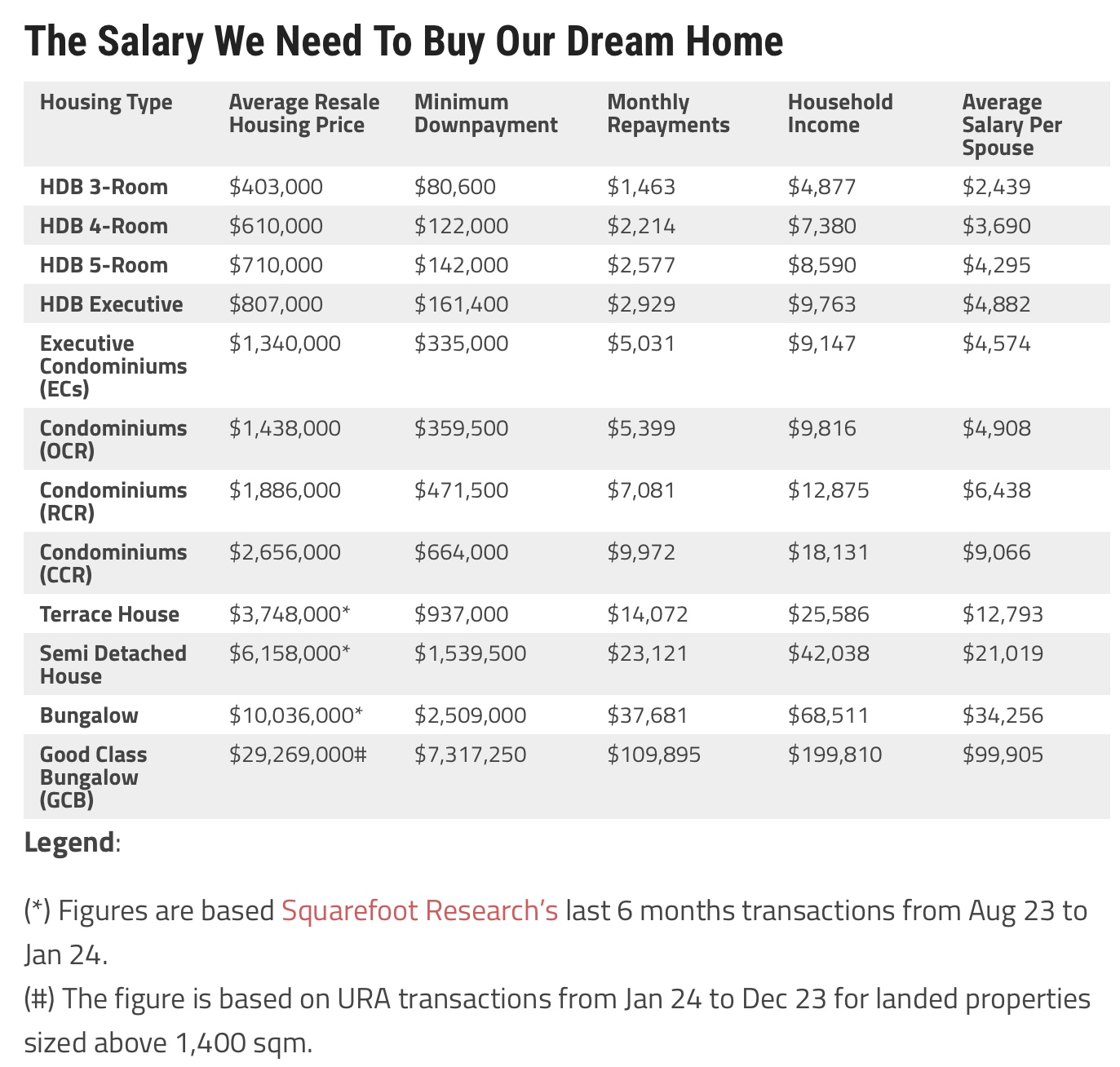
With a combined median household income, getting a home in Singapore is still affordable according to the article by Dollar & Sense.
- When buying a house, we just need to come out with 20%, with 2 person that will be 10% each.
- To have a higher returns, in term of absolute amount, for compounding. We can either increase the rate of returns or the quantum. Bigger house = bigger quantum.
- Getting a home before 35 not only allows a longer investment runway, but also allow us to take advantage of the maximum loan tenure, which reduce our monthly cash outflow.
We should be able to conserve most of our take home salary and use that to invest into the stock market.
- Owning a property come with huge liabilities, the monthly mortgage and fee.
- It is always better to go for at least a HDB 4-room. With rental of $600 to $1,300 for a common rooms should be able to cover majority of the monthly payment, any deficit can be cover by CPFOA.
- If we are able to afford a condo for our first home we should go for it.
In late 20s & early 30s- Focus on building Equities Portfolio & avoid lifestyle Inflation
- Stocks can only move in 3 directions, up, down and sideway.
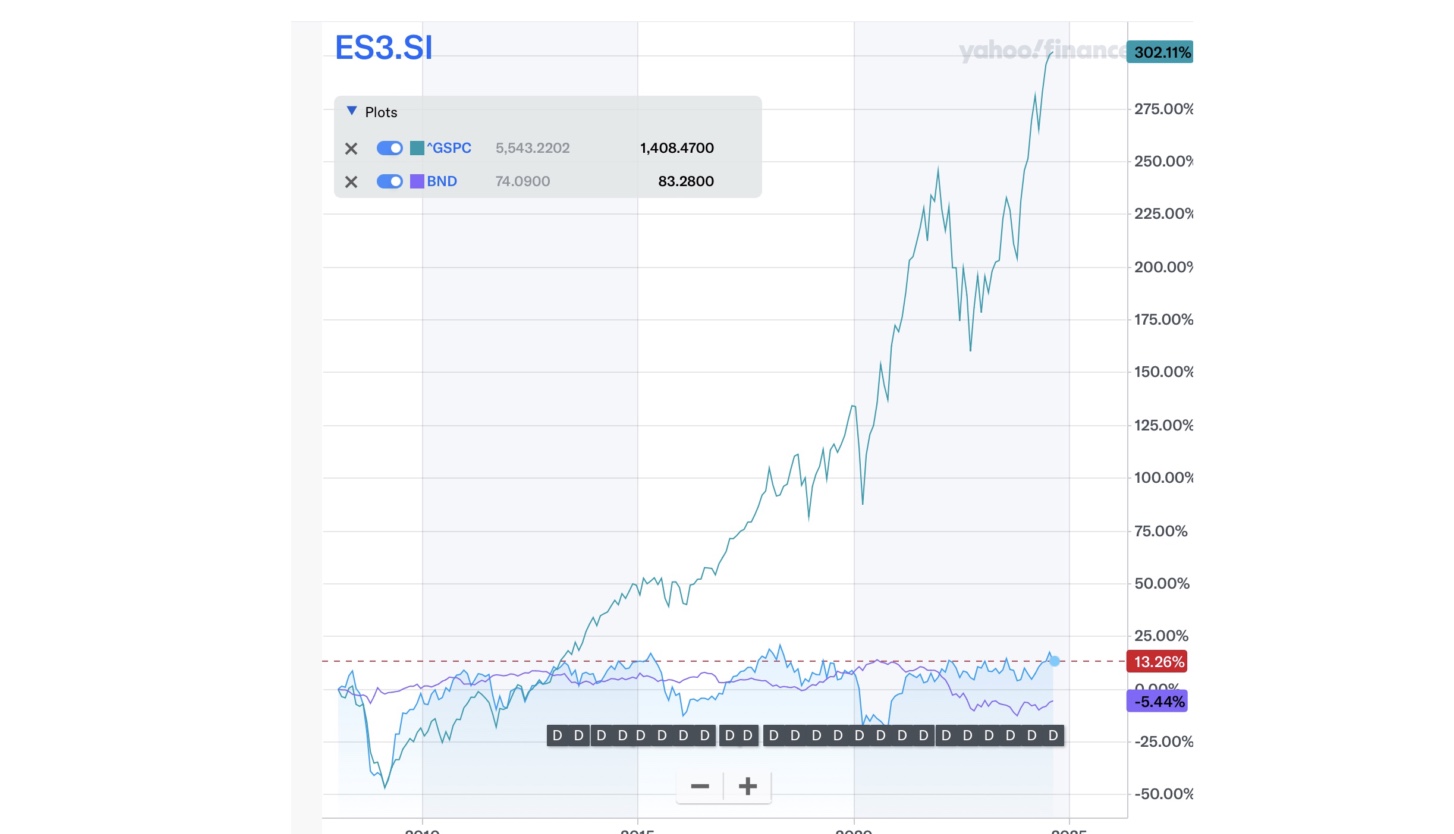
- S&P500 have historically generate 8% p.a. to 10% p.a. However, past results dont guarantee future performance.
- Building a passive income stream provide returns even in a sideway and bear market.
- Of course, when in a bull market, S&P500 will definitely outperform dividend stocks.
- The purpose of investing is to ensure we can pay bills and combat inflation when we stop working.
- Therefore, an ideal portfolio should be able to generate sufficient cashflow for daily needs and capital appreciation to combat inflation.
- Meanwhile, if we have been continuously working, with the capital appreciation of our first property, higher salary and more CPFOA, upgrading to the next higher value property should not be too difficult.
We just need to repeat these process until 50s to maximize the benefit of CPF.
In 50s- Deleverage (Strategy 6)
- Our property investment horizon is quite short, at 55 years old most of our OA will be transfer to RA and may not have sufficient fund in OA to leverage. In addition, we will not get as much loan due to age.
- Technically, we do not need to payoff all the debt (mortgage) if we had already factor in debt as an expense and deem affordable with our passive income.
- But just assume we want to have a peace of mind, we downgrade and cash out all our profit. We will be debt-free.
- Either we will be flushed with cash, if we have been paying the house using cash, or we will be CPFOA rich, if we have been using CPF.
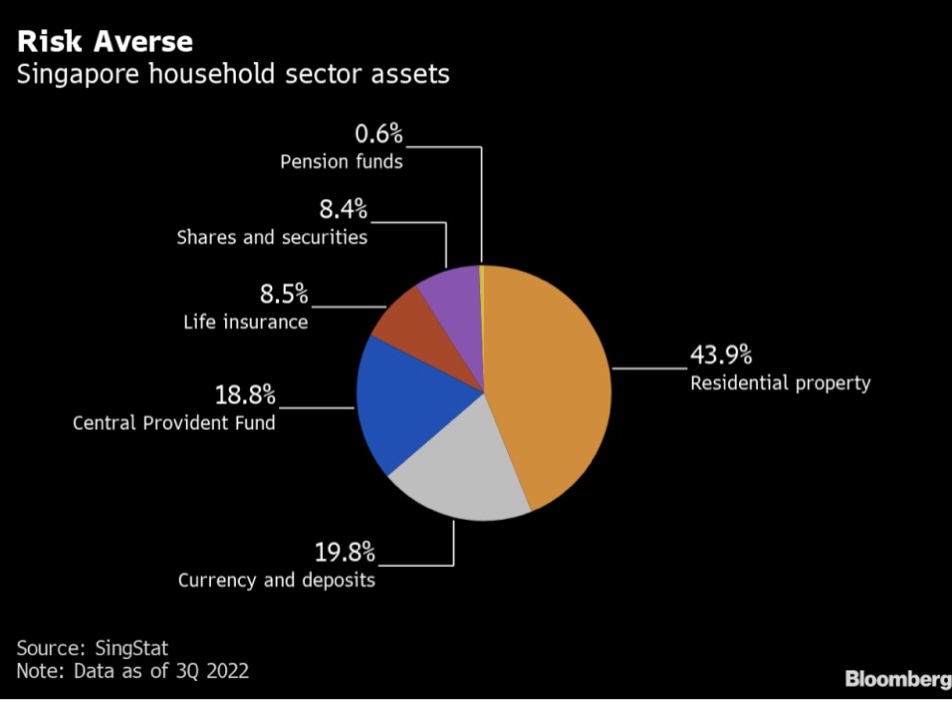
About 43% of wealth is lock in our residential property (pie chart above), by doing this we will be able to unlock most of our money.
Retirement Phase
2 Bucket instead of 3 Bucket (Strategy 3)
- While on paper it is easy to implement the 3 buckets but in practice it is flawed due to all the decision making to refill each buckets.
- The more decisions we make the more mistake we can make.
- The 2 buckets strategy is fundamentally different from the 3 buckets.
- The three buckets strategy allocate our cash into medium (bond) and long (stock) term buckets based on our expenses.
The 2 buckets combine medium and long term buckets into a portfolio and allocation is based on percentage rather than expenses and time horizon, making rebalancing easier.
- Bucket A can be the x% stock, y% bond portfolio (Strategy 2).
- It takes away all the decision-making, thus easier to implement.
- We will always rebalance back to the original allocation after we sell every year, thus it doesnt matter if we are selling stock or bond.
- Bucket B is our Water tank, which includes our daily expenses and emergency fund. It consists of risk-free to low risk instrument.
Bucket A
- According to the 4% rule, a 50% to 75% stock allocation is sufficient to support the initial 4% withdrawals with subsequent annual increase for inflation for 30 years.
- We can construct the portfolio using MPT.
- For stock, we can select either S&P or a world ETF.
- We can replace the bond allocation with SG stocks.
- Since SG market are bond-like, no FX risk and is tax free for dividend.
Withdrawal Based on Actual Expense
- There are 3 common methods of funding our retirement.
- The CPFLife (Strategy 1), 4 % rules (Strategy 4) and living off dividend / interest / rental (Strategy 5).
- Using the 4% rule as a guide to budget our withdrawal.
Our budget for each month will be $3.3k/mth with a $1M portfolio, but we may not spend the exact amount.
- We shall fund our retirement based on the following order, CPFLife, dividend / interest, then saving in Bucket B.
If we have surplus income from CPFLife and dividend then we can reinvest the cashflow into Bucket A, else we can withdraw from Bucket B to make up for any short fall.
EXAMPLE:
Bucket A + B = $1M
Budget = $1M * 4% = $40k/yr = $3.3k/mth
Income
CPFLife: $1000/mth
Dividend / Interest / Rental: $2500/mth
Total: $3500/mth
Income - expense = $200 surplus for reinvestment, no need to sell investment.
When to sell if CPFLife and dividend is not enough?
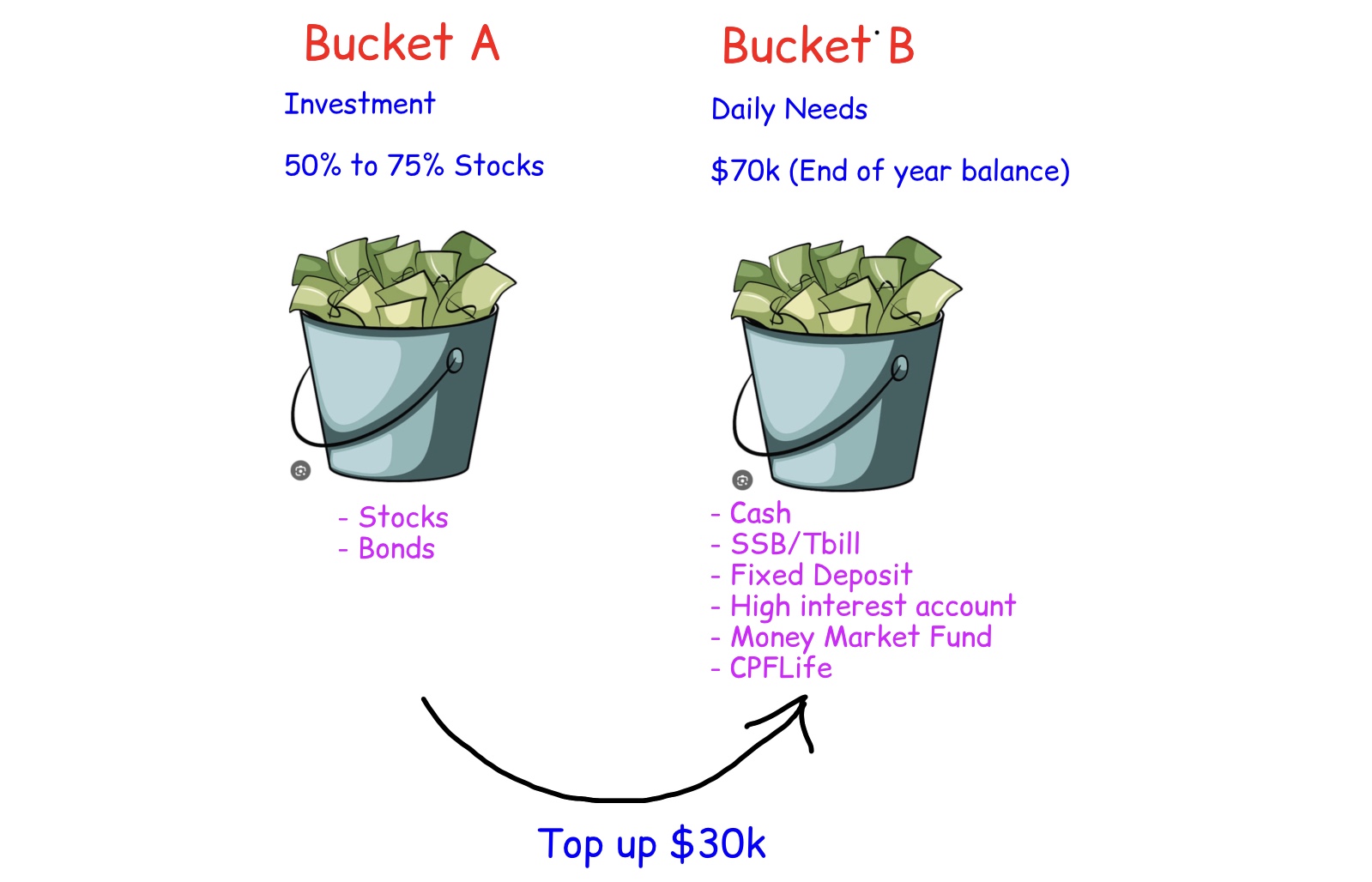
- According to the 4% rule methology, we suppose to sell at end of each year, then rebalance Bucket A.
- CPFLife provide a stable monthly income, while dividend/interest provide a variable monthly income and the cash in Bucket B should be used to cover the remaining monthly expenses.
- At end of each year, we just sell Bucket A to refill Bucket B to the water tank limit.
- We sell Bucket A based on the exact amount we spend instead of assumption.
Previous Review
Comments
136
3
ABOUT ME
Deal with your problem by being rich
136
3
Advertisement
No comments yet.
Be the first to share your thoughts!