Advertisement


OPINIONS
Is Bitcoin too Volatile to be a Store of Value?
The biggest argument against Bitcoin being a store of value by naysayers is that it is too volatile. Let's discuss!
Thaddeus Ong
18 Feb 2021
Founder at Everything About Bitcoin
Bitcoin has been considered many things in it's short history:
1) Magic internet money for nerds and gamers
2) Anonymous currency for buying weapons and funding terrorism on the dark web
3) A speculative bubble and "get rich quick" scheme
4) A potential future store of value (equivalent to a form of digital e-Gold) - This is mostly where we are today
Bitcoin today, on the verge of being recognized as a future global store of value, represents a tremendous evolution from where we just 10 years ago. How did it grow from a mysterious internet currency known to only a handful of gamers and cyberpunks, to what it is today - an asset that companies like Tesla are putting on their balance sheets, and world renowned payment solutions companies like Visa, Mastercard and PayPal are supporting on their payments eco-systems.
Despite all this happening, the most common question amongst naysayers still beckons - How can something as volatile as Bitcoin be considered as a store of value?
Bitcoin is undeniably volatile, but dismissing Bitcoin just because it is volatile is passing off the forest for a tree. Comparing Bitcoin's price action to other store of value's like gold (which is truly a recognized store of value today), the price history has been remarkably similar.
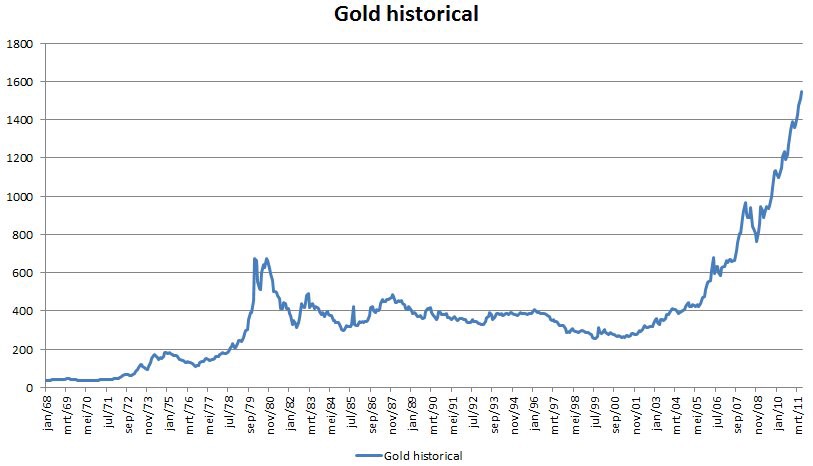
Chart above - Price history of Gold since the 1960s - Similarly to Bitcoin, Gold was a very volatile commodity in it's earlier days of trading, experience a massive price increase, before multi-year bear markets with drawdowns of more than 50% from top to bottom. With Bitcoin, the cycle is accelerated due to its decentralized nature and the advent of the internet, where new market participants can enter with much less barriers and requirements as compared to Gold.
As an emerging store of value like Bitcoin, history tells us we can expect two things:
A Rapidly Appreciating Price At First, Slowing Over Time: The price of a new store of value would likely start out very low, as few would believe in it. As it became established, prices would rise exponentially. Over time, this price appreciation would slow as it reached a steady state.
High-But-Declining Volatility: Similarly, early volatility would be extreme, as its long-term sustainability would be in question. But over time, that volatility would tail off as the asset became more established and it's market capitalization increases.
Think about it - which is likely to be more volatile? A sampan or a cruise ship. As Bitcoin continues to grow, volatility will decline along with it.
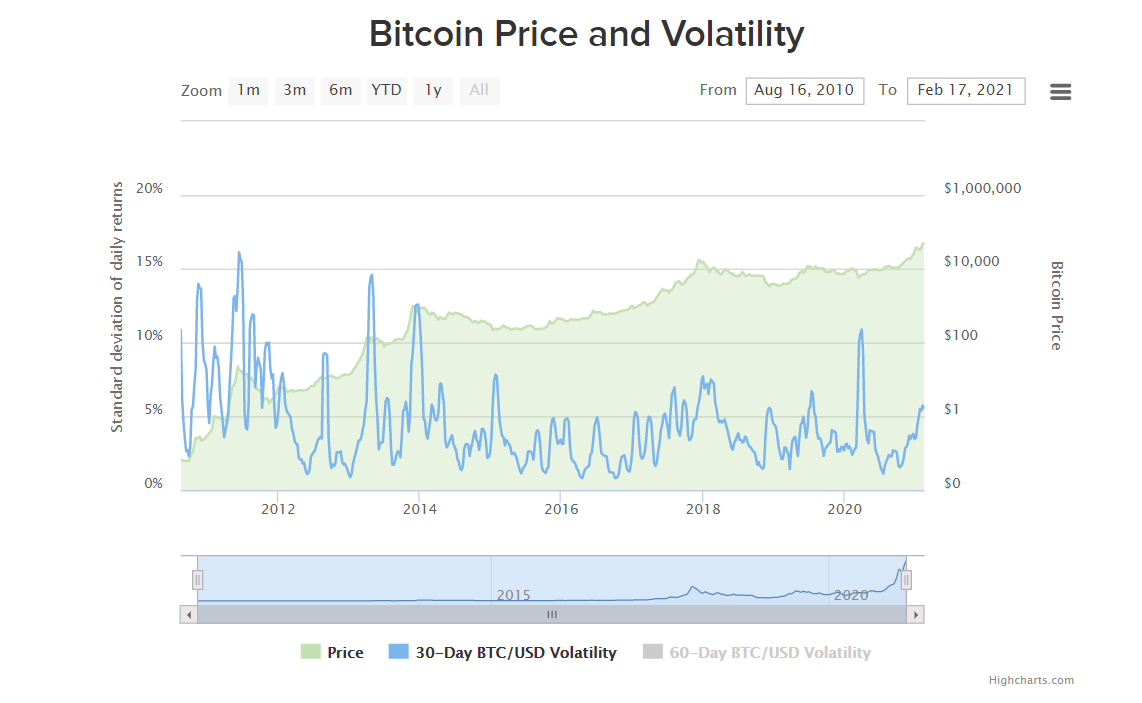
If Bitcoin slowly establishes itself as a store of value, what can we expect next?
Every day, with greater institutional adoption and acceptance, Bitcoin is moving closer and closer to being a recognized store of value. As understood from this fantastic series by Vijay Boyapati - The Bullish Case for Bitcoin, money always evolves in the following four stages:
1. Collectible: In the very first stage of its evolution, money will be demanded solely based on its peculiar properties, usually becoming a whimsy of its possessor. Shells, beads and gold were all collectibles before later transitioning to the more familiar roles of money.
2. Store of value: Once it is demanded by enough people for its peculiarities, money will be recognized as a means of keeping and storing value over time. As a good becomes more widely recognized as a suitable store of value, its purchasing power will rise as more people demand it for this purpose. The purchasing power of a store of value will eventually plateau when it is widely held and the influx of new people desiring it as a store of value dwindles. (We are now here)
3. Medium of exchange: When money is fully established as a store of value, its purchasing power will stabilize. Having stabilized in purchasing power, the opportunity cost of using money to complete trades will diminish to a level where it is suitable for use as a medium of exchange. In the earliest days of Bitcoin, many people did not appreciate the huge opportunity cost of using bitcoins as a medium of exchange, rather than as an incipient store of value. The famous story of a man trading 10,000 bitcoins (worth approximately $94 million at the time of this article’s writing) for two pizzas illustrates this confusion.
4. Unit of account: When money is widely used as a medium of exchange, goods will be priced in terms of it. I.e., the exchange ratio against money will be available for most goods. It is a common misconception that bitcoin prices are available for many goods today. For example, while a cup of coffee might be available for purchase using bitcoins, the price listed is not a true bitcoin price; rather it is the dollar price desired by the merchant translated into bitcoin terms at the current USD/BTC market exchange rate. If the price of bitcoin were to drop in dollar terms, the number of bitcoins requested by the merchant would increase commensurately. Only when merchants are willing to accept bitcoins for payment without regard to the bitcoin exchange rate against fiat currencies can we truly think of Bitcoin as having become a unit of account.
Therefore, if you think that you are late in investing in the next future store of value, you may not have completely missed the boat. If you're looking at the potential for Bitcoin to eventually arrive as a unit of account someday, then we are still remarkably earlier in that process. Of course at this point of time, the chances of it becoming a unit of account are lower than it succeeding, but with the rate of adoption we are seeing so far and the growing urgency globally for a new store of value, Bitcoin may not quite be done just yet.
Comments
322
4
ABOUT ME
Thaddeus Ong
18 Feb 2021
Founder at Everything About Bitcoin
Contributing on Bitcoin and Crypto investing. Started off investing in traditional markets, primarily a derivatives trader today.
322
4
Advertisement
No comments yet.
Be the first to share your thoughts!