Advertisement


OPINIONS
How To Financially Plan for a Career Break or Sabbatical
A career break can be freeing, as long as your finances are planned before you hit pause.
This post was originally posted on Planner Bee.
Thinking about taking a break from work?
Career breaks and sabbaticals are becoming more common in Singapore, especially among millennials and Gen Z professionals. More individuals are choosing to step away from work, whether to travel, support their mental well-being, explore a personal interest, or simply take time to breathe and recharge. These breaks are now seen as a sign of self-awareness and confidence. That said, leaving a steady income can feel financially overwhelming if you do not have a clear plan.
This article will walk you through how to prepare your finances so you can take a career break with confidence rather than worry.
What’s driving your career break, and how long will it last?
Start by being honest with yourself about why you want to take this break. Are you planning to backpack across South America, enrol in a professional course, spend quality time with your kids, or simply recover after years of nonstop hustle?
Knowing your motivation helps you shape both the purpose and structure of your time away. A break driven by personal healing will involve different planning and financial needs compared to one focused at professional development.
Next, decide how long you’ll be away. Is this a short three-month pause or a full year off? The duration affects how much you need to save and whether you might need part-time work while you’re away.
For example, a six-month yoga retreat in Bali may involve costs like basic accommodation, meals, and local transport. On the other hand, a year-long data science course in London would require budgeting for tuition, rent, daily living costs, and possibly visa expenses. Both are valid reasons for a sabbatical idea, but they require different financial pictures.
Set a realistic timeline that fits your goal and the point at which you want to begin your break. This will help you work backwards and plan your savings with more purpose.
Where do you stand financially right now?
Now is a good time to review your finances. Open your banking app or budgeting spreadsheet and ask yourself:
- What is my monthly income?
- What are my fixed and flexible expenses?
- Do I have any debt, such as a student loan, credit card balance, or housing loan?
- How much have I saved so far?
Understanding your current financial position can help you identify areas where you can cut back and start saving more effectively.
How much will your career break cost?
Start listing the main expenses you expect during your break. These may include:
- Daily living costs such as rent, food, and transport
- Travel and flight expenses
- Tuition or course fees
- Visa or insurance charges
- Mobile plans or essential technology
- A buffer for emergencies or self-care
You should also consider what you will still need to pay at home:
- Monthly loan repayments such as HDB, car, or education loans
- Insurance premiums including life, health, or home cover
- Financial support for dependents, if needed
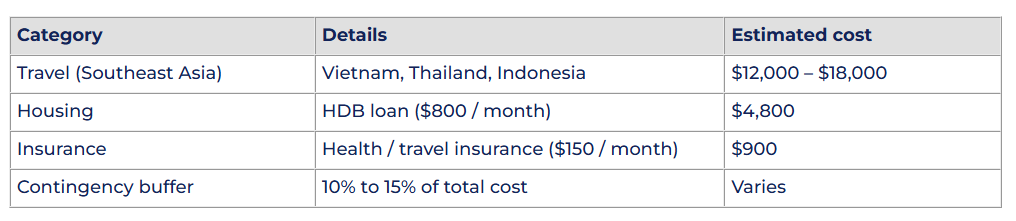
Sample expense breakdown (6-month career break)
This sample budget offers a starting point to estimate the cost of a 6-month career break. A 6-month duration is commonly chosen because it allows for meaningful travel, personal projects, or rest, while remaining financially and professionally manageable for many people.
The example focuses on travel within Southeast Asia and includes general living expenses. However, it can be adapted to suit different destinations, lifestyles, or goals. Use this breakdown as a guide and adjust the categories and amounts based on your personal plans and financial responsibilities.
Read more: Micro-Retirement Is the Workplace Trend Growing Among Gen Z
How can you build a financial cushion before you go?
Once you have a clear target amount, start working steadily towards it. Treat it like any other financial goal. Here are a few practical ways to grow your sabbatical fund:
- Automate your savings: Set up a monthly transfer to a separate account dedicated to your break.
- Cut unnecessary expenses: Cancel unused subscriptions, cook at home more often, and take public transport where possible.
- Sell items you no longer need: Unused gym equipment, clothes, or electronics could be turned into extra cash.
- Take on side gigs: Freelance writing, tutoring, or dog walking can help boost your income.
Some people go further by taking on short-term contract work or additional shifts in the year leading up to their break to strengthen their savings.
Also consider whether you want to continue making voluntary CPF contributions during your break. While not compulsory, topping up your MediSave or retirement fund can be a wise long-term decision.
Read more: How To Boost Your Earning Potential
What happens to your bills while you’re away?
You may be taking time off, but your bills won’t stop. Plan ahead so you can keep up with:
- Housing loan repayments or rent
- Insurance policies (health, life, car)
- Credit card minimum payments
- Student loan repayments
If you think you might struggle, talk with your bank or loan provider before your break begins. For example, CPF housing repayments can sometimes be deferred if you meet certain conditions. You may also be able to lower or pause payments for student loans or personal loans if you are enrolled in a course during your time off.
Taking these steps early can help protect your credit rating and reduce financial stress later on.
Can you earn while you’re on a break?
For some, earning a small income during a break helps provide extra flexibility without returning to full-time work. Consider these options:
- Freelancing: Use your professional skills in areas like design, writing, consulting, or coding.
- Teaching or tutoring: If you have academic strengths or language skills, consider teaching online part-time.
- Creative income: Sell art, music, photography, or handmade goods through platforms such as Etsy, Gumroad, or Shopify.
- Rental income: If possible, sublet a room in your flat or rent out your car while you’re away.
You can also explore passive income sources like dividend-paying stocks or REITs. Even small amounts each month can help stretch your savings.
Read more: 10 Side Hustles That Can Supplement Your Income
What about healthcare and insurance?
This is not something to leave to chance. If you’re leaving a full-time job, your company-provided insurance will likely end, so it’s important to make sure you remain covered.
In Singapore, you’ll still be protected under MediShield Life. However, this only covers basic public hospital services. To reduce the risk of large medical bills, consider:
- Keeping or upgrading your Integrated Shield Plan
- Getting travel insurance to cover overseas medical emergencies
- Looking into expat insurance if you’ll be living abroad for 6 months or more
It’s also wise to set aside a buffer for everyday healthcare needs, such as visits to the GP, dental treatment, mental health support, or regular prescriptions.
Read more: Travel Insurance: Do I Really Need It and What Should I Take Note Of?
What’s your plan for returning to work?
While it’s natural to focus on preparing for your break, thinking ahead to your return is just as important.
Here are some ways to ease the transition:
- Set aside three to six months of living expenses to cover your job search
- Use your break to upskill through short courses or certifications
- Stay active on LinkedIn and attend industry events when possible
The aim is to return refreshed, not disconnected. Even informal networking or sharing insights from your sabbatical can help keep you visible and professionally engaged.
Plan with intention, not fear
Taking a career break or sabbatical in Singapore is becoming a thoughtful way to recharge, grow, or change direction. The key is good planning.
When you are clear about your motivations, understand your costs, build a savings plan, and stay on top of your financial responsibilities, you give yourself the space to enjoy your time away without unnecessary stress.
This is not time off for the sake of it. It is time for yourself. And that’s a worthwhile investment.
Read more: Smart Ways To Financially Plan for a Midlife Career Change
Comments
19
10
ABOUT ME
Your Personal Mobile Financial Advisor Application Join us at telegram! https://t.me/plannerbee
19
10
Advertisement
No comments yet.
Be the first to share your thoughts!