Advertisement


OPINIONS
Financial Support for Ageing Parents in Singapore
Caring for ageing parents in Singapore can be tough, but planning early and getting support makes all the difference.
This post was originally posted on Planner Bee.
As Singapore’s population ages, families are feeling the pressure. According to MOH, by 2030, one in four Singaporeans will be 65 or older. This means more adult children are stepping in to care for elderly parents, often while raising kids of their own. It’s a tough balancing act that can be emotionally and financially draining. But you’re not alone.
This guide aims to help by breaking down the practical, legal and emotional aspects of eldercare in Singapore.
1. Understanding your legal duties
Family situations can get complicated, especially when legal and money matters come into play. In Singapore, adult children have a legal duty to support their elderly parents under the Maintenance of Parents Act (MPA).
Here’s a quick summary of how MPA works
- The Act applies to parents aged 60 and above who can’t support themselves financially.
- If a parent feels they aren’t receiving enough support, they can make a claim through the Tribunal for the Maintenance of Parents.
- Families are encouraged to go through mediation first to settle things without going to court.
- If the case proceeds, the tribunal carefully looks at both the parent’s needs and the child’s ability to pay.
- Maintenance is not a fixed sum, but it’s usually between S$300 and S$500 a month.
This law reflects the strong cultural value placed on filial piety in Singapore. However, it also adds legal weight to family expectations, which can be challenging when there are disagreements or uneven caregiving responsibilities among siblings.
2. Balancing tradition with modern life
In the past, it was common for Singaporean families to live under one roof and care for ageing parents at home. These traditions, rooted in Confucian values of filial piety, meant that adult children were expected to look after their elders personally.
But lifestyles have changed. Today, many people have smaller families, dual-income households, and limited time. Fewer siblings means fewer people to share the load, and daily life can become a juggling act.
Thinking about help? It’s okay
If you’re considering hiring a helper or looking into assisted living or nursing homes, you might feel unsure. There’s still a belief in some circles that turning to external care means you’re not being filial.
But the truth is:
- Getting help doesn’t mean you care less. In fact, it’s often the responsible thing to do.
- Have open conversations with your parents and siblings. It’s better to set clear expectations early on.
- Remember, caring for someone also means taking care of yourself. Burnout doesn’t help anyone.
Caring for elderly parents is a big task, and it’s normal to feel overwhelmed at times. Knowing your rights, understanding your options, and talking openly with family can go a long way.
3. Financial support schemes available in Singapore
Caring for ageing parents can be costly, but there are several support schemes in Singapore that can help. Here’s a simple breakdown of the main ones:
CareShield Life
A national long-term care insurance plan that provides monthly cash payouts to those who are severely disabled (meaning they’re unable to perform at least three out of six Activities of Daily Living).
Key details:
- Singapore Citizens and Permanent Residents born in 1980 or later are automatically enrolled at age 30.
- The monthly payout starts at S$600 in 2020 and increases by 2% each year until the age of 67, or until a claim is made. By 2024, the payout amount rose to S$649 per month.
- Once eligible, the payout continues for as long as the person remains severely disabled.
MediSave Care
This scheme allows severely disabled individuals aged 30 and above to withdraw up to S$200 a month from their MediSave account to cover long-term care expenses.
Eligibility:
- You must have at least S$5,000 remaining in your MediSave after the withdrawal.
- You may also draw from your spouse’s MediSave if needed.
Silver Support Scheme
Provides quarterly cash supplements to seniors aged 65 and above who had low incomes during their working years and now have little or no family support.
Eligibility:
- By age 55, your total CPF contributions must be S$140,000 or less.
- You should live in a 1- to 5-room HDB flat, and neither you nor your spouse should own private property or more than one flat.
- The monthly household income per person should not exceed S$2,300.
- If self-employed, your average annual net trade income from age 45 to 54 must be no more than S$27,600.
Read more: Subsidies and Schemes for Seniors and Caregivers
4. Why insurance and financial planning matter?
Insurance and financial planning are essential when caring for elderly parents. They help reduce stress and prevent unexpected costs. Ensure your parents have the right coverage:
- Health insurance for hospital stays
- Disability insurance (e.g., CareShield Life) for long-term care
- Life insurance to support the family after their passing
- Review existing policies to ensure they still meet their needs
As care needs grow, consider home adjustments for safety and comfort, such as:
- Installing grab bars
- Adding wheelchair ramps
- Using anti-slip tiles
These can be costly, so it’s important to plan for these expenses. You may also need extra help, such as:
- Domestic workers for daily support
- Part-time nurses for medical care
- Respite care for caregivers
Factor these ongoing costs into your financial plan. Lastly, plan for end-of-life matters early:
- Discuss setting up an Advance Medical Directive (AMD)
- Encourage creating a Lasting Power of Attorney (LPA)
- Set aside savings for funeral expenses
These steps help your family feel prepared and reduce stress later.
Read more: Why You Should Make a Lasting Power of Attorney (LPA) in Singapore?
5. Practical tips for everyday caregiving
Being the main caregiver for someone can be overwhelming at times. It’s important to get support from others to share the load.
- One sibling could be in charge of medical appointments and prescriptions, while another takes care of financial matters such as bills or government assistance.
- You might also set up a rotating schedule for visits, meals, and regular check-ins.
- Consider reaching out beyond your immediate family. Cousins, in-laws, neighbours, and close friends can all play a part in supporting you. The more people you can involve, the lighter the burden will feel.
Caring for someone else is demanding, so remember to look after yourself too. Make time each week to do something for yourself, like going for a walk, reading, or simply relaxing. Joining a caregiver support group can also help you connect with others in similar situations and share advice. If you’re feeling overwhelmed, it might be helpful to speak to a counsellor or trusted friend.
Additionally, don’t hesitate to use respite care services. Taking regular breaks is vital for your well-being. Caring for someone else starts with making sure you’re healthy and able to cope.
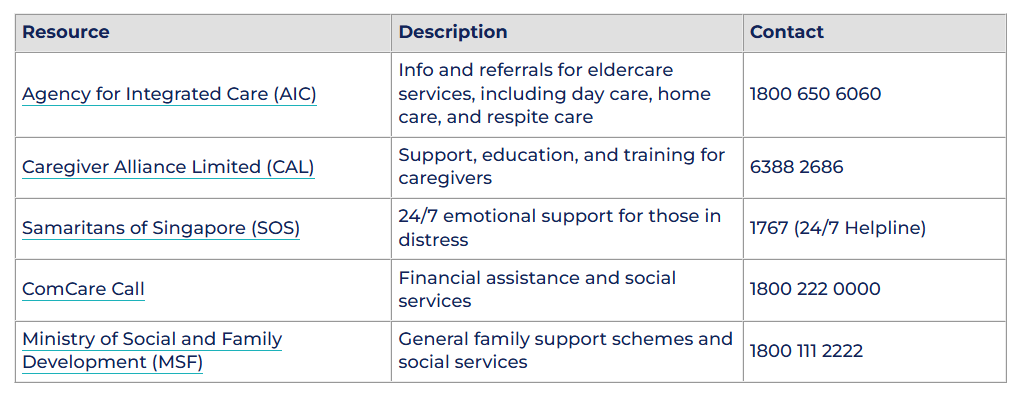
Helpful hotlines and resources in Singapore
Here are some trusted places to turn to when you need help, information, or someone to talk to:
Caring for ageing parents in Singapore is a meaningful responsibility, but it can come with emotional, financial and logistical challenges. Knowing your legal duties, such as those under the Maintenance of Parents Act, and tapping into financial support schemes like CareShield Life or the Silver Support Scheme can ease the load. Early planning also helps you avoid difficult decisions during times of stress.
Just as important is clear communication with your family. Set expectations early, divide responsibilities fairly, and don’t hesitate to involve professionals or community services. You don’t have to do everything on your own. The earlier you seek support, the more manageable and fulfilling the caregiving journey will be.
Comments
36
24
ABOUT ME
Your Personal Mobile Financial Advisor Application Join us at telegram! https://t.me/plannerbee
36
24
Advertisement
No comments yet.
Be the first to share your thoughts!