Advertisement


OPINIONS
Can You Hedge Against Inflation by Investing in Gold and Precious Metals?
Precious metals go beyond gold, with silver, platinum and palladium now popular investment options for hedging inflation
This was originally posted on Planner Bee.
Gold has long been known to play an important role as a store of value. In times of economic turbulence and inflation, investors often turn to gold as a safe haven. It underscores the metal’s resilience as a financial asset.
Yet when we talk about precious metals, the scope is a lot wider. It extends to include silver, platinum, and palladium, each with its unique characteristics that appeal to investors. Today, the question of whether one can effectively hedge inflation by investing in gold and precious metals becomes increasingly pertinent.
Role of Gold and Precious Metals
What sets gold and precious metals apart is their ability to retain value, irrespective of economic conditions. Gold, for instance, does not corrode or tarnish and its supply is limited, factors that contribute to its enduring value. Similarly, silver, platinum, and palladium possess unique qualities that make them indispensable in various industrial applications, further underpinning their intrinsic worth.
Additionally, the historical performance of gold and precious metals during inflationary periods offers compelling evidence of their efficacy as hedges. In times when traditional assets like stocks and bonds may falter, these metals have often demonstrated resilience, maintaining or even increasing in value. For investors in Singapore, the appeal of these precious metals is accentuated by their historical performance as reliable stores of value.
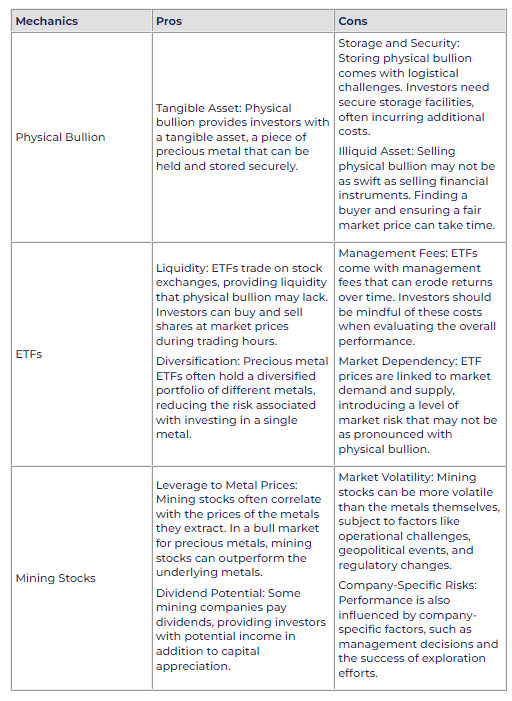
Mechanics of Gold and Precious Metal Investments
Physical Bullion: Tangibility and Tradition
Investing in physical bullion, like gold coins or bars, represents the most tangible form of precious metal ownership. Gold bars and bullion coins are available for purchase both online and in person. For instance, UOB customers have the option to acquire gold items through online transactions and collect them in person at the UOB Main Branch. Additionally, utilising CPF funds for gold purchases is feasible under the CPF Investment Scheme.
Exchange-Traded Funds (ETFs): Convenience and Diversification
For a storage-free exposure to precious metals, ETFs offer a convenient alternative. Take the SPDR Gold Shares ETF for example. The leader in the ETF space provides Singaporean investors with access to precious metals on the SGX. With assets exceeding US$70 billion, this physically backed ETF ensures high liquidity, mirroring the performance of gold bullion. There are also other ETF options, such as iShares MSCI Global Gold Miners ETF and VanEck Vectors Gold Miners ETF, which specifically tracks the performance of gold mining companies.
Mining Stocks: Leveraging Industry Performance
Investors in Singapore seeking a distinct angle on precious metals often explore mining stocks. Investing in companies engaged in the exploration, extraction, and production of precious metals provides a unique opportunity to leverage industry performance. Examples of such companies include Newmont Corporation, the only gold producer listed in the S&P 500 Index, and Barrick Gold Corporation. Investing in gold-related stocks, such as these, provides flexibility akin to intraday trades, aligning with market dynamics. Dividend-focused investors can also consider gold stocks for income, presenting an alternative to physical gold.
Read more:__ What to Look Out for When Investing in ETFs?
Gold vs. Other Precious Metals: A Comparative Analysis
Gold
The standard-bearer for precious metals, renowned for its enduring value and cultural significance. In Singapore, gold holds a special place in the hearts of many as a symbol of prosperity and good fortune. Its ability to withstand the test of time has made it a cornerstone of investment portfolios globally.
Inflation Hedge:
- Historical Resilience: Gold has a well-established track record of preserving wealth during inflationary periods.
Global Recognition: Its universal acceptance contributes to its appeal as a hedge against currency depreciation.
Silver
Often referred to as “the poor man’s gold,” silver has its own unique properties that make it an attractive investment. While not as revered as gold, silver’s affordability and diverse industrial applications add an interesting dimension to a precious metals portfolio.
Inflation Hedge:
- Industrial Demand: Silver’s use in various industrial applications can contribute to its value during economic expansions.
Affordability: Silver may be more accessible to a broader range of investors.
Platinum and Palladium:
Platinum and palladium are lesser-known but equally valuable precious metals, each with distinct characteristics. While platinum has been associated with luxury and prestige, palladium has gained prominence in industrial applications, particularly in the automotive sector.
Inflation Hedge:
- Automotive Demand: Palladium, used in catalytic converters, is influenced by trends in the automotive industry.
- Luxury and Industry: Platinum’s dual role in luxury goods and industrial applications can contribute to its resilience.
In constructing a precious metals portfolio, investors in Singapore might consider the potential benefits of diversification. Each metal reacts differently to economic conditions, and a diversified approach can help mitigate and balance risks associated with the performance of a single metal.
Risks and Challenges
1. Market Volatility
Precious metals, like any investment, are not immune to market volatility. The prices of gold and other metals can experience significant fluctuations driven by various factors, including economic data, geopolitical events, and changes in investor sentiment.
2. Geopolitical Factors
The precious metals market is sensitive to geopolitical events, and sudden geopolitical tensions can lead to swift and unpredictable movements in prices.
3. Currency Risks
The value of precious metals is often denominated in US dollars. Changes in currency exchange rates can impact the returns for investors in Singapore. Fluctuations in the value of the Singapore dollar against the US dollar can influence the local purchasing power of precious metals.
4. Regulatory Changes
Government policies and regulatory changes can also impact the precious metals market. In Singapore’s case, given the country’s robust regulatory framework, investors should be vigilant about any changes that might affect the taxation or trading of precious metals.
To mitigate the above risks, explore different mitigation strategies!
For example:
- Diversification: Holding a diversified portfolio of precious metals with different currency denominations can help reduce the impact of volatility.
- Active Monitoring: Regularly monitoring market trends and staying informed about global events can empower investors to make timely decisions.
- Global Awareness: Staying abreast of international developments and geopolitical tensions is crucial for anticipating potential market reactions.
- Hedging: Utilising currency hedging strategies can help mitigate the impact of currency fluctuations on precious metal investments.
Legal Counsel: Seeking legal advice to understand the regulatory landscape and any potential changes that may impact precious metal investments.
Read more:__ Smart Money or Blind Bet: Assessing Your Investment Approach
Tax Considerations for Precious Metal Investments in Singapore
1. Goods and Services Tax (GST)
In Singapore, precious metals are exempt from the Goods and Services Tax (GST). This exemption applies to the supply of investment-grade precious metals, providing a favourable environment for investors.
To qualify for the GST exemption, the precious metals must meet certain criteria, including minimum purity levels. The exemption generally applies to precious metals in the form of bars and coins that are considered suitable for investment purposes.
2. Capital Gains Tax
One of the advantages of investing in precious metals in Singapore is the absence of capital gains tax. When you sell precious metals at a profit, the capital gains are not subject to tax.
Precious metal investments can be tax-efficient in Singapore, allowing investors to retain a larger portion of their profits. The absence of capital gains tax is particularly beneficial for long-term investors.
Whether you are a seasoned investor or someone taking their first steps into the world of investments, the realm of precious metals in Singapore offers a spectrum of opportunities for those seeking to fortify their portfolios against the uncertainties of inflation.
As you explore these investments, do remember that success in this field requires a commitment to ongoing research, an awareness of global economic trends, and a willingness to adapt to the ever-changing dynamics of the precious metals market!
Comments
384
3
ABOUT ME
Your Personal Mobile Financial Advisor Application Join us at telegram! https://t.me/plannerbee
384
3
Advertisement
No comments yet.
Be the first to share your thoughts!