Advertisement


OPINIONS
An Oversimplified Guide To The Different Blockchains, Tokens, Coins, NFTs & Metaverse
Still wrapping your head around why are there so many different blockchains, coins and NFTs? Read this short guide!
Victor
Edited 17 Nov 2021
Marketing at StraitsX
Ethereum vs Bitcoin
To begin understanding the different blockchains, we can start by looking at the Bitcoin & Ethereum blockchains.
The core difference between the Bitcoin and Ethereum blockchain is that the Bitcoin blockchain only supports transactions of Bitcoin while we can think of Ethereum as a network of computers that functions as a single computer (the geeks call this the Ethereum Virtual Machine or EVM).
Ethereum achieves this through the use of "smart contracts", which are programs that execute themselves when certain conditions are met.
What's the difference between coins and tokens?
If a cryptocurrency is a native cryptocurrency on a blockchain, it is considered a coin. On the Ethereum blockchain, Ethereum (ETH) is the native coin. What this means is that all transactions on the Ethereum blockchain need to be paid with ETH.
As Ethereum supports "smart contracts", one can use the Ethereum blockchain to issue their own tokens on the blockchain.
One can issue two forms of standard tokens on Ethereum, ERC-20 and ERC721.
ERC-20 are fungible tokens, which basically means two tokens are identical.
The USD Coin (USDC) and the StraitsX Singapore Dollar (XSGD), both tokens pegged to the US dollar and Singapore dollar respectively are examples of ERC-20 tokens. They're both issued on the Ethereum blockchain.
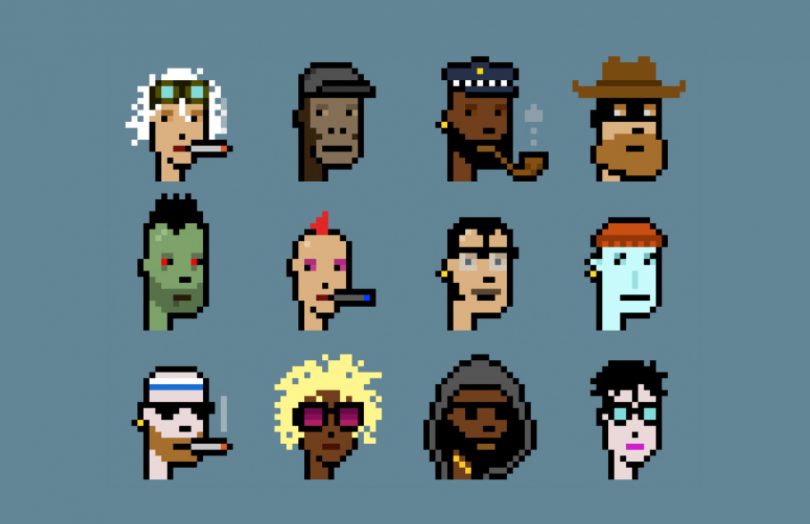
ERC-721 are non-fungible tokens (NFTs), which means that no two tokens are identical. CryptoPunks, one of the earliest NFTs projects on Ethereum are on average priced at 350,000 USD per image at the time of writing. Yup, each one of this strange pixel art is worth roughly an HDB each.
Why are other blockchains becoming more popular than Ethereum?
As more applications started to develop on the Ethereum blockchain, transactions on the blockchain became more and more expensive. (transaction fees on blockchains paid in the native coin are known as "gas fees") In fact, the average transaction at the time of writing is slightly over 8 USD.
This means, in order for me to send 1 USDC to another person on Ethereum, I would end up paying around 9 USD to make this transaction. Not great.
The Chain Wars
Some up and coming blockchains, such as Solana, boast cheaper and faster transactions (no more than a few cents per transaction), attracting more users and developers to their blockchain.
The issuers of USDC have started issuing USDC tokens on the Solana blockchain as well. In fact, at the time of writing, USDC is issued on six chains, Ethereum, Algorand, Solana, Stellar, Tron and Hedera.
Generally, blockchains encourage developers to use their chain by offering them grants to build an ecosystem of applications on their chain.
Blockchains like Solana has been relatively successful in attracting game developers and NFT creators onto their platform while blockchains like Hedera has attracted healthcare companies to use their blockchain for medical applications, such as applications to track COVID-19.
As different blockchains have different applications, blockchains have begun to develop "bridges" for users that would like to participate in multiple blockchains.
For example, a user who has USDC in their Ethereum wallet may connect both their Ethereum wallet and Solana wallet to a "bridge" to move their USDC (Ethereum) to USDC (Solana).
Decentralised Finance (DeFi) & Decentralised Autonomous Organisations (DAO)
DeFi refers to financial services enabled by blockchain. Examples would be Uniswap & Aave on the Ethereum blockchain.
Uniswap allows anyone to connect their blockchain wallet to access services such as swapping a cryptocurrency for another. On the other hand, Aave allows users to deposit cryptocurrencies to earn interest on them as well as take loans on their cryptocurrencies.
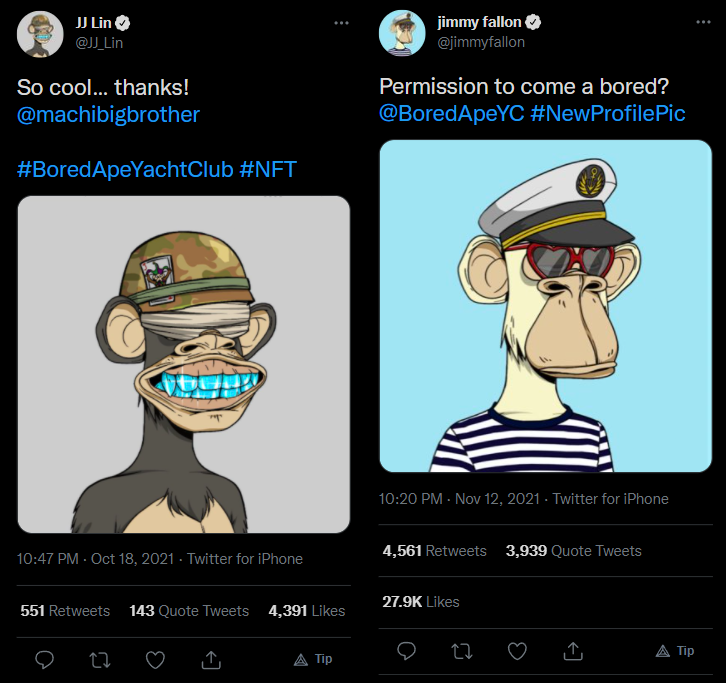
DAOs generally refer to organisations formed by users on the blockchain. For example, the Uniswap DAO allows holders of its token (UNI) to vote on matters such as what features they would like to see on the platform. DAOs can also be communities formed by holders of a specific NFT. For example, one might want to acquire a Bored Ape Yacht Club NFT to join celebrities like Jimmy Fallon & JJ Lin who are owners of the NFT. The club purports to offer its members certain benefits and access to exclusive activities.
The Metaverse
The word "metaverse" is being thrown around quite often since Facebook decided to rename themselves to Meta, but in a nutshell, the Metaverse refers to Virtual Reality (VR) and Augmented Reality (AR) environments becoming more prevalent in near future. NFTs and blockchains will potentially play a big part in Metaverse as game developers and NFT owners start to build compatibility with VR and AR environments. Examples include Star Atlas, a game built on the Solana blockchain.
Imagine owning a spaceship NFT and being able to enter that spaceship in a blockchain-enabled game in a VR/AR environment.
The metaverse awaits!
Disclaimer
The views, thoughts, and opinions expressed in the text is solely for educational purposes and belong solely to the author, and not the author’s employer, organization, committee or other group or individual.
Comments
3518
3
ABOUT ME
Victor
Edited 17 Nov 2021
Marketing at StraitsX
I've given up explaining crypto to my friends so I'm sending them to read my articles here instead! 🤣
3518
3
Advertisement
No comments yet.
Be the first to share your thoughts!