Advertisement


OPINIONS
3 Undervalued Bargain Companies with Price/Earnings Ratio below 10 times
An undervalued company is one that not only achieves consistent profitability but also inherits a healthy balance sheet.
An undervalued company is one that not only achieves consistent profitability, but also inherits a healthy balance sheet. On top of that, the respective company must also be trading at an attractive valuation.
As value investing will require time before the market realises their fair value, it is a good addition to the portfolio of investors who have a longer investment horizon.
With that in mind, we will be looking at these 3 undervalued companies:
- Challenger Technologies Limited (SGX: 573)
- Koda Limited (SGX: BJZ)
- Spindex Industries Limited (SGX: 564)
1) Challengers Technologies Limited (SGX: 573)
Challenger Technologies Limited (“Challenger”) is a Singapore-based information technology (IT) lifestyle retailer of personal computers, notebooks, printers, tablets and mobile devices. The Company operates through three segments, which include IT products and services, electronic signage services, and telephonic call center and data management services.
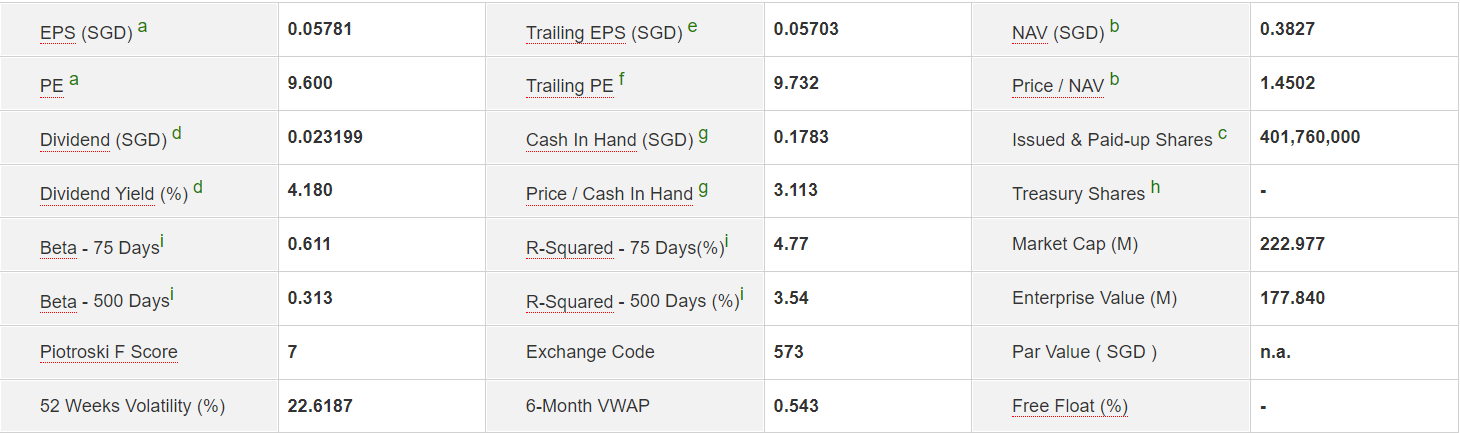
Key Statistics
Past Financial Performance
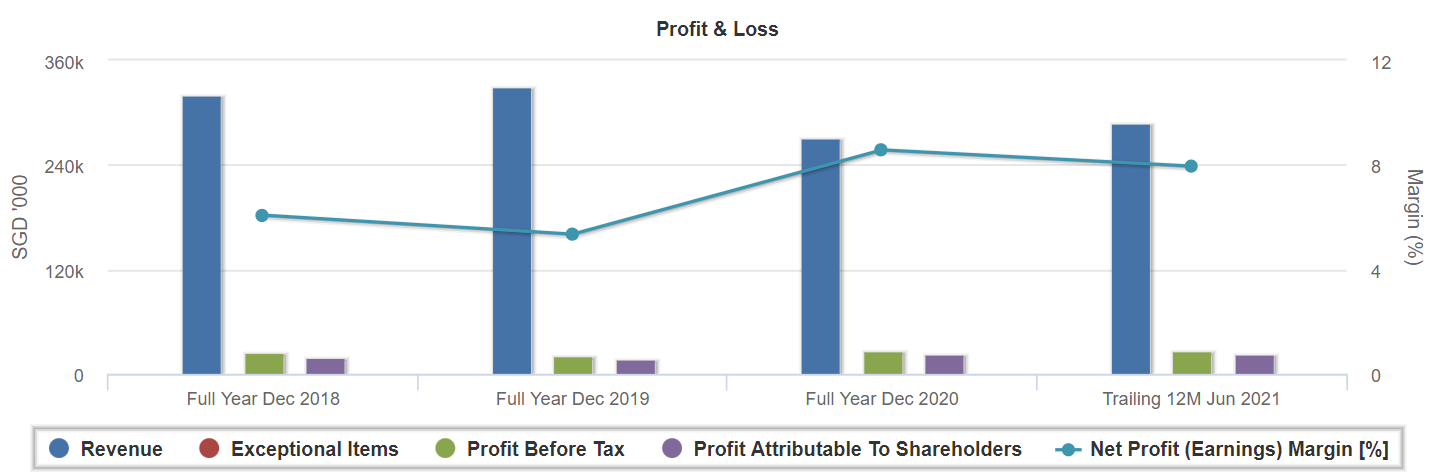
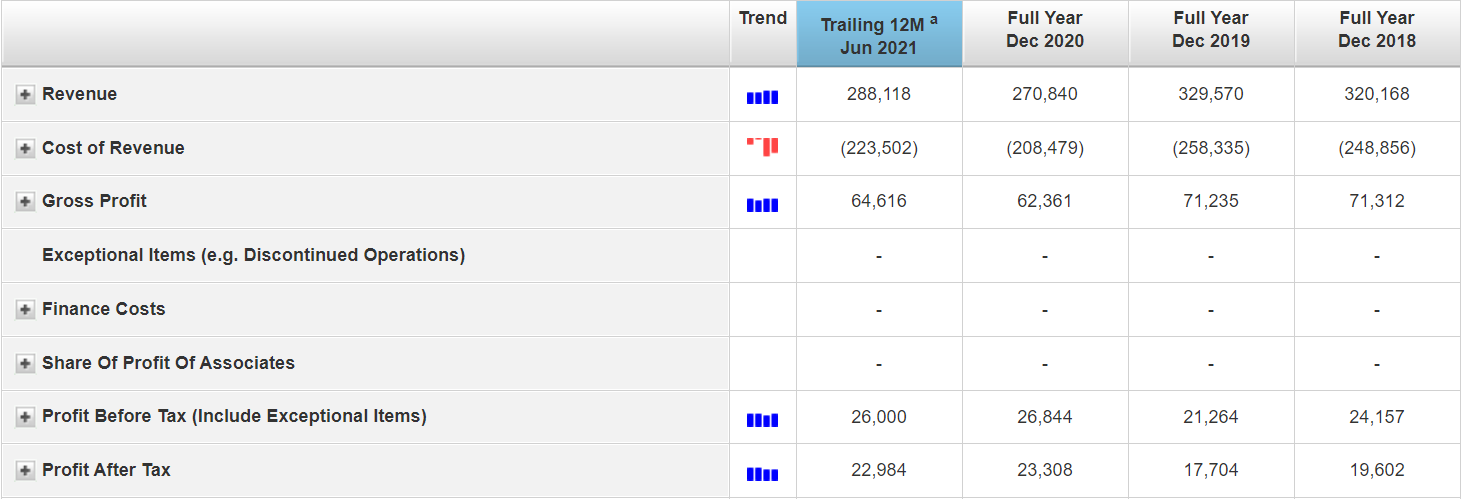
For Challenger’s trailing 12-month financial performance, its revenue (Blue Bar) grew by 6.37% to S$288.11 million. The higher revenue can be seen from the rebound in its IT products and services business segment, as a result of strong growth in its retail operations while partially offset by weaker contribution from online sales.
Despite the revenue growth, Challenger’s profit after tax (Purple Bar) dipped marginally by 1.39% to S$22.98 million. The drop in profit after tax was impacted by the higher Depreciation Expense of Right-of-use Assets and Purchase of Goods and Consumables.
Leverage Ratio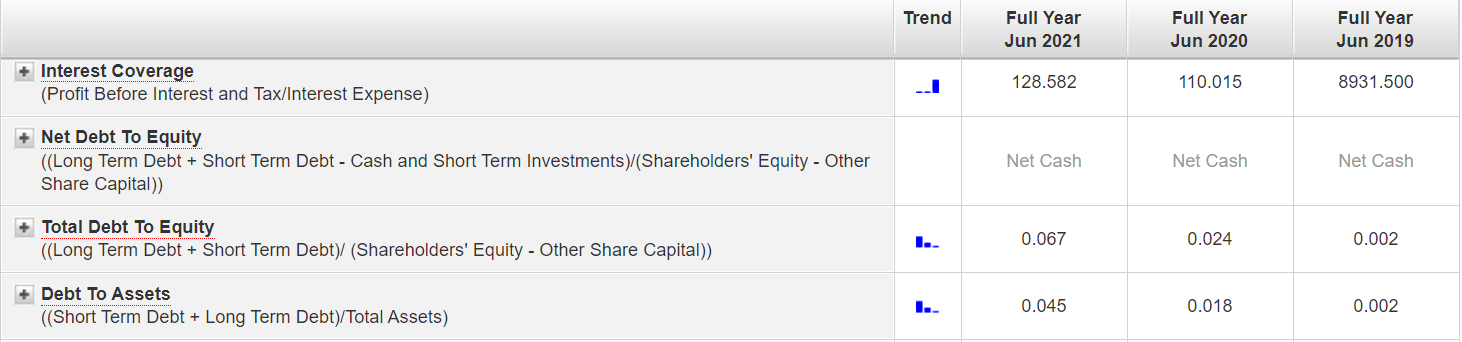
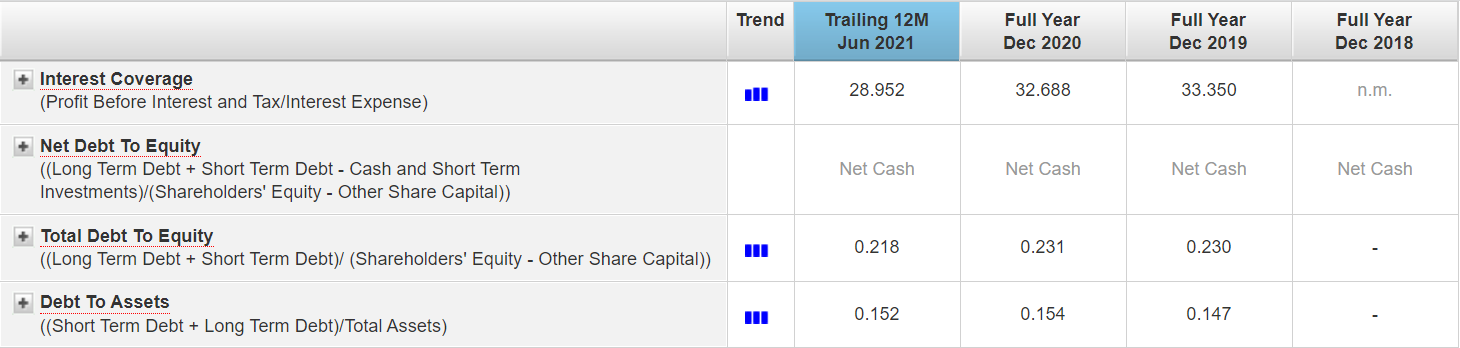
Challenger has maintained as a net cash company over the past few financial years, as seen from the table above. On top of that, its total debt to equity ratio has remained at a healthy level of less than 0.23 times. This shows that the company is not highly leveraged.
Meanwhile, its high interest coverage ratio also suggests that Challenger has sufficient profits on hand to meet its interest expenses, and hence likely to have a low probability of default in its debts.
2) Koda Limited (SGX: BJZ)
Koda Limited (“Koda”) is engaged in the manufacture of furniture and fixtures of wood (including upholstery) and furniture design services.
Koda operates through four segments: Chairs and tables; Outdoor and garden furniture; Bedroom furniture, Occasional and other furniture. Koda designs and produces furniture for the dining room, living room and bedroom furniture. The Company has manufacturing bases in Malaysia, Vietnam and China.
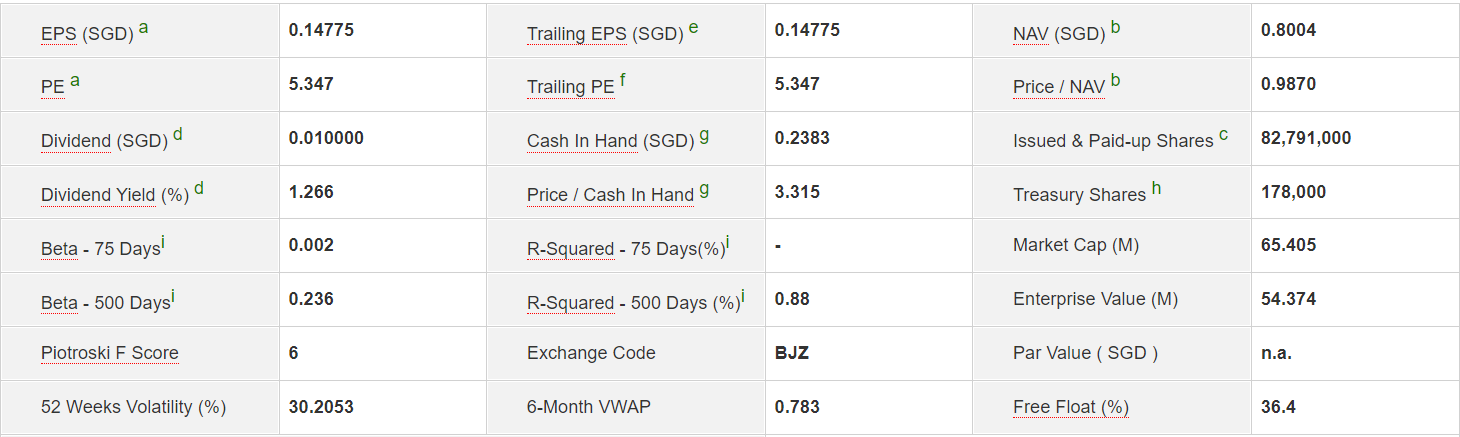
Key Statistics
Past Financial Performance
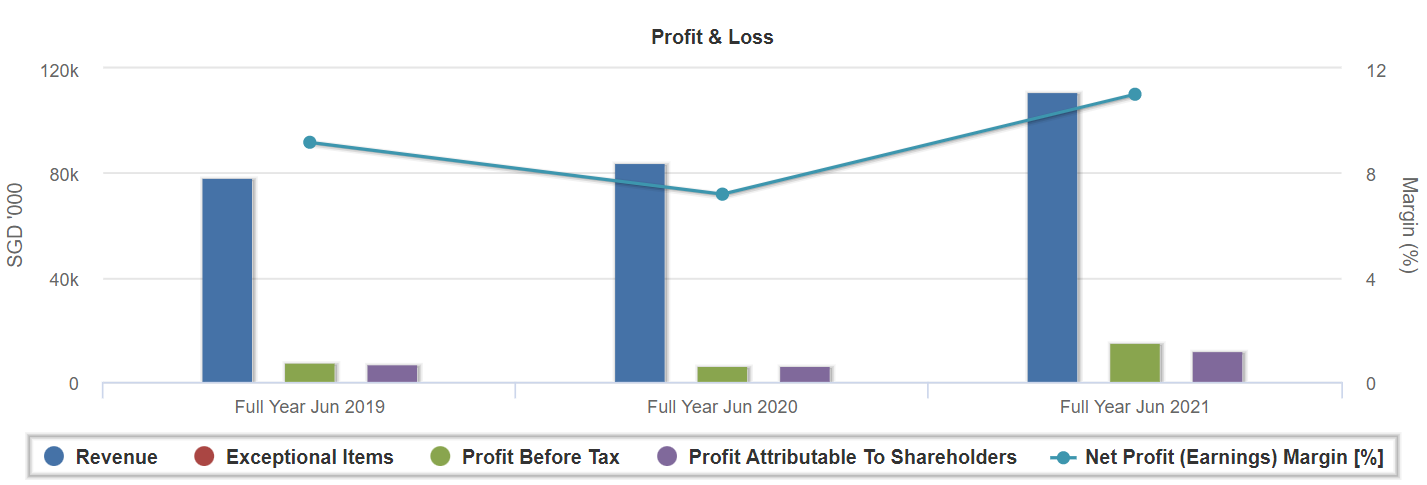
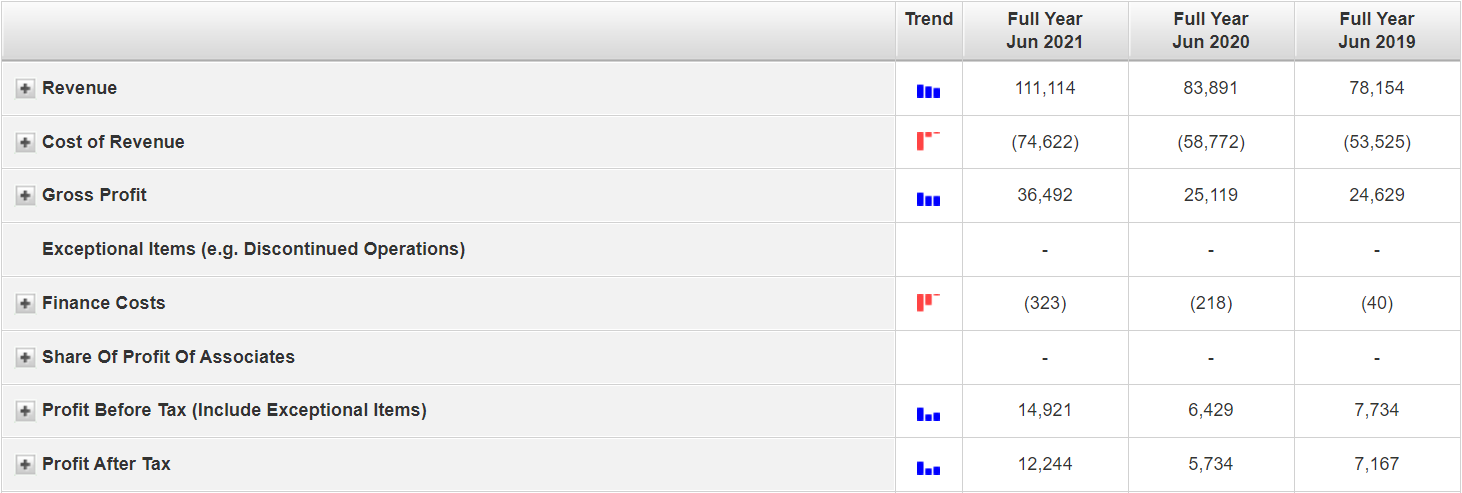
In FY2021, Koda’s revenue (Blue Bar) grew by 32.45% year-on-year to S$111.11 million. The higher revenue can be attributed to the higher export and retail sales achieved in the financial period. On top of that, its manufacturing division also helped to boost its topline.
With the slower growth in cost of revenue, distributions and administrative expenses, Koda’s profit after tax (Purple Bar) jumped by more than 110% year-on-year to S$12.24 million.
Leverage Ratio
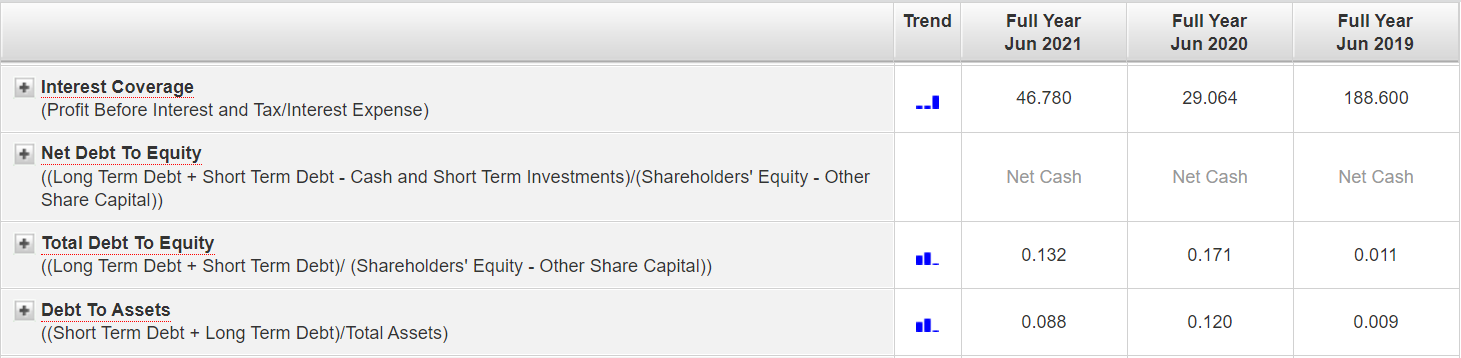
Like Challenger, Koda has remained as a net cash company over the past few financial years, as seen from the table above. Koda’s total debt to equity also declined significantly to just 0.13 times, mainly due to the lower debt level in the financial period.
With the surge in profits and lower debt load, Koda’s interest coverage ratio surged to 46.7 times in FY2021. This suggests that the company has little risk of not being able to meet its interest obligations.
3) Spindex Industries Limited (SGX: 564)
Founded in 1981, Spindex Industries Limited (“Spindex”) is a leading precision engineering manufacturer with core competencies in turning, machining, grinding, surface treatments, mechanical sub-assemblies. With a regional footprint and international reach, Spindex has its headquarters in Singapore, and 4 production locations located in China, Malaysia and Vietnam with over 2000 headcount and more than 1000 CNC equipment.
The Company's segments include Imaging and printing; Machinery and automotive systems, and Others (domestic appliances, consumer electronics, data storage, telecommunications, energy and others).
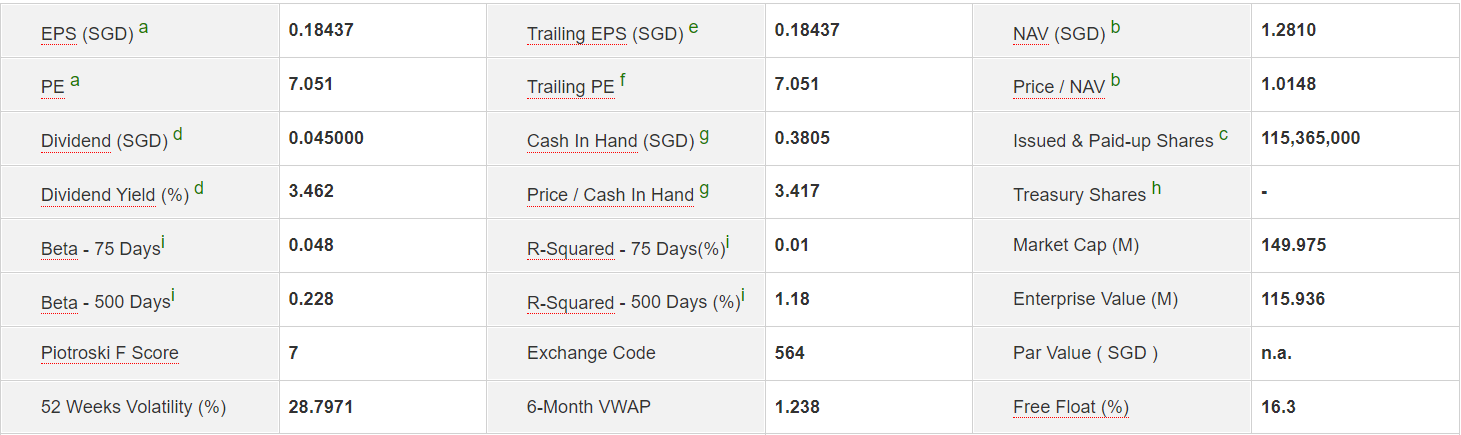
Key Statistics
Past Financial Performance
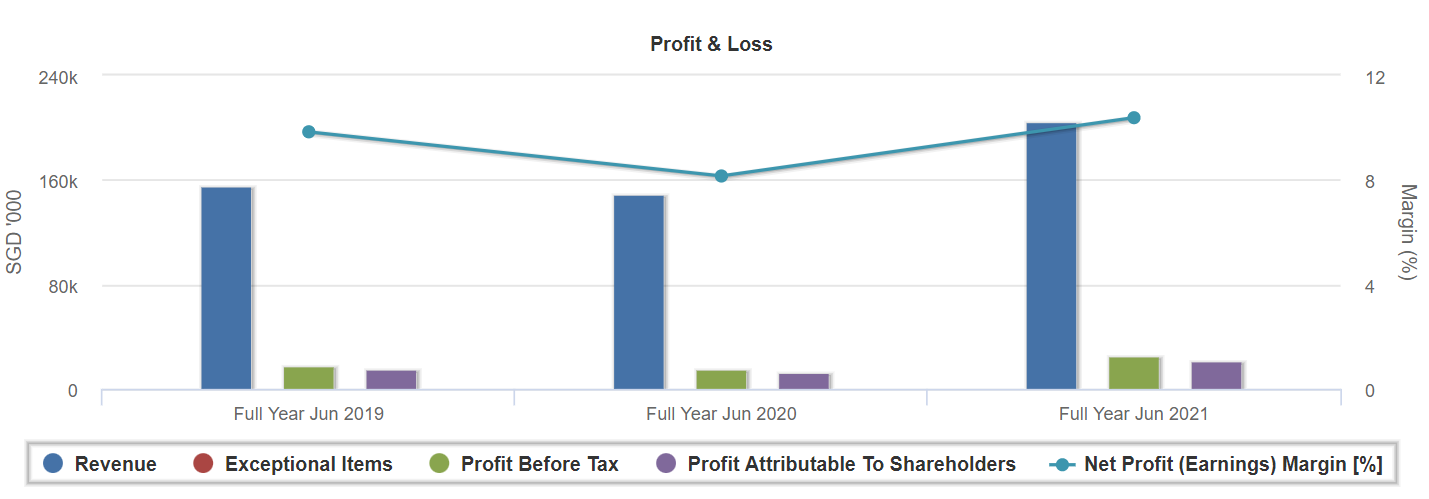
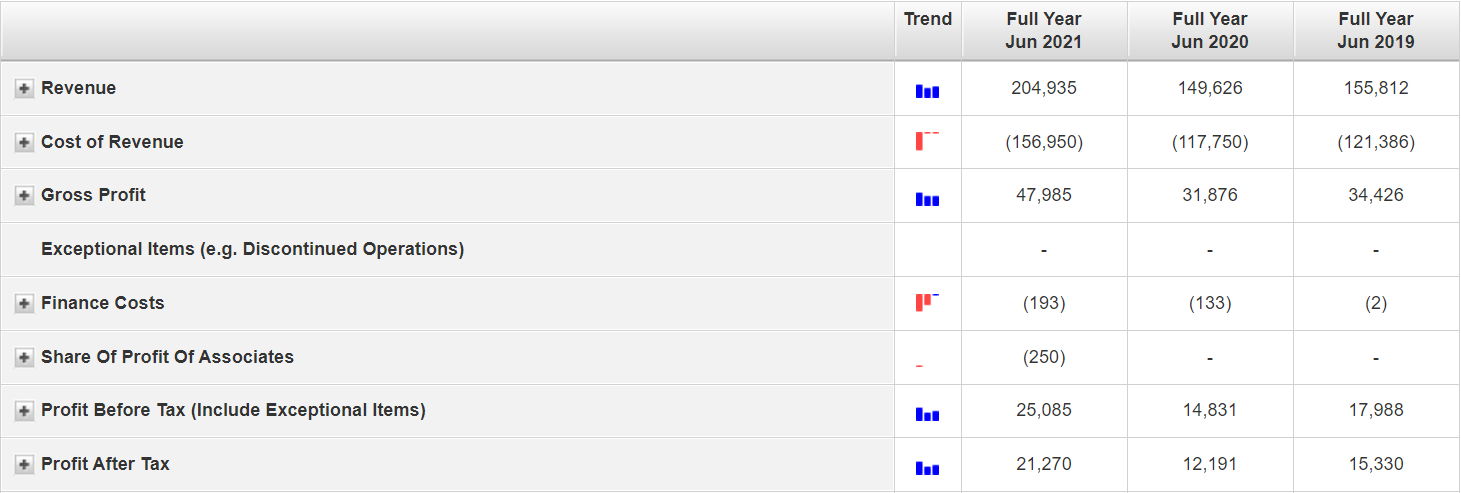
For FY2021, Spindex’s revenue (Blue Bar) jumped by close to 37% year-on-year to S$204.93 million, underpinned by a broad-based growth from existing customers’ orders.
This is because the pandemic resulted in more people staying and working from home, hence boosting new demand for office equipment, domestic appliances and hobby-related equipment.
With the higher revenue achieved, Spindex’s profit after tax (Purple Bar) surged by 74% year-on-year to S$21.27 million.
Leverage Ratio
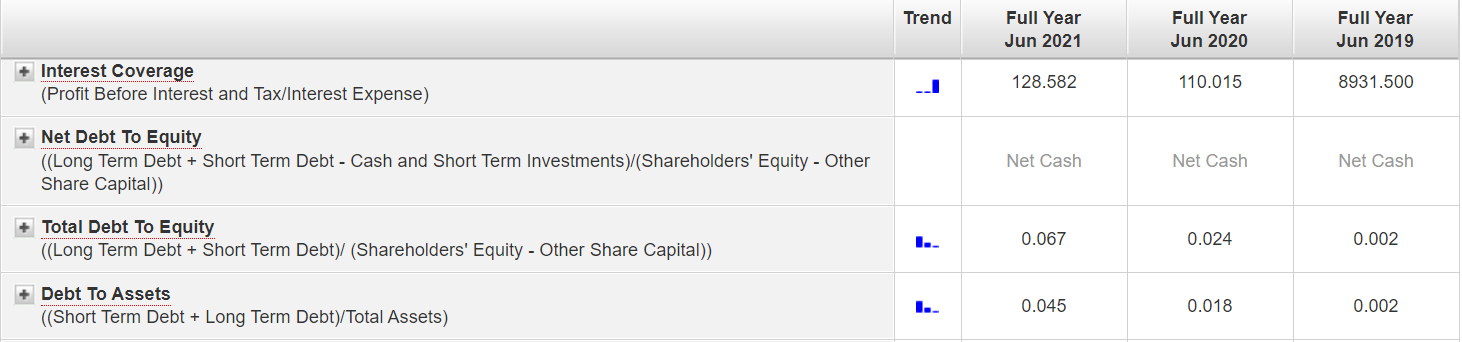
From the table above, Spindex has been in a net cash position for the past few financial years. This indicates that the company has a strong balance sheet to weather any adverse economic situation.
In terms of Spindex’s interest converge ratio, it has improved by 17% year-on-year to 128.58 times. This improvement was mainly attributed to the higher earnings achieved in FY2021.
Overall, the high interest coverage ratio indicates that Spindex has sufficient capability to meet its interest obligations with ease and will have a low probability of debt defaults.
Conclusion
To conclude, these 3 counters mentioned above inherited a strong net cash balance sheet and have remained profitable over the years. This shows that they faced little insolvency risks and could survive adverse economic conditions.
More importantly, their respective price/earnings ratio also suggests that they are grossly undervalued and definitely warrants a second look for value investors.

More than 3,600 investors are on our Telegram, what are you waiting for? Join us now for more first-hand updates, articles, events, promos and happenings. Click here now. See you on the inside.
Comments
1349
0
ABOUT ME
A portal that provides a holistic approach to assess SGX listed companies through a wide array of viewpoint.
1349
0
Advertisement
No comments yet.
Be the first to share your thoughts!